
Common Juniper
Juniperus communis
- Native to:
- Afghanistan, Albania, Algeria, Austria, Baltic States, Belarus, Belgium, Bulgaria, Canada, China, Corse, Cyprus, Czechia-Slovakia, Denmark, East Aegean Is., Finland, Føroyar, France, Germany, Great Britain, Greece, Greenland, Hungary, Iceland, Iran, Iraq, Ireland, Italy, Japan, Kazakhstan, Kirgizstan, Korea, Krym, Kuril Is., Labrador, Lebanon-Syria, Morocco, Nepal, Netherlands, North Caucasus, Norway, NW. Balkan Pen., Pakistan, Poland, Portugal, Prince Edward I., Romania, Russia, Sardegna, Sicilia, Spain, Sweden, Switzerland, Tadzhikistan, Transcaucasus, Türkiye, Türkiye-in-Europe, Turkmenistan, Ukraine, United States, Uzbekistan, Virgin Islands
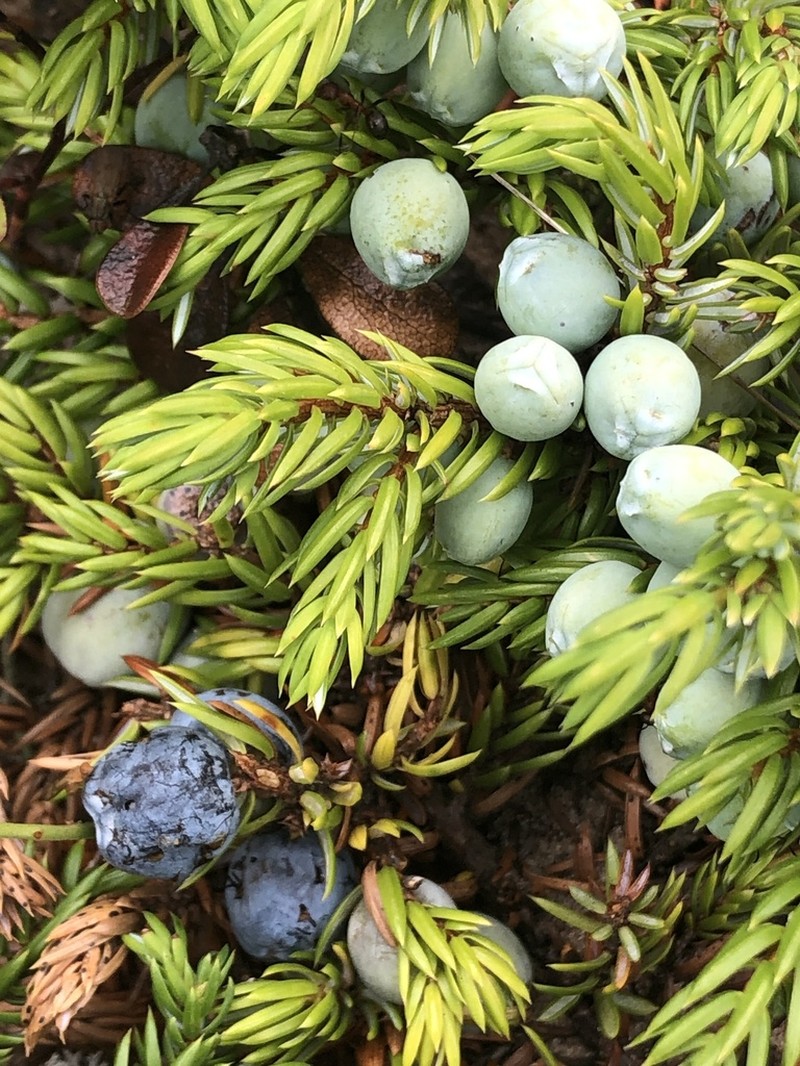
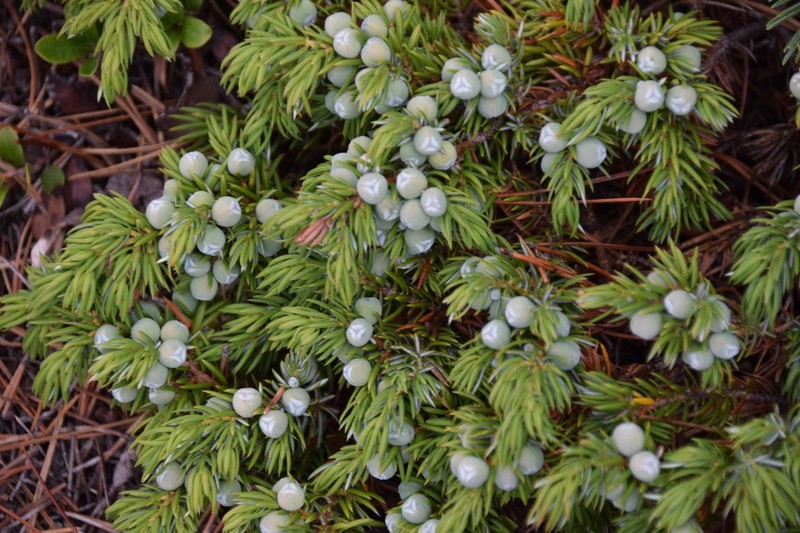
iNaturalist: © viktor_parkhomenko (iNaturalist #114409247)

Taxonomy
- Division:
- Coniferophyta | - Conifers
- Family:
- Cupressaceae
- Genus:
- Juniperus
- Species:
- Juniperus communis
- USDA Symbol:
- JUCO6
Growth Characteristics
- Life Cycle:
- Perennial
- Growth Habit:
- Shrub , Tree
- Height:
- 1000 cm
- Light Requirements:
- Full Sun
- Drought Tolerance:
- High
- Evergreen Shrub:
- Yes
- Landscaping Shrub:
- Yes
Wildlife Benefits
- Butterflies & Moths:
- ★★★★★ Documented Lepidoptera association (GBIF)
- Caterpillars:
- ★★★☆☆ Recorded caterpillar host plant (HOSTS Database)
Keystone Species Ranking
- Caterpillar Keystone:
- ★★★★☆ Butterfly & moth species supported by this genus (NWF)
Host Plant for Caterpillars
Aethes rutilana, Argyresthia annettella, Bucculatrix inusitata, Cecropia moth (Hyalophora cecropia), Coleotechnites juniperella, common eupithecia (Eupithecia miserulata), common juniper leafminer (Coleotechnites gibsonella), contracted spanworm (Thera contractata), Dichomeris marginella, Eupithecia interruptofasciata, Eupithecia niphadophilata, Freyer's Pug (Eupithecia intricata), Gypsy moth (Lymantria dispar), Imperial Moth (Eacles imperialis), Juniper Carpet (Thera juniperata), juniper pug (Eupithecia pusillata), Thera otisi
Garden & Ecology Notes
- Wildlife Value:
- birds, small mammals
- Deer Resistant:
- Yes
- Salt Tolerant:
- Yes
- Fragrant:
- Yes
Soil Requirements
- Soil Type:
- sandy, acidic, nutrient-poor soil
- pH:
- 4.5 - 7.5 (acidic to neutral)
- Drainage:
- excellent drainage required
- Moisture:
- dry to moderate
- Notes:
- Commonly found in rocky or sandy soils.
Propagation & Germination
- Stratification:
- Cold/moist stratification required — 30–90 days
- Scarification:
- Seed coat scarification required before sowing
- Germination Time:
- 30–180 days
- Notes:
- Seeds require cold stratification and scarification; germination can be slow and erratic.
Pre-treatment: Cuttings should be trimmed to a 5- to 6-inch length, with all buds, leaves, and branches removed from the basal 2 to 3 inches. Cuttings should be wounded at the base, sprayed with water, and inserted into a rooting compound. Cuttings should be treated with either 16,000 ppm IBA or a combination of 2,000 ppm NAA and 40,400 ppm ThiramT fungicide. Cuttings should be stored in a moist environment before processing.
Establishment: Cuttings are best collected in early August or early to mid May. Rooting percentages vary depending on the type of cutting and treatment used. Avoid frequent misting as it can cause needle decay.
Source: npn.rngr.net
Where to Buy
Nationwide Seller
- Sheffield's Seed (seeds)