
Creeping Juniper
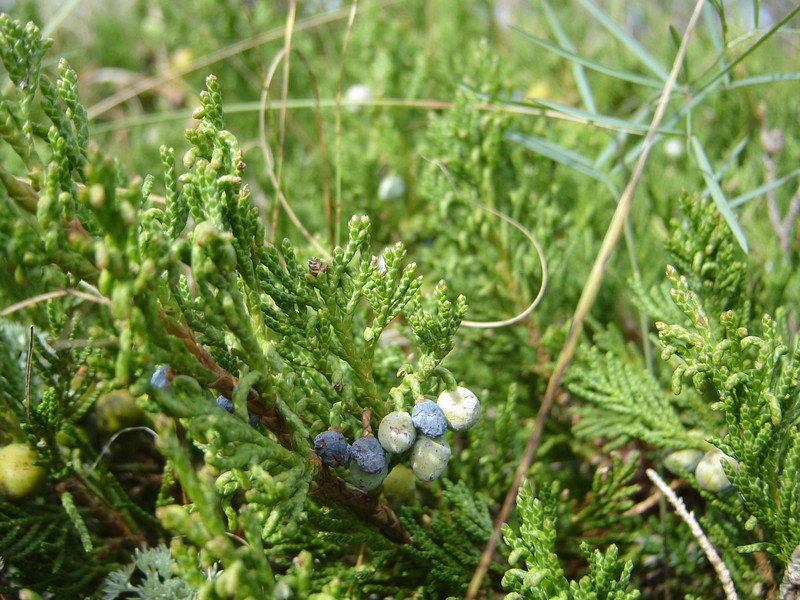
Juniperus horizontalis
Taxonomy
- Division:
- Coniferophyta | - Conifers
- Family:
- Cupressaceae
- Genus:
- Juniperus
- Species:
- Juniperus horizontalis
Growth Characteristics
- Life Cycle:
- Perennial
- Growth Habit:
- Subshrub
- Height:
- 1-2 ft
- Light Requirements:
- Full Sun, Part Shade
- Drought Tolerance:
- High
- Bloom Months:
- apr, may
- Bloom Colors:
- White, Brown
- Ground Cover:
- Yes
- Lawn Substitute:
- Yes
- Evergreen Shrub:
- Yes
Native Range
United States: Alaska, Connecticut, Iowa, Illinois, Massachusetts, Maine, Michigan, Minnesota, Montana, North Dakota, Nebraska, New Hampshire, New York, Rhode Island, South Dakota, Vermont, Wisconsin, Wyoming, Canada: Alberta, British Columbia, Manitoba, New Brunswick, Nova Scotia, Northwest Territories, Nunavut, Ontario, Prince Edward Island, Quebec, Saskatchewan, Yukon
Keystone Species Ranking
- Caterpillar Keystone:
- ★★☆☆☆ Based on number of butterfly and moth species using this genus as host plant (Source: National Wildlife Federation)
Host Plant for Caterpillars
Reported Fauna Sightings
Soil Requirements
- Soil Type:
- sandy, well-drained, nutrient-poor soil
- pH:
- 5.0 - 7.5 (slightly acidic to neutral)
- Drainage:
- excellent drainage required
- Moisture:
- dry to moderate
- Notes:
- native to rocky, sandy areas with low fertility
Germination Information
Pre-treatment: Cuttings are recut after collection, with 1/2 of basal leaves removed. Terminal buds are removed and cuttings are treated with a 2 minute Domain fungicide bath. Cuttings are then treated with 8000 ppm IBA and placed in a mist bed with bottom heat. Cuttings are 13 cm in length, 5 mm in diameter.
Establishment: Cuttings are collected from healthy field plants in early to mid May. Cuttings taken in late summer, fall, and winter have also been successfully rooted to high percentages.
Source: npn.rngr.net