
Western Redcedar
Thuja plicata
- Native to:
- Canada, United States
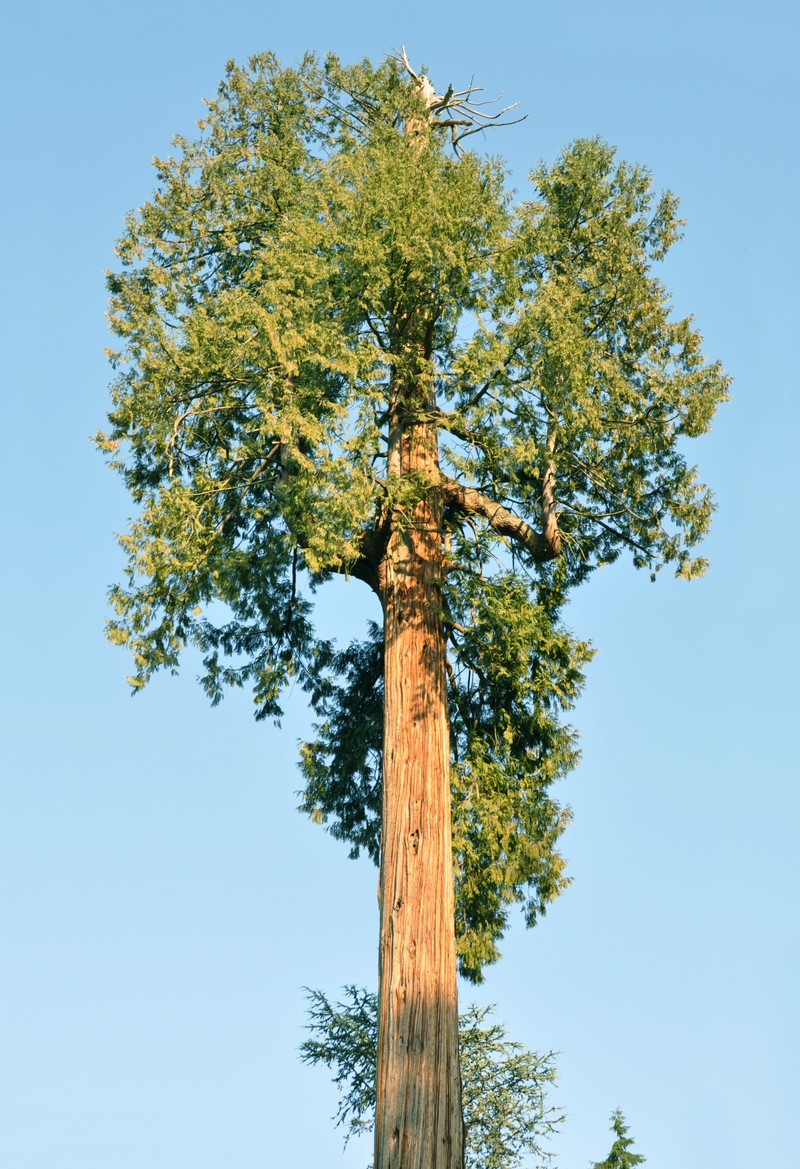
Walter Siegmund (talk)
Taxonomy
- Division:
- Coniferophyta | - Conifers
- Family:
- Cupressaceae
- Genus:
- Thuja
- Species:
- Thuja plicata
- USDA Symbol:
- THPL
Growth Characteristics
- Life Cycle:
- Perennial
- Growth Habit:
- Tree
- Height:
- 6000 cm
- Light Requirements:
- Part Shade,Shade
- Drought Tolerance:
- Low
Wildlife Benefits
- Bees:
- ★☆☆☆☆ Documented bee visitation (GBIF)
- Butterflies & Moths:
- ★★★★★ Documented Lepidoptera association (GBIF)
- Caterpillars:
- ★★★☆☆ Recorded caterpillar host plant (HOSTS Database)
- Hummingbirds:
- ★☆☆☆☆ Documented hummingbird visits (GBIF)
Keystone Species Ranking
- Caterpillar Keystone:
- ★★★★☆ Butterfly & moth species supported by this genus (NWF)
Host Plant for Caterpillars
Argyresthia freyella, Brown angle shades (Phlogophora periculosa), common idia (Idia aemula), Eupithecia annulata, Eupithecia graefii, Eupithecia longipalpata, Eupithecia maestosa, Eupithecia palpata, Eupithecia placidata, Eupithecia sabulosata, Eupithecia unicolor, Eupithecia usurpata, Freyer's Pug (Eupithecia intricata), Gabriola dyari, hibiscus Quaker (Orthosia hibisci), Imitated Melanolophia (Melanolophia imitata), Mournful Thorn (Lambdina fiscellaria), Neoalcis californiaria, orange tortrix moth (Argyrotaenia citrana), Porcelain Gray (Protoboarmia porcelaria), Rusty Tussock Moth (Orgyia antiqua), Semiothisa setonana, Silver-spotted Tiger Moth (Lophocampa argentata), Spiramater lutra, Entomologist's hairstreak (Incisalia eryphon), Nelson's hairstreak (Mitoura nelsoni)
Reported Fauna Sightings
Hummingbirds: Rufous Hummingbird (Selasphorus rufus)
Garden & Ecology Notes
- Wildlife Value:
- birds, small mammals
- Deer Resistant:
- Yes
- Fragrant:
- Yes
- Fire Ecology:
- Fire adapted — tolerates or benefits from fire
- Fire Notes:
- Thuja plicata is fire-adapted with thick bark and ability to resprout after low-severity fire, but is not fire-dependent.
Soil Requirements
- Soil Type:
- rich, well-drained loamy soil
- pH:
- 5.5 - 7.5 (slightly acidic to neutral)
- Drainage:
- tolerates poor drainage
- Moisture:
- consistently moist
- Notes:
- Thrives in deep, fertile soils of river valleys
Propagation & Germination
- Stratification:
- Cold/moist stratification required — 30–60 days
- Germination Time:
- 14–30 days
- Notes:
- Seeds require cold stratification for 30-60 days to break dormancy; sow in moist, well-drained seedbed.
Pre-treatment: Seeds are placed into fine mesh bags and soaked in running tap water for 48 hours. Then, seeds are stratified (cold, moist) for 28 to 65 days at 34 to 36°F. After stratification, seeds are soaked again for 24 hours in running tap water.
Establishment: Seeds are collected when cones are brown, but before scales begin to reflex. Cone bearing branches are cut and fall on a tarp below. Cones are hand pulled off branches and stored in paper bags. Germination was greater in light than dark. The protocols do not provide a specific germination rate.
Source: npn.rngr.net
Where to Buy
Nationwide Seller
- Sheffield's Seed (seeds)