
Pacific Silver Fir
Abies amabilis
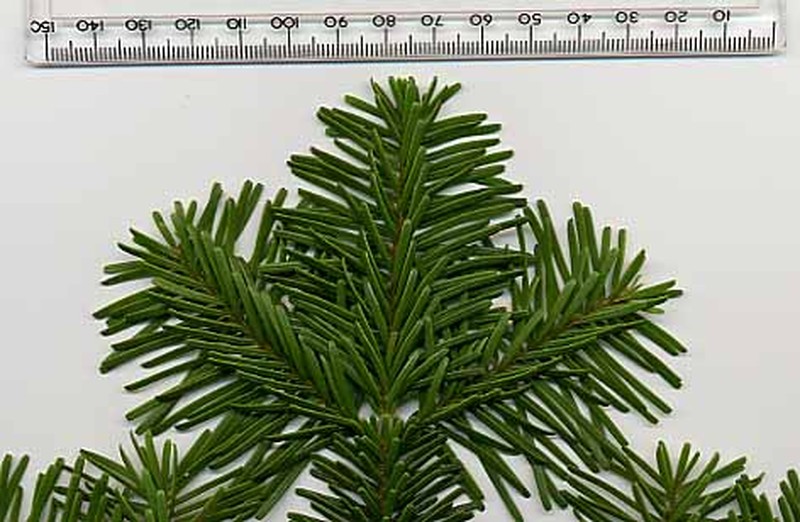
No machine-readable author provided. MPF assumed (based on copyright claims).
Taxonomy
- Division:
- Coniferophyta | - Conifers
- Family:
- Pinaceae
- Genus:
- Abies
- Species:
- Abies amabilis
Growth Characteristics
- Life Cycle:
- Perennial
- Growth Habit:
- Tree
- Height:
- More than 40 ft
- Light Requirements:
- Shade
- Drought Tolerance:
- High
- Bloom Months:
- apr, may
- Bloom Colors:
- Yellow
Native Range
United States: Alaska, California, Oregon, Washington, Canada: British Columbia
Keystone Species Ranking
- Caterpillar Keystone:
- ★☆☆☆☆ Based on number of butterfly and moth species using this genus as host plant (Source: National Wildlife Federation)
Host Plant for Caterpillars
Soil Requirements
- Soil Type:
- moist, well-drained, rich loamy soil
- pH:
- 4.5 - 6.0 (acidic to slightly acidic)
- Drainage:
- good drainage required
- Moisture:
- consistently moist
- Notes:
- prefers cool, humid environments
Germination Information
Pre-treatment: Seeds are placed in fine mesh bags into a 1% hydrogen peroxide (3:1 water/3% hydrogen peroxide) soak for 24 hours, rinsed, and placed in water for an additional 24 hours. The bags are then placed in sealed containers in refrigeration at 1 to 3 °C for 90 days. Alternatively, seeds can be placed in cold moist stratification for 28 days.
Establishment: Abies amabilis is native to the Pacific Northwest, ranging from northern California to Alaska and Idaho. It grows at elevations of 300 to 2,100 m on coastal slopes of the Cascades. Germination is somewhat slow and uneven, and may take up to 3 to 4 weeks to be complete. Germination was found to be greater in dark than light.
Source: npn.rngr.net