
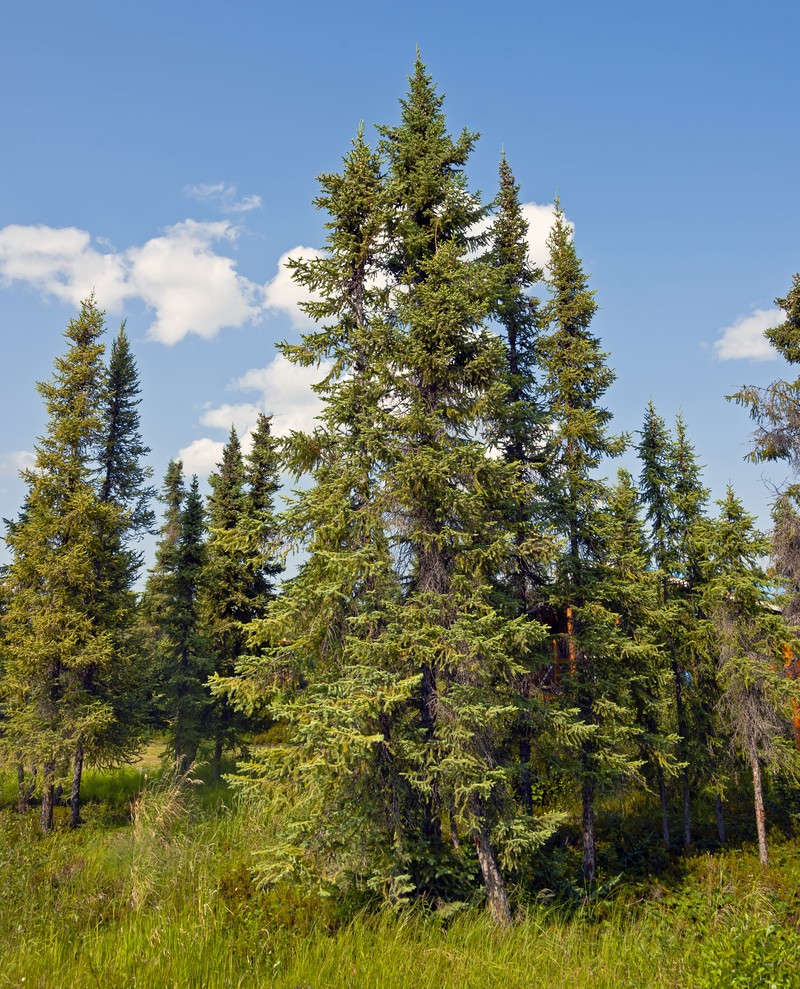
Black Spruce
Picea mariana
Taxonomy
- Division:
- Coniferophyta | - Conifers
- Family:
- Pinaceae
- Genus:
- Picea
- Species:
- Picea mariana
Growth Characteristics
- Life Cycle:
- Perennial
- Growth Habit:
- Tree
- Height:
- More than 40 ft
- Light Requirements:
- Full Sun, Part Shade, Shade
- Drought Tolerance:
- High
- Bloom Months:
- apr, may
- Bloom Colors:
- Red, Yellow
Native Range
United States: Alaska, Connecticut, Illinois, Massachusetts, Maine, Michigan, Minnesota, New Hampshire, New Jersey, New York, Pennsylvania, Rhode Island, Vermont, Wisconsin, Canada: Alberta, British Columbia, Manitoba, New Brunswick, Nova Scotia, Northwest Territories, Nunavut, Ontario, Prince Edward Island, Quebec, Saskatchewan, Yukon
Keystone Species Ranking
- Caterpillar Keystone:
- ★☆☆☆☆ Based on number of butterfly and moth species using this genus as host plant (Source: National Wildlife Federation)
Host Plant for Caterpillars
Alberta leafroller (Archips alberta), Argyresthia mariana, Black zigzag (Panthea acronyctoides), black-dashed hydriomena moth (Hydriomena divisaria), Coleotechnites ducharmei, Columbia silk moth (Hyalophora columbia), common idia (Idia aemula), Comstock's sallow (Feralia comstocki), Dawn Rustic (Xestia dilucida), Eastern blackheaded budworm (Acleris variana), Eastern Panthea (Panthea furcilla), Eastern spruce budworm (Choristoneura fumiferana), Endothenia albolineana, Eupithecia annulata, Eupithecia casloata, Eupithecia fletcherata, Eupithecia palpata, European spruce needleminer (Epinotia nanana), False hemlock looper (Nepytia canosaria), forgotten fan-foot (Zanclognatha protumnusalis), Gerdana caritella, gray spruce looper (Caripeta divisata), Grey pug (Eupithecia subfuscata), Gypsy moth (Lymantria dispar), hibiscus Quaker (Orthosia hibisci), hooked silver Y (Syngrapha alias), Jocose Sallow (Feralia jocosa), Larch Pug (Eupithecia lariciata), Manto Tussock Moth (Dasychira manto), marsh moth (Dolichomia thymetusalis), Northern Pine Tussock Moth (Dasychira plagiata), obscure leafroller (Argyrotaenia occultana), packard's archips moth (Archips packardiana), Pine Hypagyrtis Moth (Hypagyrtis piniata), Porcelain Gray (Protoboarmia porcelaria), powdered eufidonia (Eufidonia notataria), Ratzeburg's tortricid moth (Zeiraphera ratzeburgiana), Red-banded leafroller (Argyrotaenia velutinana), Semiothisa granitata, spruce bud moth (Zeiraphera canadensis), spruce coneworm (Dioryctria reniculella), spruce needleminer (Coleotechnites piceaella), Syngrapha rectangula, Syngrapha selecta, Variable Climbing Cutworm (Xestia elimata), variegated midget (Elaphria versicolor), Xestia perquiritata, Xestia praevia, Zanclognatha minoralis, Zeiraphera improbana, Zeiraphera unfortunana, 🛑Bog Elfin (Incisalia lanoraieensis)
Reported Fauna Sightings
Butterflies:azure (Celastrina Tutt), Brown Elfin (Callophrys augustinus), Brown Elfin (Callophrys augustinus), Canadian Tiger Swallowtail (Pterourus canadensis), Clouded Yellows (Colias Fabricius), Frigga Fritillary (Boloria frigga), Frigga Fritillary (Boloria frigga), Northern Azure (Celastrina lucia), Northern Azure (Celastrina lucia)
Soil Requirements
- Soil Type:
- peaty, acidic, nutrient-poor soil
- pH:
- 4.0 - 5.5 (strongly acidic to acidic)
- Drainage:
- tolerates poor drainage
- Moisture:
- consistently moist
- Notes:
- Common in bogs and wetlands
Germination Information
Pre-treatment: Seeds are placed in cold moist stratification for 24 days.
Establishment: P. mariana is found in muskegs, bottomlands, bogs, and dry peatlands; from Alaska south across Canada to the Atlantic ocean. It is found south in the eastern United States from Maine to Pennsylvannia and south through the midwestern states to Minnesota, Michigan and Wisconsin.
Source: npn.rngr.net