
Bristlecone Pine
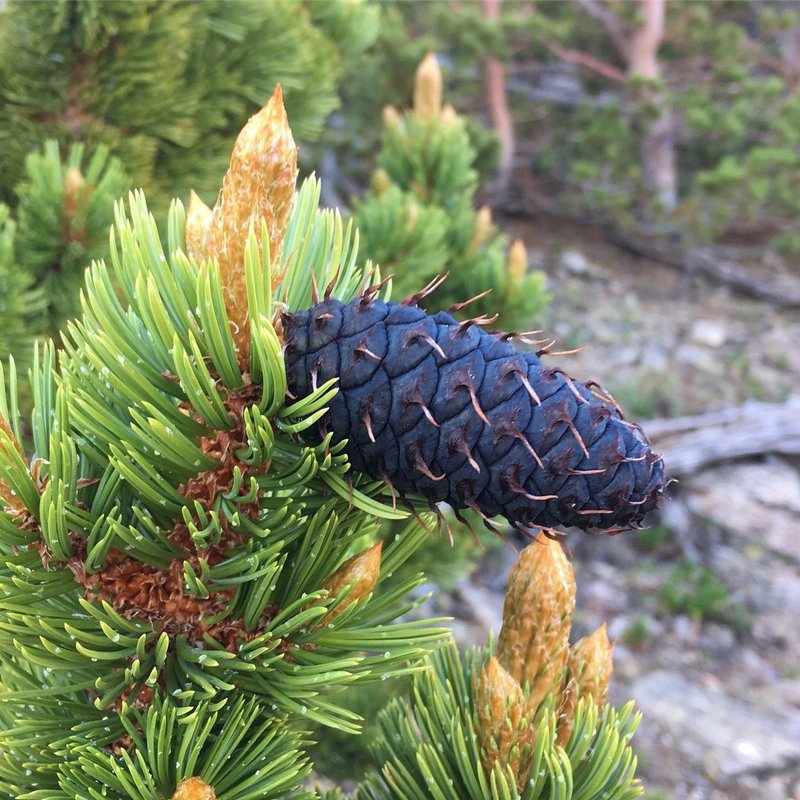
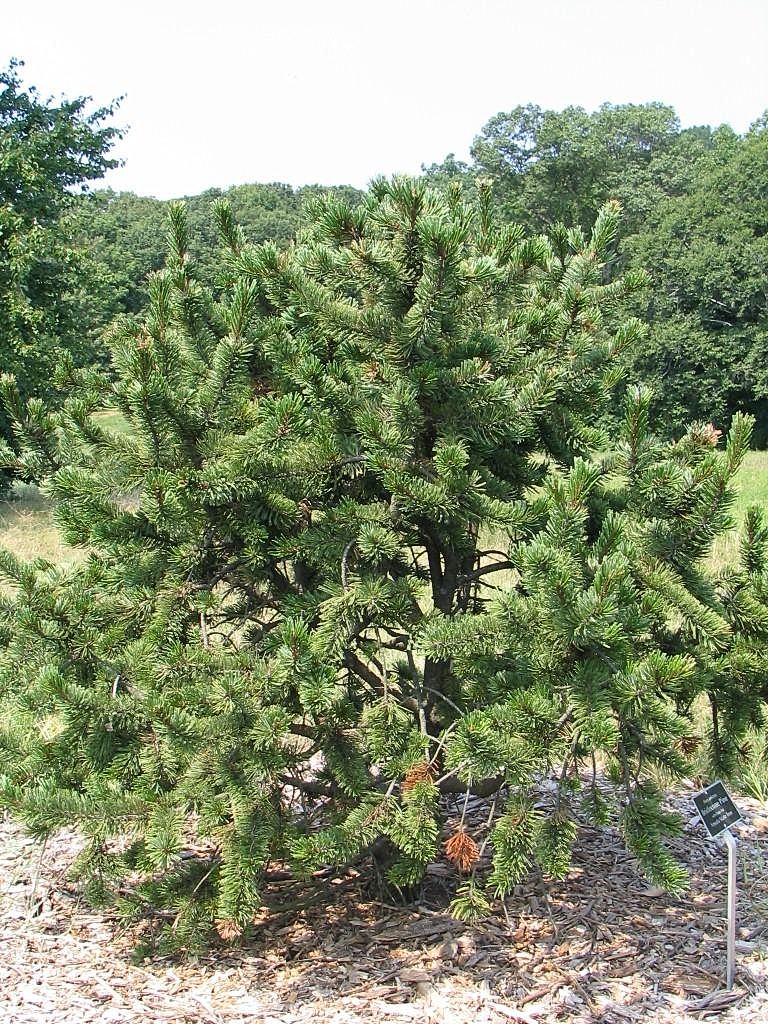
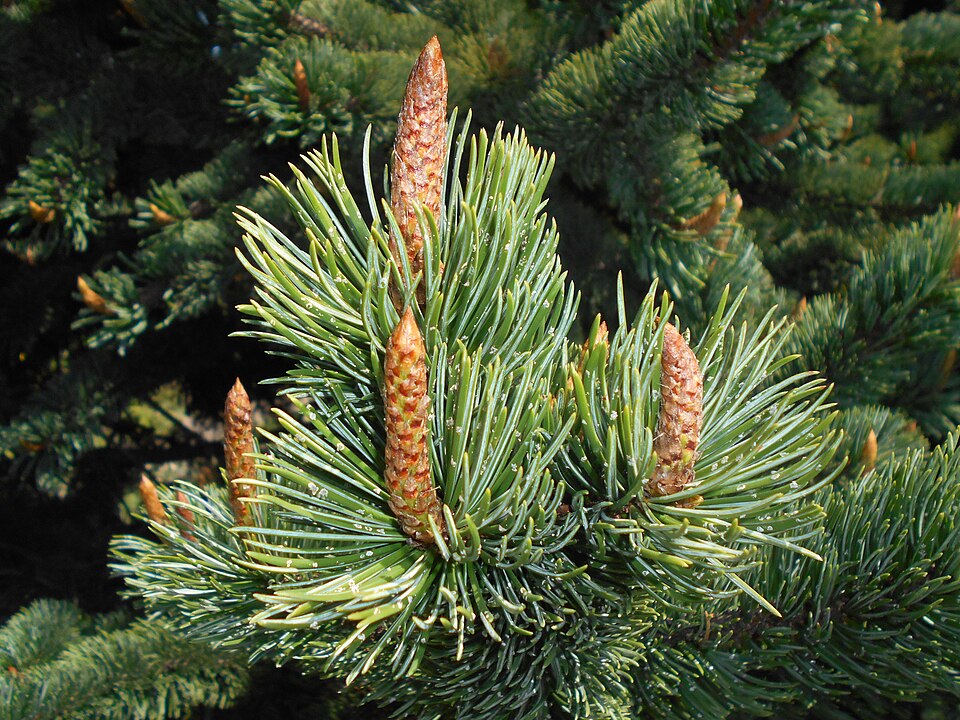
Pinus aristata
- Native to:
- United States
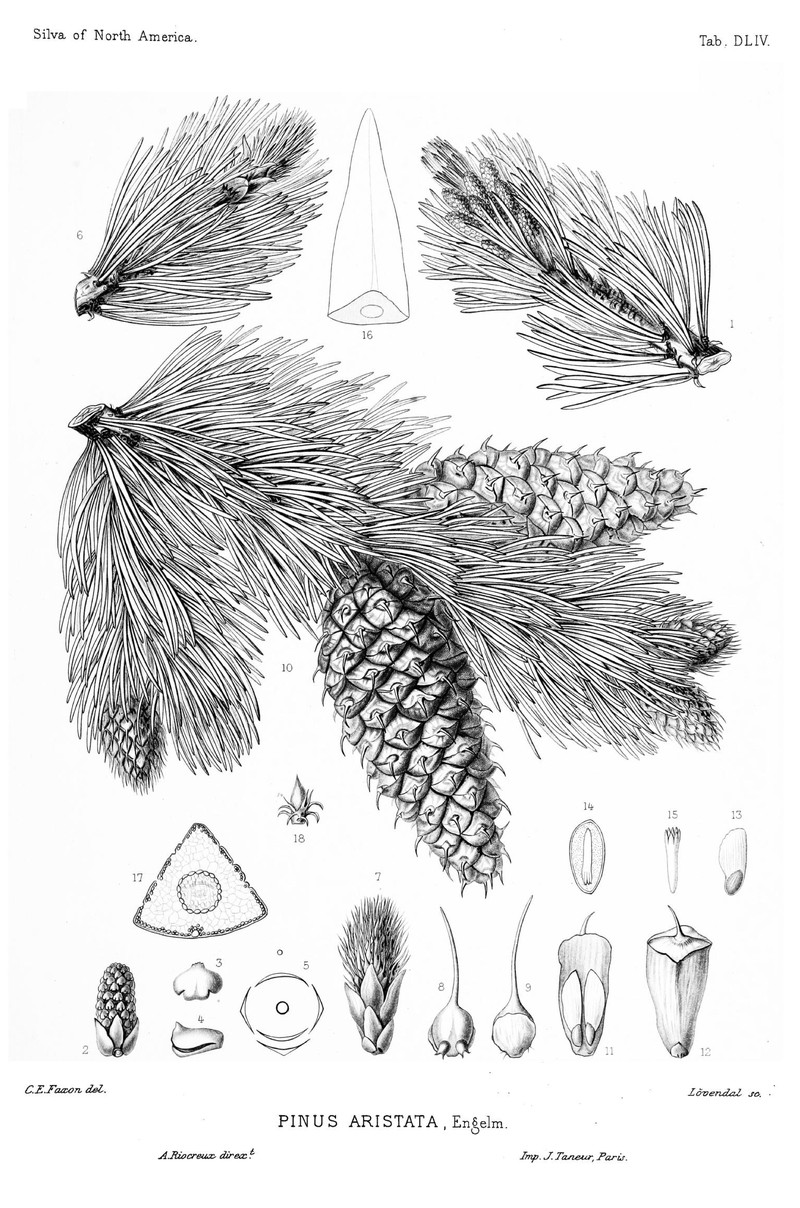
Charles Edward Faxon (January 21, 1846 – February 6, 1918), Illustrator
Taxonomy
- Division:
- Coniferophyta | - Conifers
- Family:
- Pinaceae
- Genus:
- Pinus
- Species:
- Pinus aristata
- USDA Symbol:
- PIAR
Growth Characteristics
- Life Cycle:
- Perennial
- Growth Habit:
- Tree
- Height:
- 1500 cm
- Light Requirements:
- Full Sun
- Drought Tolerance:
- High
Wildlife Benefits
- Bees:
- ★★☆☆☆ Documented bee visitation (GBIF)
- Butterflies & Moths:
- ★★★☆☆ Documented Lepidoptera association (GBIF)
- Caterpillars:
- ★☆☆☆☆ Recorded caterpillar host plant (HOSTS Database)
Keystone Species Ranking
- Caterpillar Keystone:
- ★★★★★ Butterfly & moth species supported by this genus (NWF)
Host Plant for Caterpillars
Eucosma bobana
Reported Fauna Sightings
Bees: Anthophora urbana
Garden & Ecology Notes
- Wildlife Value:
- birds, small mammals
- Fragrant:
- Yes
Soil Requirements
- Soil Type:
- rocky, sandy, nutrient-poor soil
- pH:
- 5.5 - 7.0 (slightly acidic to neutral)
- Drainage:
- excellent drainage required
- Moisture:
- dry to moderate
- Notes:
- native to high elevations with harsh conditions
Propagation & Germination
- Stratification:
- Cold/moist stratification required — 30–60 days
- Germination Time:
- 30–90 days
- Notes:
- Seeds benefit from cold stratification for 30-60 days to break dormancy.
Pre-treatment: Seeds are removed from storage and placed in water at room temperature for 12 - 18 hours. The moistened seed is then placed into self-sealing, polyethylene baggies and stratified for 28 days at temperatures ranging from 2 to 4°C.
Establishment: The protocols do not conflict. The seeds are collected from entire cones harvested by hand from trees when they begin to turn purple and brown along cone scale edges, typically in September through early October. The plant is found in high elevation forests of Arizona, New Mexico, and Colorado at 2500 to 3400 m elevation.
Source: npn.rngr.net
Where to Buy
Nationwide Seller
- Sheffield's Seed (seeds)