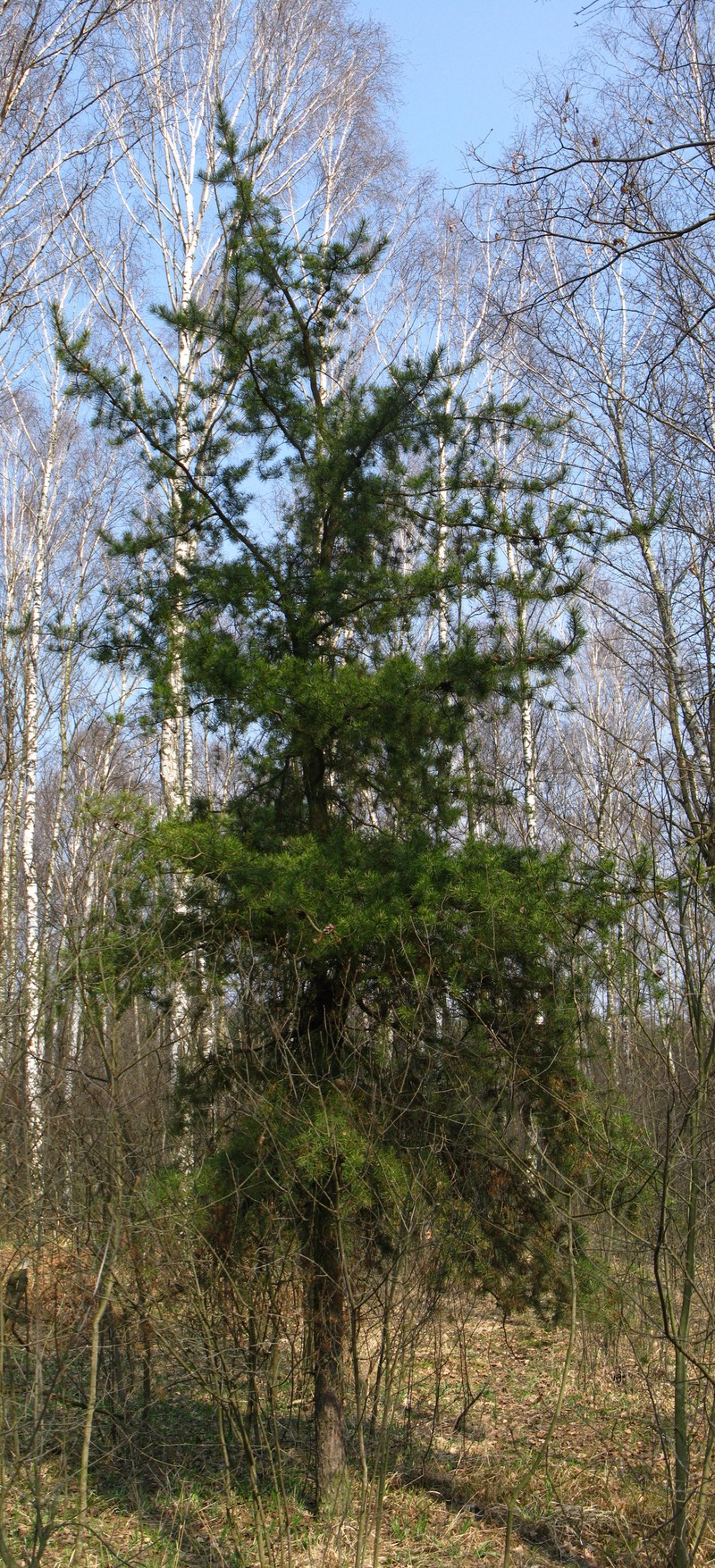
Taxonomy
- Division:
- Coniferophyta | - Conifers
- Family:
- Pinaceae
- Genus:
- Pinus
- Species:
- Pinus banksiana
Growth Characteristics
- Life Cycle:
- Perennial
- Growth Habit:
- Tree
- Height:
- More than 40 ft
- Light Requirements:
- Full Sun
- Drought Tolerance:
- High
- Bloom Months:
- apr, may
- Bloom Colors:
- Red, Yellow
Native Range
United States: Illinois, Indiana, Massachusetts, Maine, Michigan, Minnesota, Missouri, North Dakota, New Hampshire, New York, Ohio, Pennsylvania, Rhode Island, Vermont, Wisconsin, West Virginia, Canada: Alberta, British Columbia, Manitoba, New Brunswick, Nova Scotia, Northwest Territories, Ontario, Prince Edward Island, Quebec, Saskatchewan
Keystone Species Ranking
- Caterpillar Keystone:
- ★☆☆☆☆
Based on number of butterfly and moth species using this genus as host plant (Source: National Wildlife Federation)
Host Plant for Caterpillars
Adana pine tip moth (Rhyacionia adana), Allen's Aphelia (Aphelia alleniana), Anacamptodes vellivolata, Banks' wave moth (Semiothisa banksianae), Black zigzag (Panthea acronyctoides), Coleotechnites canusella, Coleotechnites coniferella, Cydia toreuta, Dioryctria banksiella, Eastern Panthea (Panthea furcilla), eastern pine shoot borer (Eucosma gloriola), Eastern spruce budworm (Choristoneura fumiferana), Eupithecia annulata, Eupithecia palpata, False hemlock looper (Nepytia canosaria), false sphinx (Lapara bombycoides), forgotten fan-foot (Zanclognatha protumnusalis), Grants Pine Tip Moth (Rhyacionia granti), Gypsy moth (Lymantria dispar), hibiscus Quaker (Orthosia hibisci), Imperial Moth (Eacles imperialis), jack pine budworm (Choristoneura pinus), Jack pine tube moth (Argyrotaenia tabulana), Jocose Sallow (Feralia jocosa), Manto Tussock Moth (Dasychira manto), marsh moth (Dolichomia thymetusalis), mottled gray carpet moth (Cladara limitaria), Northern Pine Tussock Moth (Dasychira plagiata), oblique zale (Zale obliqua), Obliquebanded leafroller (Choristoneura rosaceana), one-lined sparganothis moth (Sparganothis unifasciana), Petrova albicapitana, Petrova pallipennis, pine false looper (Zale duplicata), Pine Hypagyrtis Moth (Hypagyrtis piniata), pine needle sheathminer (Zelleria haimbachi), pine needleminer (Exoteleia pinifoliella), Pine tip moth (Rhyacionia busckana), Pine Tussock Moth (Dasychira pinicola), Pitch mass borer (Synanthedon pini), ponderosa twig moth (Dioryctria ponderosae), Porcelain Gray (Protoboarmia porcelaria), powdered eufidonia (Eufidonia notataria), Red pinecone borer (Eucosma monitorana), Scarlet-winged Lichen Moth (Hypoprepia miniata), Scrub Euchlaena (Euchlaena madusaria), Semiothisa bicolorata, Semiothisa distribuaria, Semiothisa minorata, Semiothisa transitaria, Smeared Dagger Moth (Acronicta oblinita), Sonia pitch moth (Rhyacionia sonia), sparganothis fruitworm moth (Sparganothis sulfureana), Syngrapha abstrusa, Syngrapha epigaea, three-streaked sparganothis moth (Sparganothis tristriata), Variable Climbing Cutworm (Xestia elimata), variegated midget (Elaphria versicolor), western pine tip moth (Rhyacionia bushnelli), western pineshoot borer (Eucosma sonomana), White-lined leafroller (Amorbia humerosana), white-marked tussock moth (Dasychira leucophaea), Zale helata, Zale metatoides, Zale submediana, Eastern Tailed-Blue (Incisalia niphon), Entomologist's hairstreak (Incisalia eryphon)
Reported Fauna Sightings
Butterflies:Pink-edged Sulphur (Colias interior), Pink-edged Sulphur (Colias interior)
Soil Requirements
- Soil Type:
- sandy, acidic, nutrient-poor soil
- pH:
- 4.0 - 6.5 (acidic to slightly acidic)
- Drainage:
- excellent drainage required
- Moisture:
- dry to moderate
- Notes:
- Commonly found in sandy or rocky soils in boreal forests.
Germination Information
Pre-treatment: Seeds are placed in cold moist stratification for 0 to 7 days or soaked in water for 24 hours. Before planting, seeds can be dried and treated with Thiram fungicide.
Establishment: Seeds can be purchased commercially or from local people who collect from established stands near the nursery. Germination occurs equally well in light and dark. Ovulate cones mature in two years, and are tawny yellow or brown, ovoid to oblong, 3.5 to 5 cm (1 to 2 in) long and are borne singly or in groups. Each cone contains several, black or brown, winged seeds.
Source: npn.rngr.net