
Western White Pine
Pinus monticola
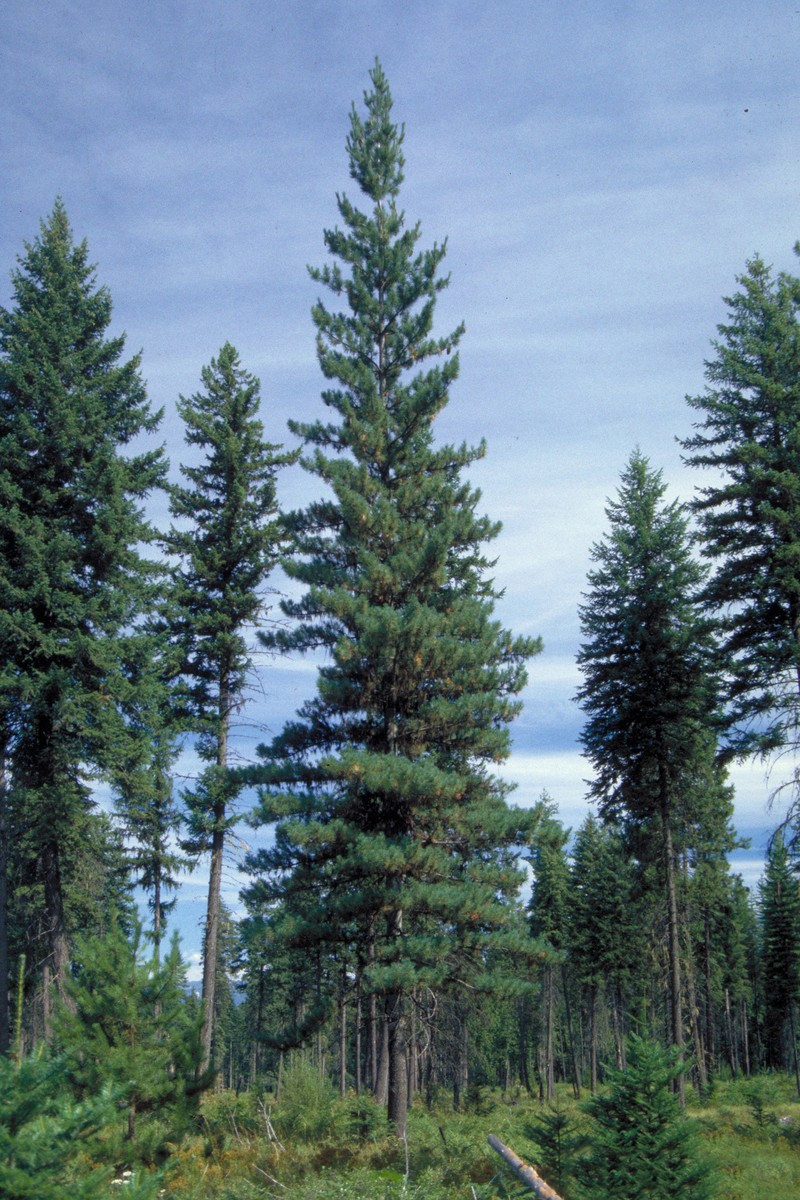
Chris Schnepf, University of Idaho, USA
Taxonomy
- Division:
- Coniferophyta | - Conifers
- Family:
- Pinaceae
- Genus:
- Pinus
- Species:
- Pinus monticola
Growth Characteristics
- Life Cycle:
- Perennial
- Growth Habit:
- Tree
- Height:
- More than 40 ft
- Light Requirements:
- Full Sun
- Drought Tolerance:
- High
- Bloom Months:
- apr
- Bloom Colors:
- Yellow
Native Range
United States: California, Idaho, Montana, Nevada, Oregon, Utah, Washington, Canada: Alberta, British Columbia
Keystone Species Ranking
- Caterpillar Keystone:
- ★☆☆☆☆ Based on number of butterfly and moth species using this genus as host plant (Source: National Wildlife Federation)
Host Plant for Caterpillars
Soil Requirements
- Soil Type:
- well-drained, sandy or loamy soil
- pH:
- 4.5 - 6.5 (acidic to slightly acidic)
- Drainage:
- excellent drainage required
- Moisture:
- dry to moderate
- Notes:
- prefers soils with good aeration and low fertility
Germination Information
Pre-treatment: Seeds are placed into a water/bleach solution for sterilization, followed by a 48 hour running water rinse. Seeds are then placed in cold, moist stratification for 120 days at 1 to 3 C. A gibberellic acid treatment may enhance germination.
Establishment: Cones are collected in August-September or early October, before they open or when they turn brown and scales begin to reflex. Cones should be dried quickly after harvest to prevent mold development. Germination is greater in dark than light. The low germination percentage may have been improved if a longer stratification period was used.
Source: npn.rngr.net