
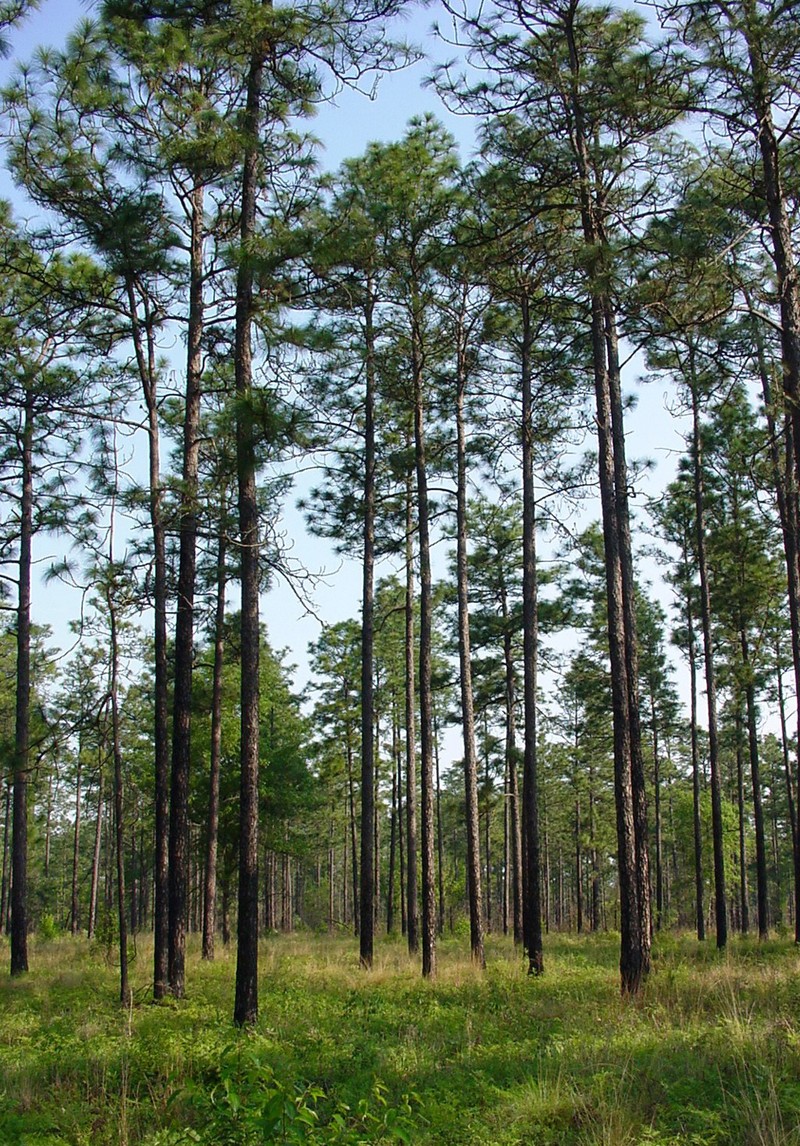
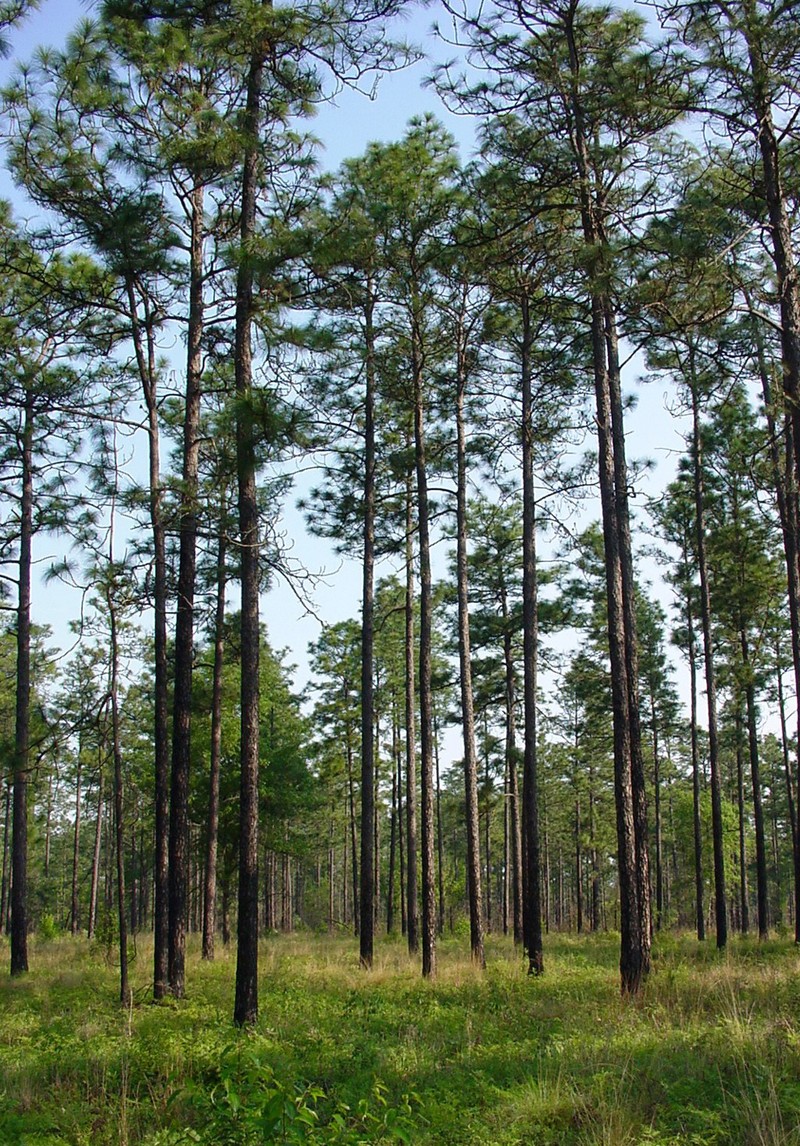
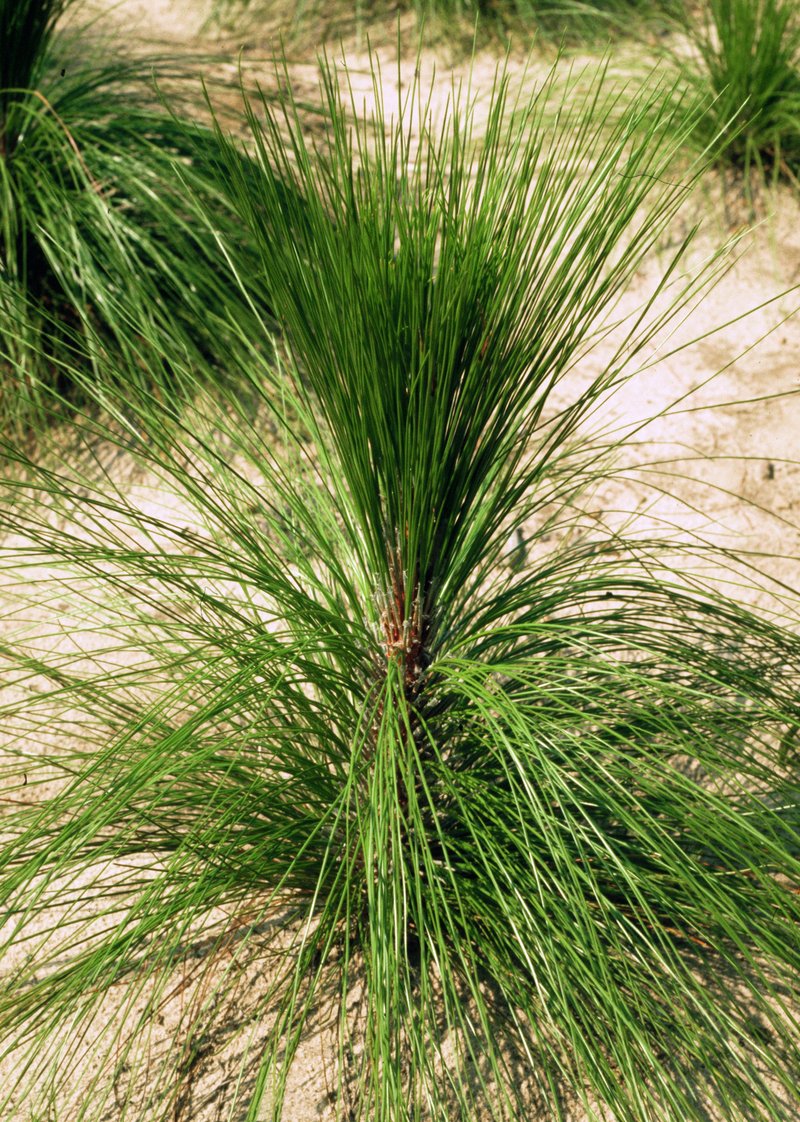
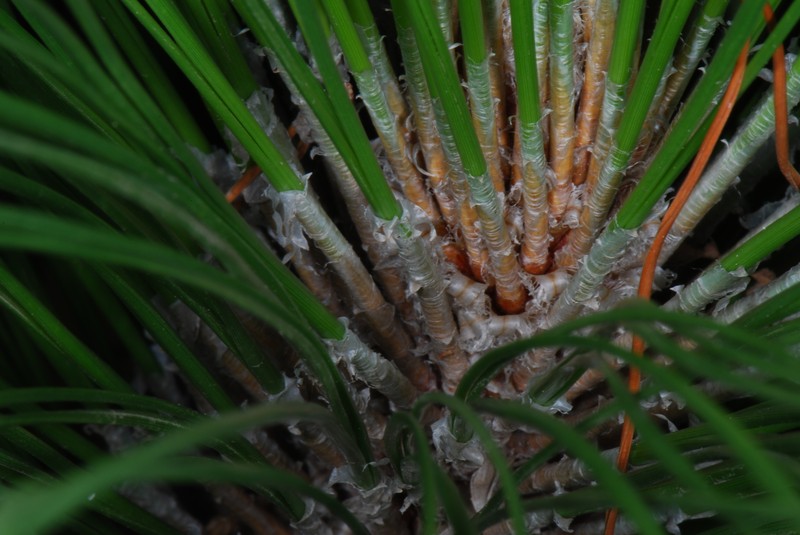
Longleaf Pine
Pinus palustris
- Native to:
- United States, Virgin Islands
Chuck Bargeron, University of Georgia
Taxonomy
- Division:
- Coniferophyta | - Conifers
- Family:
- Pinaceae
- Genus:
- Pinus
- Species:
- Pinus palustris
- USDA Symbol:
- PIPA2
Growth Characteristics
- Life Cycle:
- Perennial
- Growth Habit:
- Tree
- Height:
- 3500 cm
- Light Requirements:
- Full Sun
- Drought Tolerance:
- High
Wildlife Benefits
- Bees:
- ★☆☆☆☆ Documented bee visitation (GBIF)
- Butterflies & Moths:
- ★★★★★ Documented Lepidoptera association (GBIF)
- Caterpillars:
- ★★☆☆☆ Recorded caterpillar host plant (HOSTS Database)
- Hummingbirds:
- ★☆☆☆☆ Documented hummingbird visits (GBIF)
Keystone Species Ranking
- Caterpillar Keystone:
- ★★★★★ Butterfly & moth species supported by this genus (NWF)
Host Plant for Caterpillars
Reported Fauna Sightings
Garden & Ecology Notes
- Wildlife Value:
- birds, small mammals
- Fire Ecology:
- Requires fire for germination
- Fire Notes:
- Requires periodic fire for regeneration; thick bark protects mature trees, and seeds germinate best on mineral soil exposed by fire.
Soil Requirements
- Soil Type:
- sandy, acidic, nutrient-poor soil
- pH:
- 4.5 - 6.5 (acidic to slightly acidic)
- Drainage:
- excellent drainage required
- Moisture:
- dry to moderate
- Notes:
- Thrives in fire-prone ecosystems
Propagation & Germination
- Stratification:
- Cold/moist stratification required — 30–60 days
- Germination Time:
- 14–28 days
- Notes:
- Seeds benefit from cold stratification for 30-60 days to break dormancy; sow in well-drained sandy soil.
Pre-treatment: Cold stratify seeds for 30-60 days. Treat seeds with Thiram or soak in 30% hydrogen peroxide for 1 hour or a 10 minute bath in benomyl solution (5g/L). Use seeds with at least 80% viability.
Establishment: Seeds are typically collected from Longleaf pine seed orchards in Texas, Louisana, Mississippi. Cones are collected in September and October, with seeds dispersing naturally from October to November. Obtaining good quality seeds is difficult. The natural range of Pinus palustris includes most of the Atlantic and Gulf Coast Plains from southeastern Virginia to eastern Texas and south through the the northern two thirds of pensisular Florida. It also grows in the Piedmont Ridge and Valley, and Mountain Provinces of Alabama and northwest Georgia.
Source: npn.rngr.net
Where to Buy
Nationwide Seller
- Sheffield's Seed (seeds)