
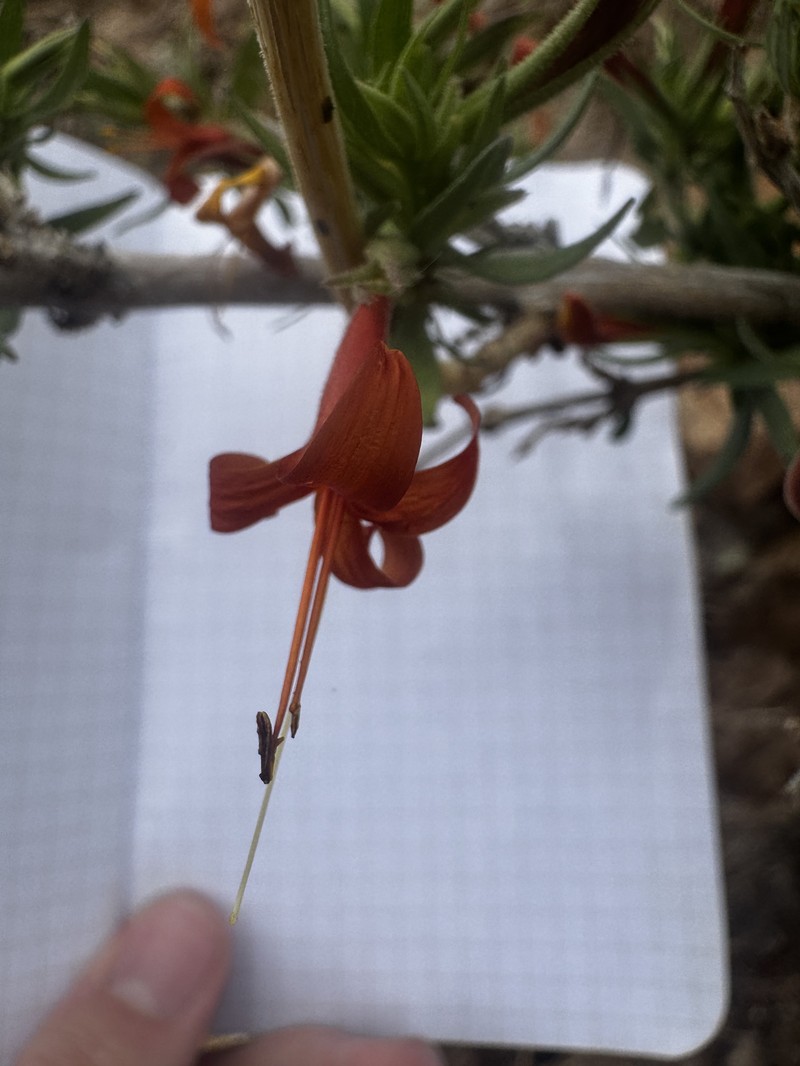
Thurber's Desert Honeysuckle
Anisacanthus thurberi
- Native to:
- Mexico, United States
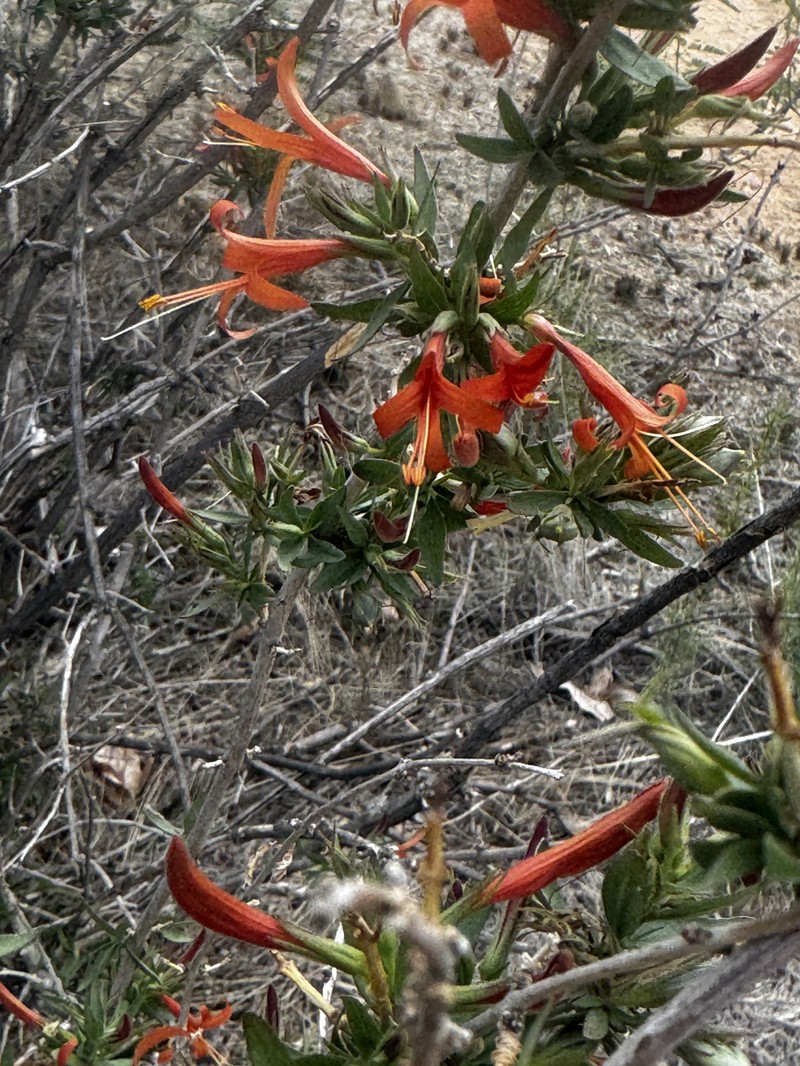
Wikimedia: Eneocho
Taxonomy
- Division:
- Magnoliophyta | - Flowering plants
- Family:
- Acanthaceae
- Genus:
- Anisacanthus
- Species:
- Anisacanthus thurberi
- USDA Symbol:
- ANTH2
Growth Characteristics
- Life Cycle:
- Perennial
- Growth Habit:
- Shrub
- Height:
- 150 cm
- Light Requirements:
- Full Sun
- Drought Tolerance:
- High
- Bloom Months:
- apr,may,jun,jul,aug,sep,oct
- Bloom Colors:
- orange, red
- Landscaping Shrub:
- Yes
Wildlife Benefits
- Butterflies & Moths:
- ★★★☆☆ Documented Lepidoptera association (GBIF)
Garden & Ecology Notes
- Wildlife Value:
- hummingbirds, butterflies
- Deer Resistant:
- Yes
Soil Requirements
- Soil Type:
- rocky, well-drained, nutrient-poor soil
- pH:
- 6.0 - 7.5 (slightly acidic to neutral)
- Drainage:
- excellent drainage required
- Moisture:
- dry to moderate
- Notes:
- native to arid regions, prefers rocky slopes
Propagation & Germination
Pre-treatment: None required
Establishment: Seed is wild-collected from adjacent public and private lands using protocols that ensure population integrity and genetic diversity. The collection window is determined by phenological monitoring and seed is collected at the time of natural dispersal. This seed was collected between the end of June to end of July. Softwood and semi-hard cuttings are taken from nursery stock or wild material. Wild cuttings are taken during the active vegetative growth season during the SW monsoons (July-Sept), and transported to the nursery between wet newspaper, sealed in plastic bag, in a cooler. Cuttings are processed as soon as possible.
Source: npn.rngr.net