
Spiny Hopsage
Grayia spinosa
- Native to:
- United States
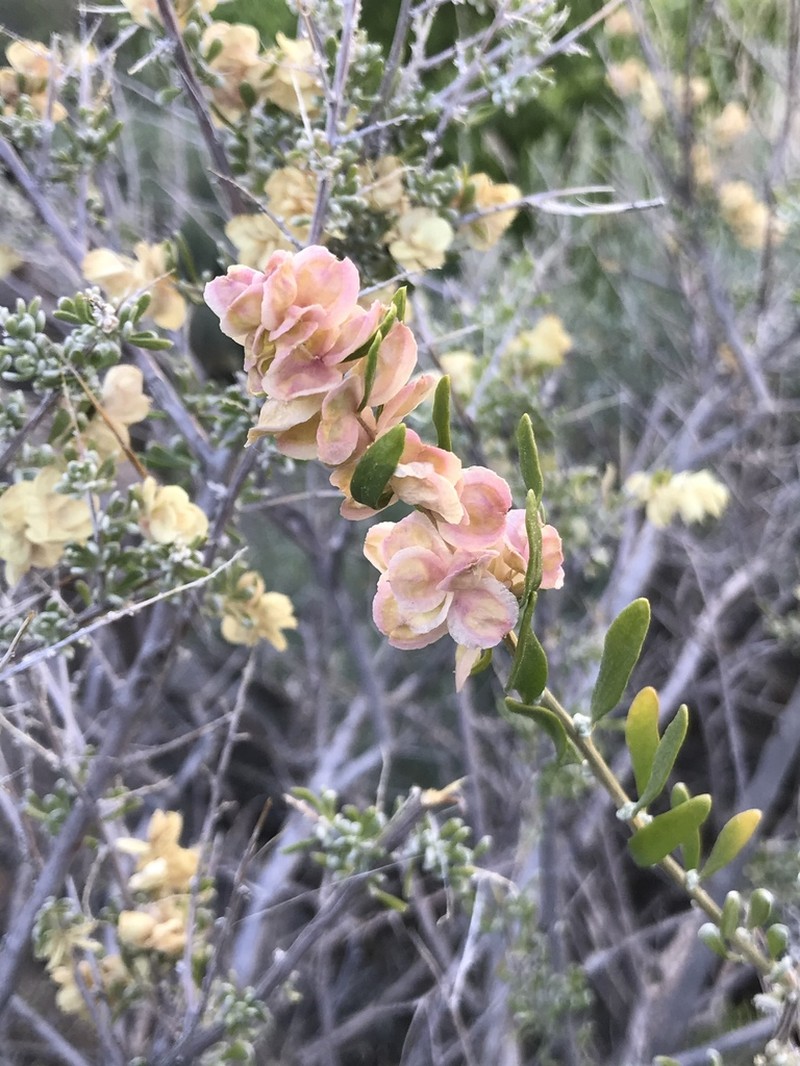
iNaturalist: © chrisophylla (iNaturalist #82358769)
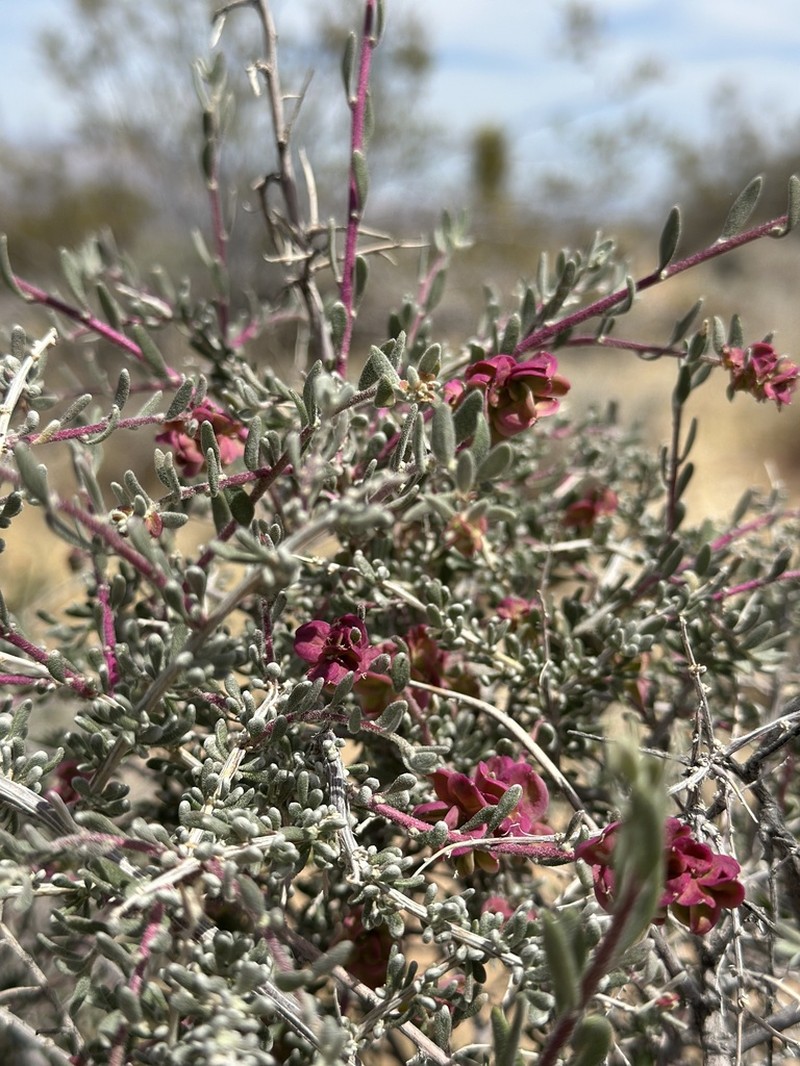
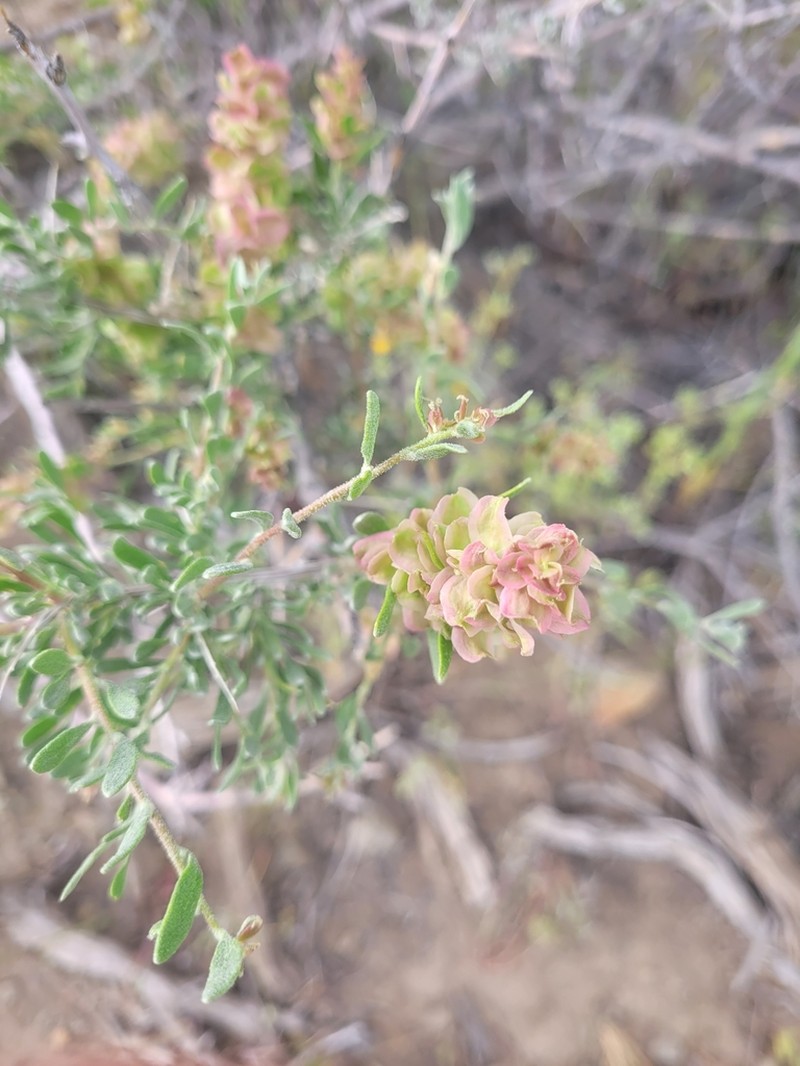
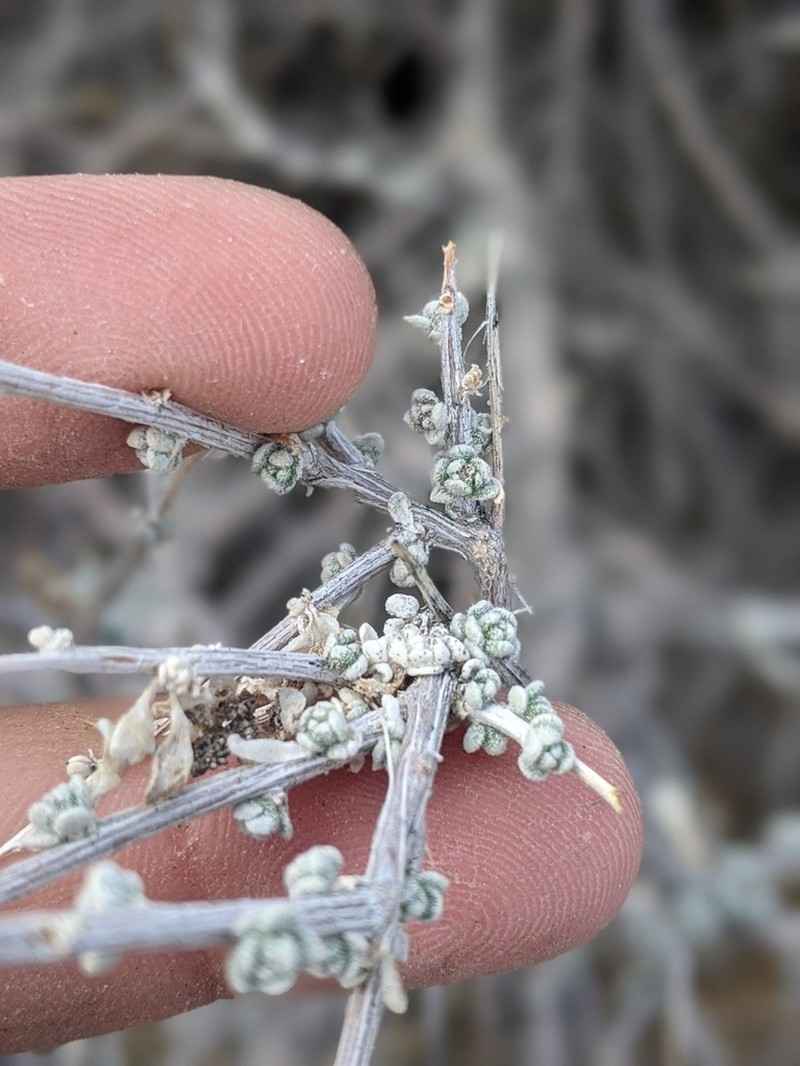
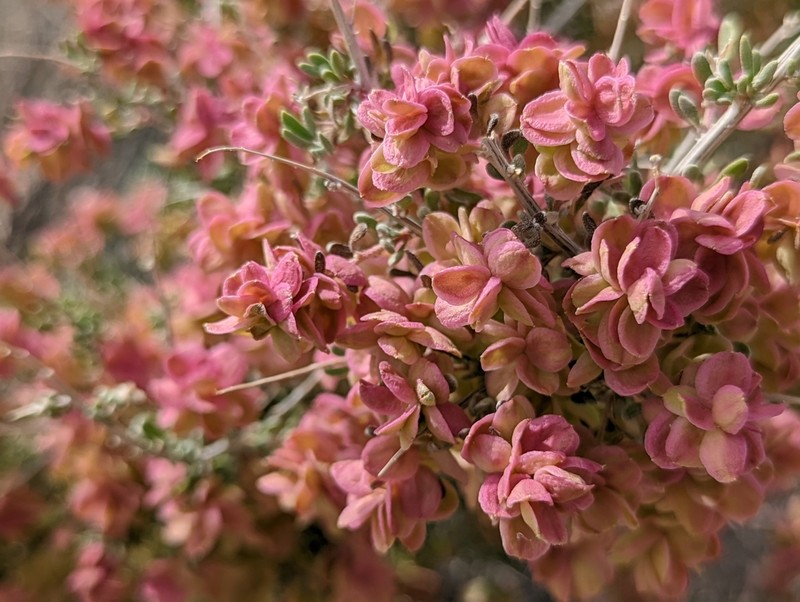
Taxonomy
- Division:
- Magnoliophyta | - Flowering plants
- Family:
- Amaranthaceae
- Genus:
- Grayia
- Species:
- Grayia spinosa
- USDA Symbol:
- GRSP
Growth Characteristics
- Life Cycle:
- Perennial
- Growth Habit:
- Shrub , Subshrub
- Height:
- 200 cm
- Light Requirements:
- Part Shade
- Drought Tolerance:
- High
- Bloom Months:
- mar,apr,may
- Bloom Colors:
- greenish, red
- Landscaping Shrub:
- Yes
Wildlife Benefits
- Butterflies & Moths:
- ★★★★☆ Documented Lepidoptera association (GBIF)
- Caterpillars:
- ★☆☆☆☆ Recorded caterpillar host plant (HOSTS Database)
Host Plant for Caterpillars
Perizoma custodiata
Garden & Ecology Notes
- Wildlife Value:
- birds, small mammals
- Deer Resistant:
- Yes
- Salt Tolerant:
- Yes
- Fire Ecology:
- Fire adapted — tolerates or benefits from fire
- Fire Notes:
- Resprouts from root crown after fire; adapted to fire-prone sagebrush steppe.
Soil Requirements
- Soil Type:
- sandy, well-drained, nutrient-poor soil
- pH:
- 6.0 - 8.0 (neutral to slightly alkaline)
- Drainage:
- excellent drainage required
- Moisture:
- dry to moderate
- Notes:
- Common in arid desert regions; tolerates saline soils.
Propagation & Germination
- Stratification:
- Cold/moist stratification required — 30–60 days
- Germination Time:
- 14–30 days
- Notes:
- Seeds benefit from cold stratification for 30-60 days to break dormancy.
Pre-treatment: Seeds are placed in cold moist stratification. Seeds are directly sown into open flats using a growing medium of 2 parts sand, 1 part mulch and 2 parts perlite.
Establishment: Grayia spinosa is found in the Mojave and Colorado deserts from southern California to Colorado and eastern Wyoming. Seeds are hand collected in June.
Source: npn.rngr.net
ORGHPS Germination Guide: Sow @ 20C. Germinates within 3 months.
Where to Buy
Nationwide Seller
- Native Seed Group (seeds)