
Winterfat
Krascheninnikovia lanata
- Native to:
- Canada, Mexico, United States
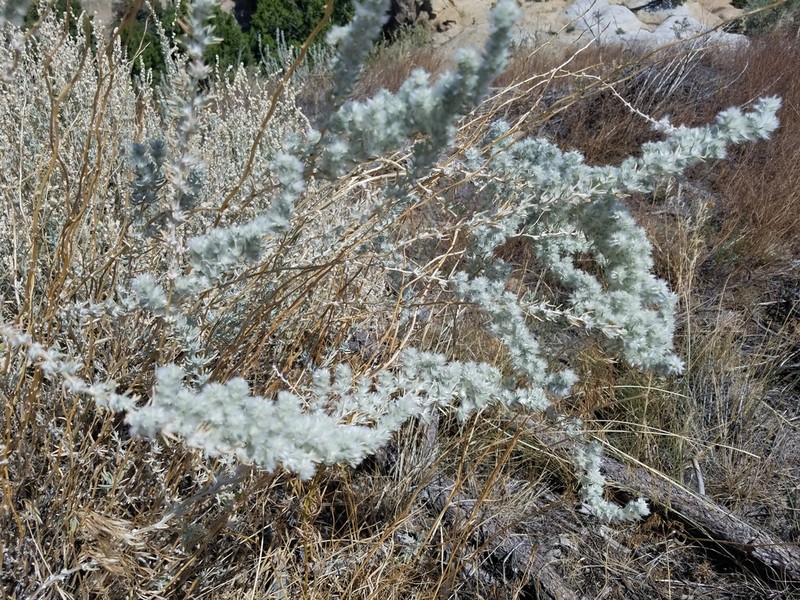
iNaturalist: © firelilysackett (iNaturalist #58668626)
Taxonomy
- Division:
- Magnoliophyta | - Flowering plants
- Family:
- Amaranthaceae
- Genus:
- Krascheninnikovia
- Species:
- Krascheninnikovia lanata
- USDA Symbol:
- KRLA2
Growth Characteristics
- Life Cycle:
- Perennial
- Growth Habit:
- Shrub , Subshrub
- Height:
- 120 cm
- Light Requirements:
- Full Sun
- Drought Tolerance:
- High
- Bloom Months:
- jul,aug,sep
- Bloom Colors:
- greenish, white
- Landscaping Shrub:
- Yes
Wildlife Benefits
- Caterpillars:
- ★☆☆☆☆ Recorded caterpillar host plant (HOSTS Database)
Host Plant for Caterpillars
Bucculatrix eurotiella
Garden & Ecology Notes
- Wildlife Value:
- birds, small mammals
- Deer Resistant:
- Yes
- Salt Tolerant:
- Yes
- Fire Ecology:
- Fire adapted — tolerates or benefits from fire
- Fire Notes:
- Resprouts from root crown after fire; fire can stimulate seed germination.
Soil Requirements
- Soil Type:
- sandy, well-drained, nutrient-poor soil
- pH:
- 6.0 - 8.0 (neutral to slightly alkaline)
- Drainage:
- excellent drainage required
- Moisture:
- dry to moderate
- Notes:
- Thrives in arid and semi-arid regions
Propagation & Germination
- Stratification:
- Cold/moist stratification required — 30–60 days
- Germination Time:
- 14–30 days
- Notes:
- Seeds benefit from cold stratification for 30-60 days to break dormancy.
Pre-treatment: Freshly harvested seed may require prechilling of 41°F for 14 days prior to germination. Seeds are also soaked in water for 1 to 2 hrs to remove any inhibitors and to allow full imbibition of seeds prior to sowing.
Establishment: Germination rates heavily depend on the age of the seed. Fresh (1-2 years old) seed germination rates are typically 85-95% but seed 3 years old or older has germination rates of 0-15%, even under optimal storage conditions. The plant does not tolerate excessive moisture or acidic soils and is usually found on slopes and plains, sometimes on alkaline soils from 2,000–7,000 ft (500-2100m).
Source: npn.rngr.net
Where to Buy
Nationwide Seller
- Native Seed Group (seeds)