
Staghorn Sumac
Rhus typhina
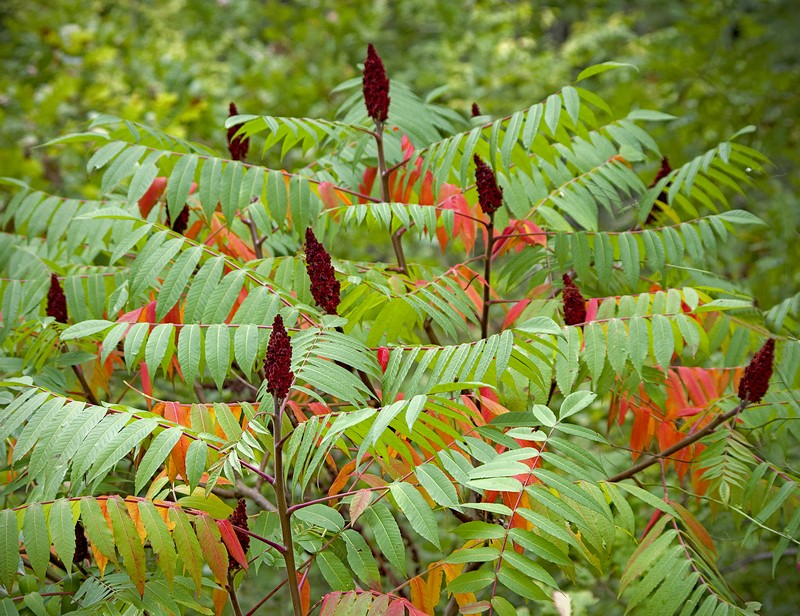
Katya from Moscow, Russia
Taxonomy
- Division:
- Magnoliophyta | - Flowering plants
- Family:
- Anacardiaceae
- Genus:
- Rhus
- Species:
- Rhus typhina
Growth Characteristics
- Life Cycle:
- Perennial
- Growth Habit:
- Shrub , Tree
- Height:
- 20-40 ft
- Light Requirements:
- Full Sun, Part Shade, Shade
- Drought Tolerance:
- High
- Bloom Months:
- jun, jul
- Bloom Colors:
- Red, Yellow, Green
Native Range
United States: Alabama, Connecticut, District of Columbia, Delaware, Georgia, Iowa, Illinois, Indiana, Kansas, Kentucky, Massachusetts, Maryland, Maine, Michigan, Minnesota, Missouri, Mississippi, North Carolina, New Hampshire, New Jersey, New York, Ohio, Pennsylvania, Rhode Island, South Carolina, South Dakota, Tennessee, Utah, Virginia, Vermont, Wisconsin, West Virginia, Canada: New Brunswick, Nova Scotia, Ontario, Prince Edward Island, Quebec
Keystone Species Ranking
- Caterpillar Keystone:
- ★★☆☆☆ Based on number of butterfly and moth species using this genus as host plant (Source: National Wildlife Federation)
Host Plant for Caterpillars
Reported Fauna Sightings
Soil Requirements
- Soil Type:
- sandy, well-drained, nutrient-poor soil
- pH:
- 4.5 - 6.5 (acidic to slightly acidic)
- Drainage:
- excellent drainage required
- Moisture:
- dry to moderate
- Notes:
- Thrives in disturbed areas and open fields
Germination Information
Pre-treatment: Scarification: boil water to cover the seeds. Cool for one day. Mix equal amount of seeds with perlite or vermiculite in a bag or container. Add a small amount of water. Cold store (33-42 degrees F) for 3-5 months.
Establishment: Seed is collected by hand from locally native plants within the eastern Upper Peninsula. Flowers from May to July. Seed is harvested in late summer to fall. No artificial light is used in the greenhouse.
Source: npn.rngr.net