
Western Poison Ivy
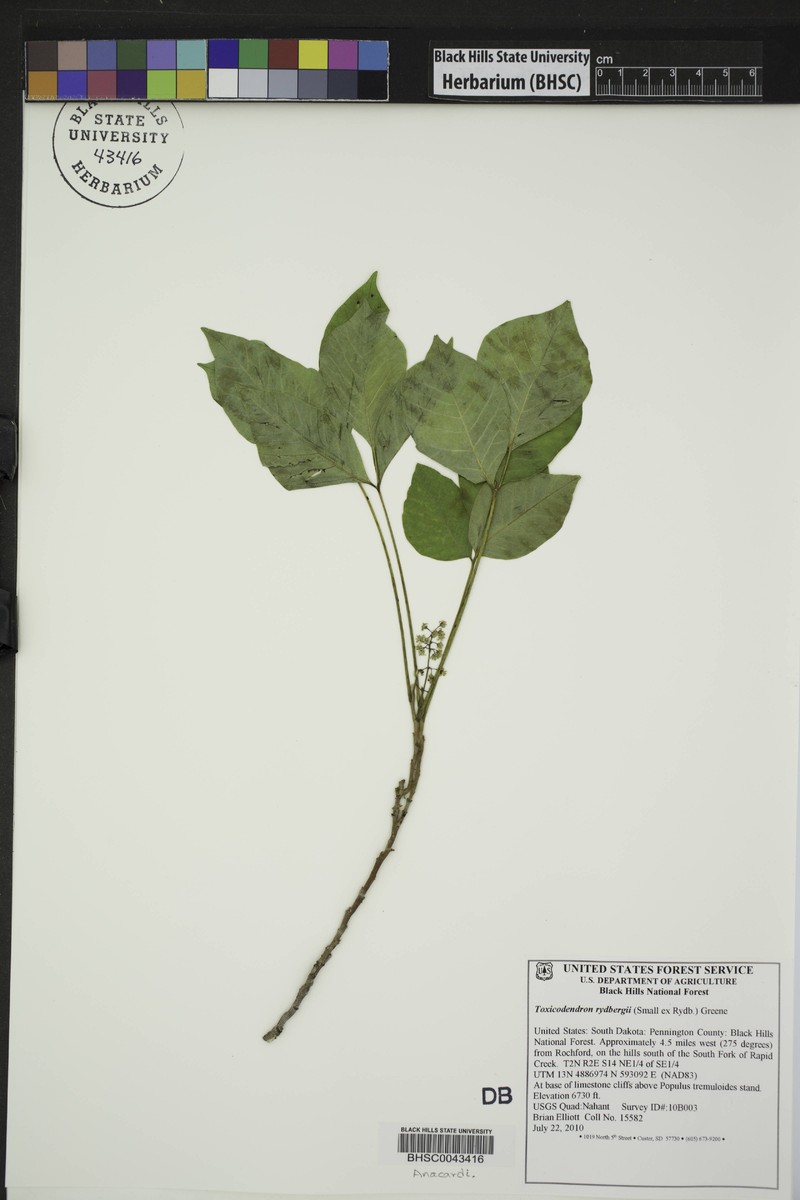
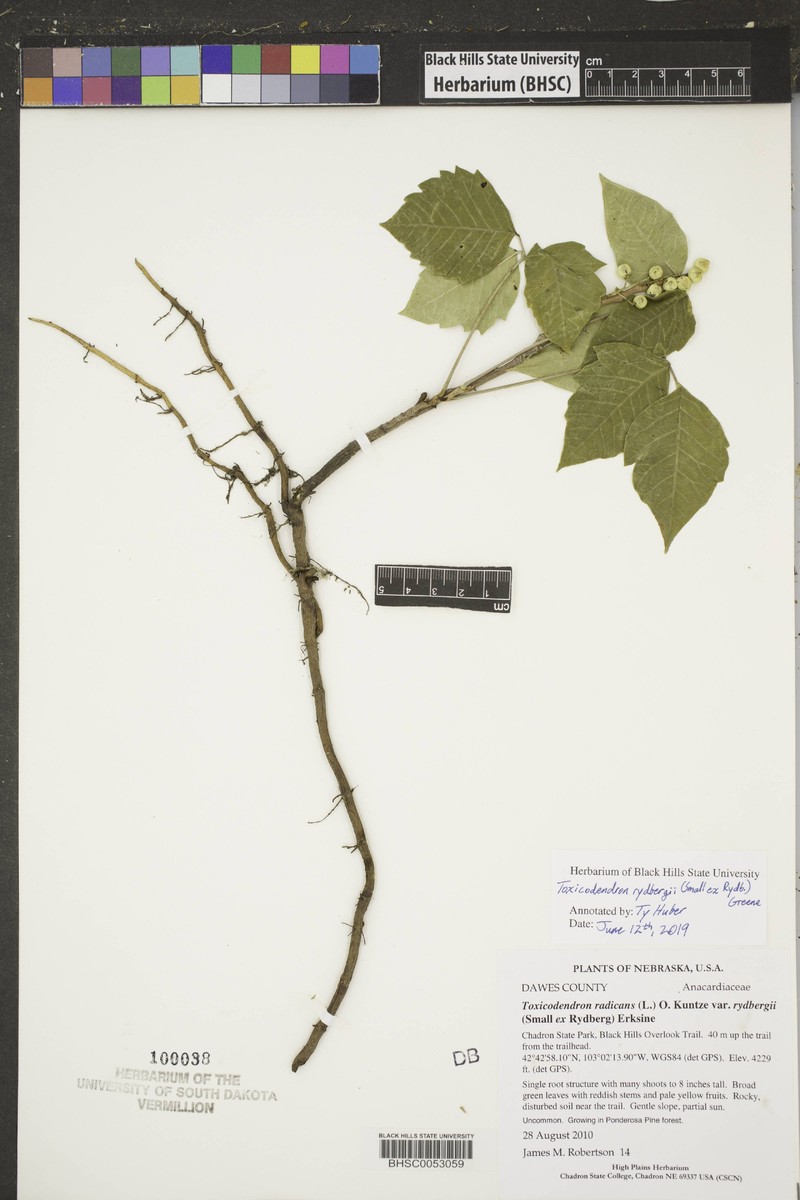
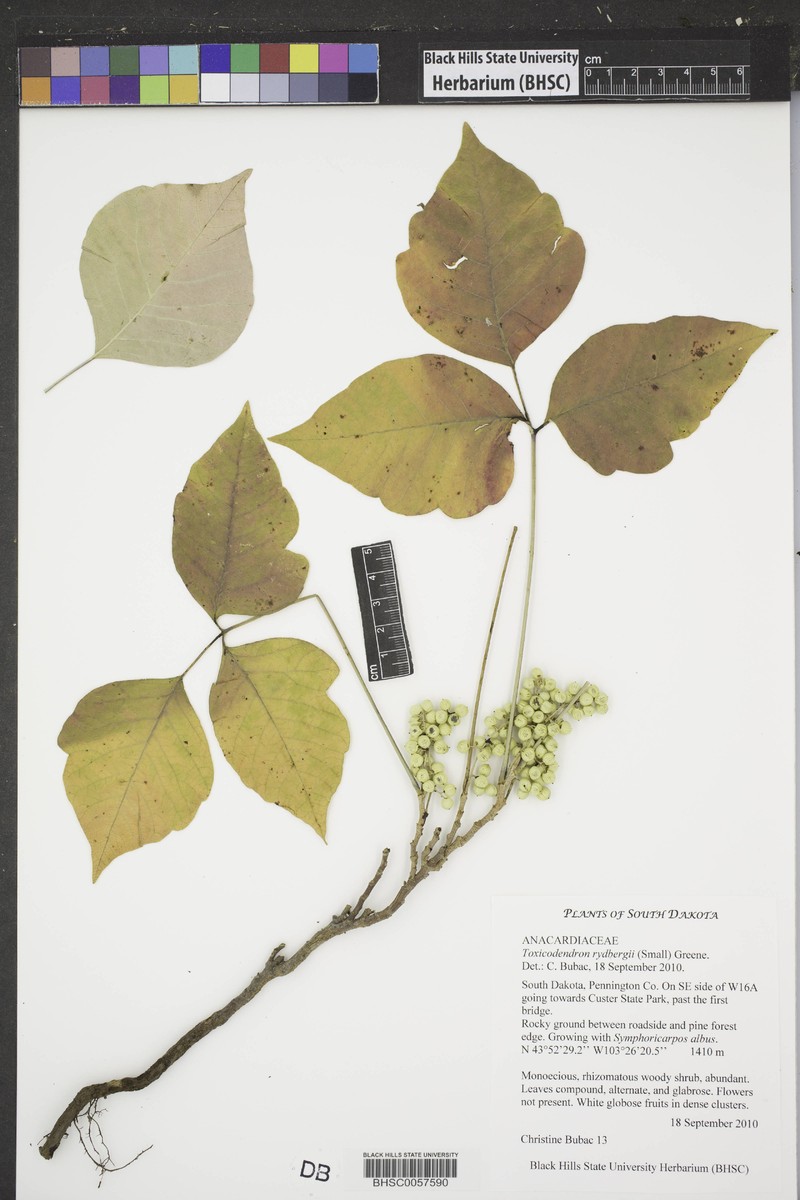
Toxicodendron radicans subsp. rydbergii
- Native to:
- Canada, Mexico, Prince Edward I., United States, Virgin Islands
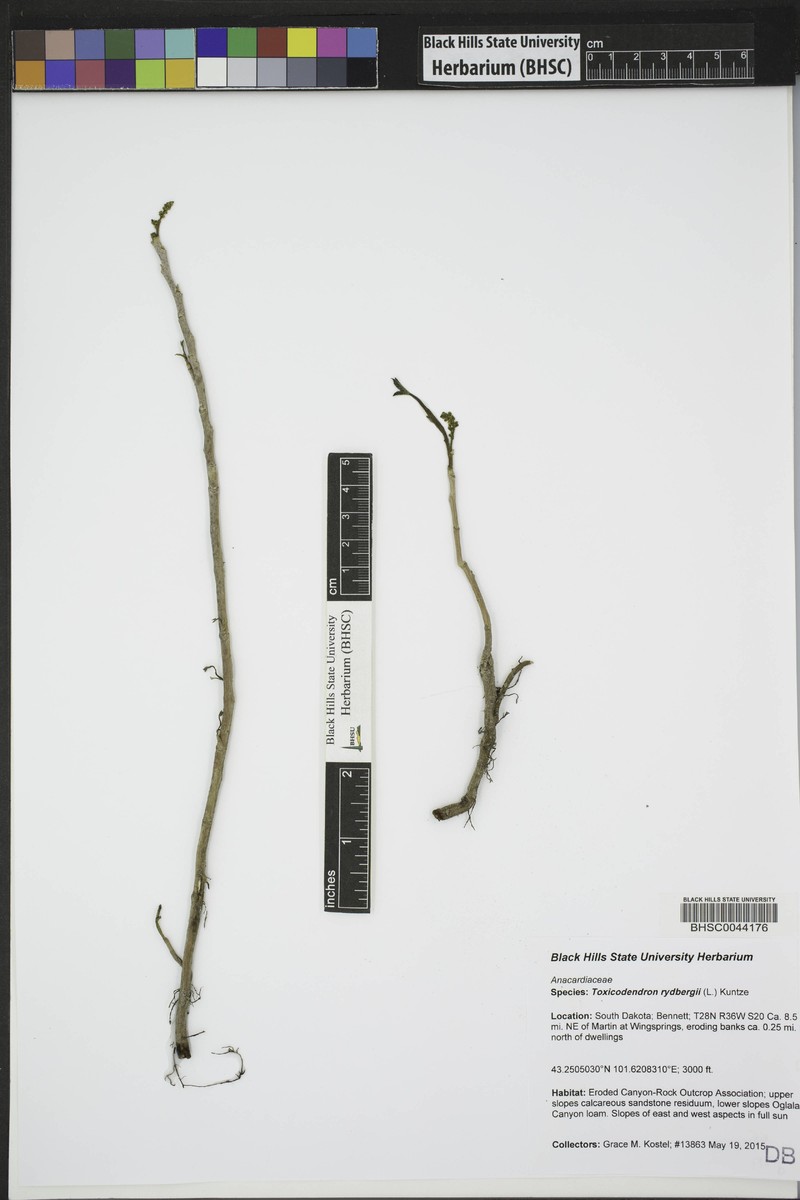
GBIF: Kostel, Grace M.
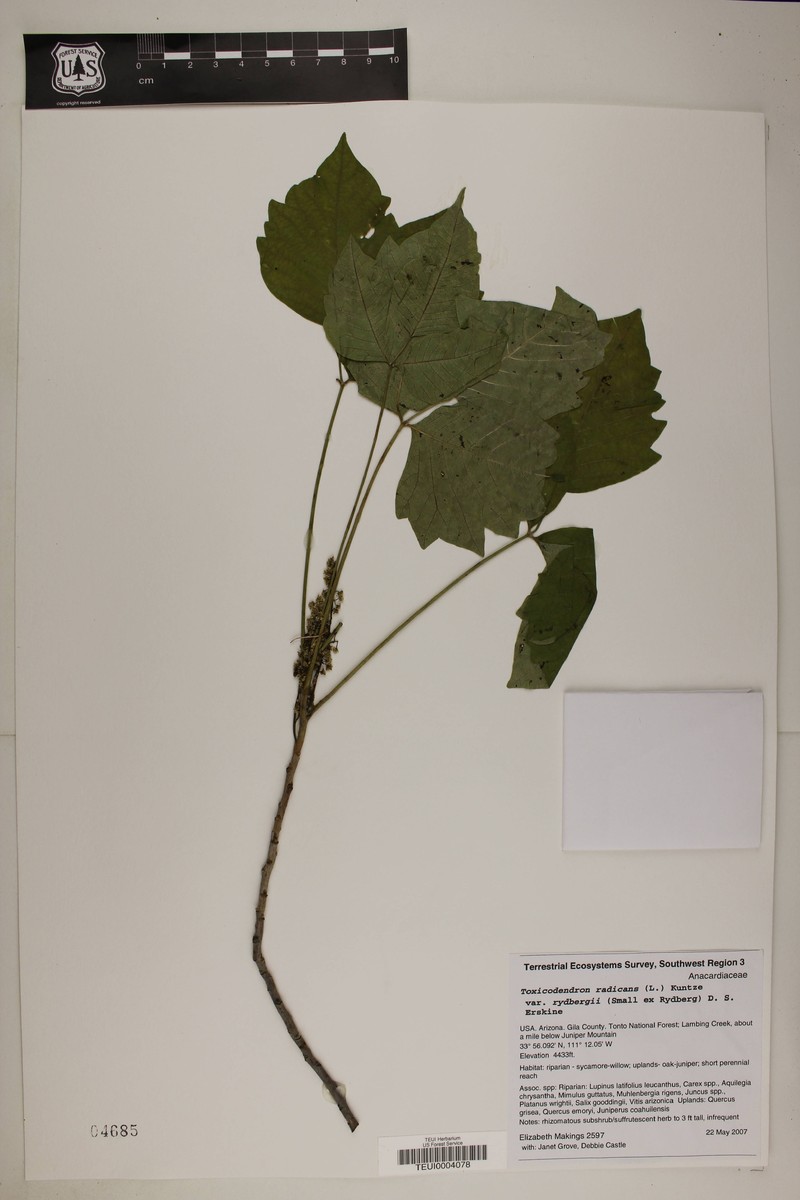
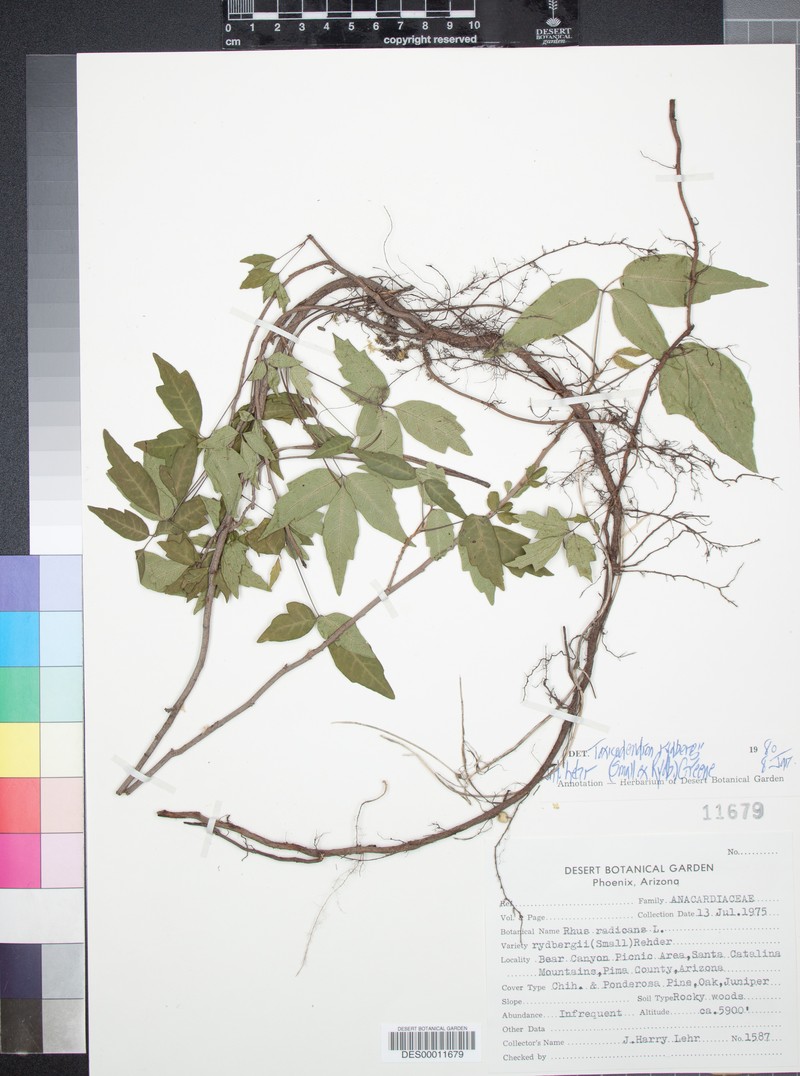
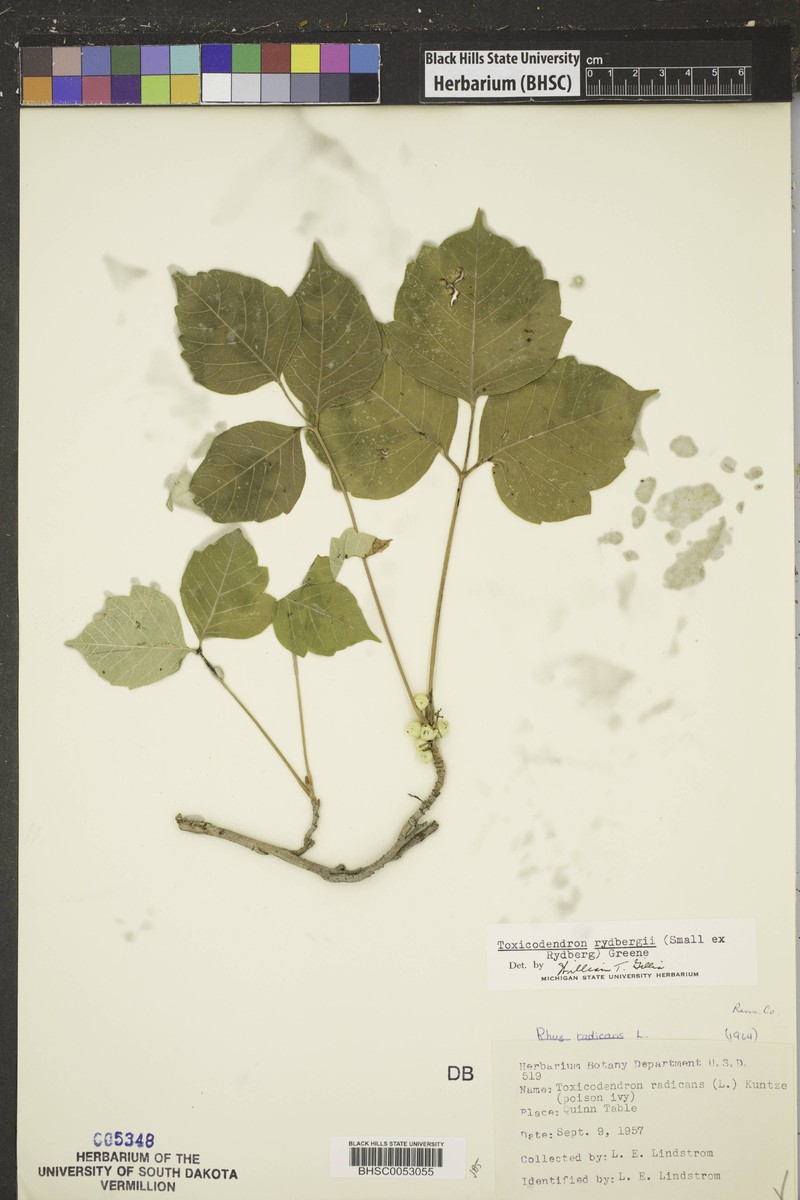
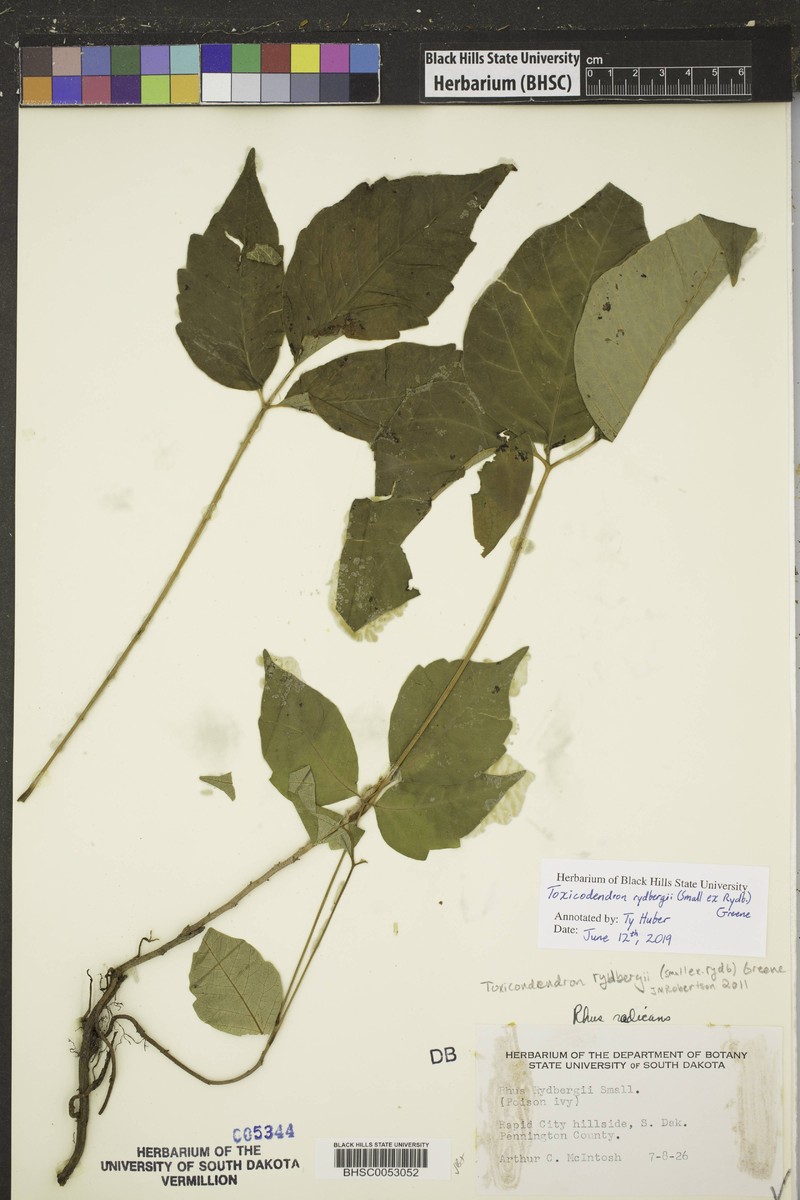
Taxonomy
- Division:
- Magnoliophyta | - Flowering plants
- Family:
- Anacardiaceae
- Genus:
- Toxicodendron
- Species:
- Toxicodendron radicans subsp. rydbergii
- USDA Symbol:
- TORY
Growth Characteristics
- Life Cycle:
- Perennial
- Growth Habit:
- Forb/herb , Shrub , Subshrub , Vine
- Height:
- 150 cm
- Light Requirements:
- Full Sun
- Drought Tolerance:
- Medium
- Bloom Months:
- may,jun,jul
- Bloom Colors:
- yellow, green
Host Plant for Caterpillars
Cameraria guttifinitella, Eutelia pulcherrimus, eyed paectes moth (Paectes oculatrix), Marathyssa basalis, Marathyssa inficita, Paectes occulatrix, Stigmella rhoifoliella, Sumac Leafblotch Miner Moth (Caloptilia rhoifoliella), White-lined leafroller (Amorbia humerosana)
Garden & Ecology Notes
- Wildlife Value:
- birds, small mammals
- Deer Resistant:
- Yes
- Fall Color:
- red, orange, yellow
- Fire Ecology:
- Fire adapted — tolerates or benefits from fire
- Fire Notes:
- Resprouts vigorously from rhizomes following fire; often increases in disturbed post-fire environments.
Soil Requirements
- Soil Type:
- rich, well-drained loamy soil
- pH:
- 4.5 - 7.0 (acidic to neutral)
- Drainage:
- excellent drainage required
- Moisture:
- dry to moderate
- Notes:
- commonly found in forest edges and open woods
Propagation & Germination
- Stratification:
- Warm then cold/moist stratification (double dormancy) — 60–90 days
- Scarification:
- Seed coat scarification required before sowing
- Germination Time:
- 30–180 days
- Notes:
- Seeds have hard seed coat requiring scarification; double dormancy with warm followed by cold stratification improves germination.