
Common Cowparsnip
Heracleum maximum
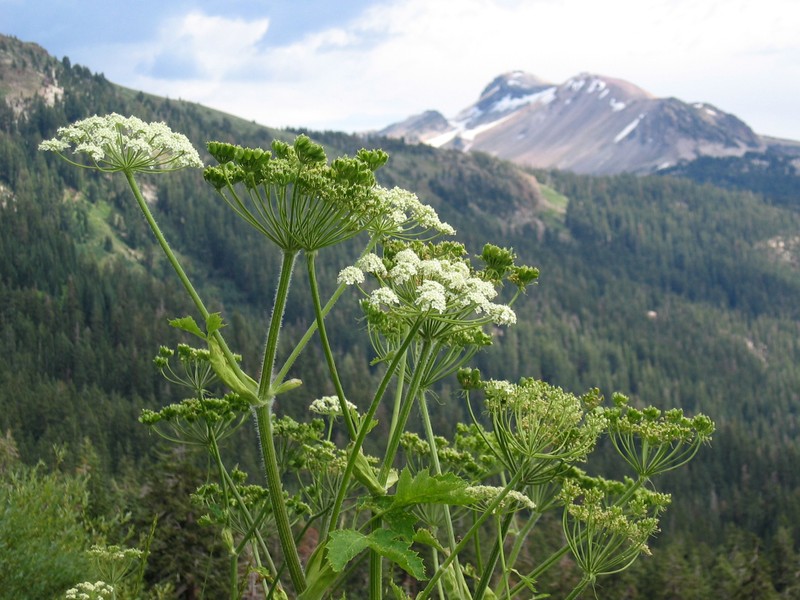
Dcrjsr
Taxonomy
- Division:
- Magnoliophyta | - Flowering plants
- Family:
- Apiaceae
- Genus:
- Heracleum
- Species:
- Heracleum maximum
Growth Characteristics
- Life Cycle:
- Perennial
- Growth Habit:
- Forb/herb
- Height:
- 6-8 ft
- Light Requirements:
- Shade
- Drought Tolerance:
- High
- Bloom Months:
- feb, mar, apr, may, jun, jul, aug, sep
- Bloom Colors:
- White
Native Range
United States: Alaska, Arizona, California, Colorado, Connecticut, Delaware, Georgia, Iowa, Idaho, Illinois, Indiana, Kansas, Kentucky, Massachusetts, Maryland, Maine, Michigan, Minnesota, Missouri, Montana, North Carolina, North Dakota, Nebraska, New Hampshire, New Jersey, New Mexico, Nevada, New York, Ohio, Oregon, Pennsylvania, Rhode Island, South Dakota, Tennessee, Utah, Virginia, Vermont, Washington, Wisconsin, West Virginia, Wyoming, Canada: Alberta, British Columbia, Manitoba, New Brunswick, Nova Scotia, Northwest Territories, Ontario, Prince Edward Island, Quebec, Saskatchewan, Yukon
Host Plant for Caterpillars
Reported Fauna Sightings
Soil Requirements
- Soil Type:
- rich, moist, well-drained loamy soil
- pH:
- 5.5 - 7.5 (slightly acidic to neutral)
- Drainage:
- tolerates poor drainage
- Moisture:
- consistently moist
- Notes:
- Thrives in riparian zones and wet meadows.
Germination Information
Pre-treatment: Seal the seeds in a container with an equal mix of seeds with perlite or vermiculite. Add just enough water to barely saturate the mixture and store in a refrigerator for at least 2 months. Alternatively, a 72 hour water soak of fresh seeds can be used, changing the water daily. Seeds should then be placed into a 100 day cold, moist stratification in a ventilated container under refrigeration at 1 to 3C.
Establishment: Seeds may not germinate in the first year and may require temperatures of 22C or above during the day and 13C to 16C at night in early June in the outdoor nursery. Transplant survival averages 50%. Conflicting information exists regarding the optimal stratification period, with recommendations ranging from 2 weeks to 2-3 months.
Source: npn.rngr.net