
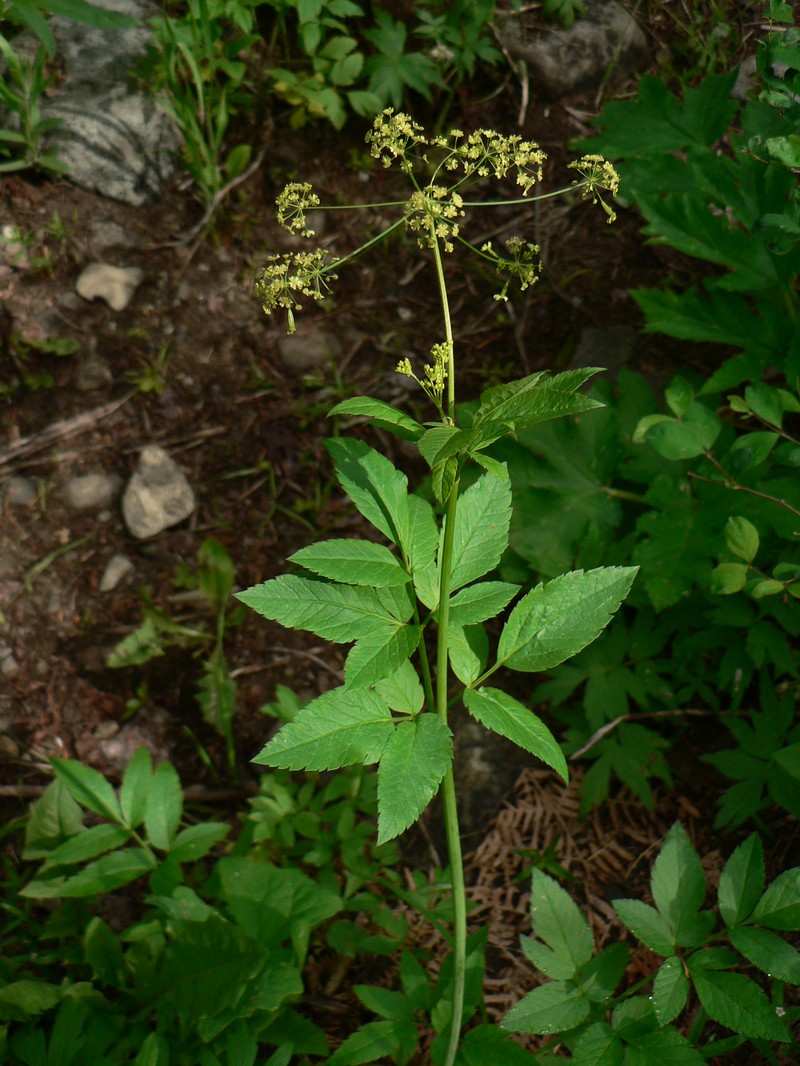
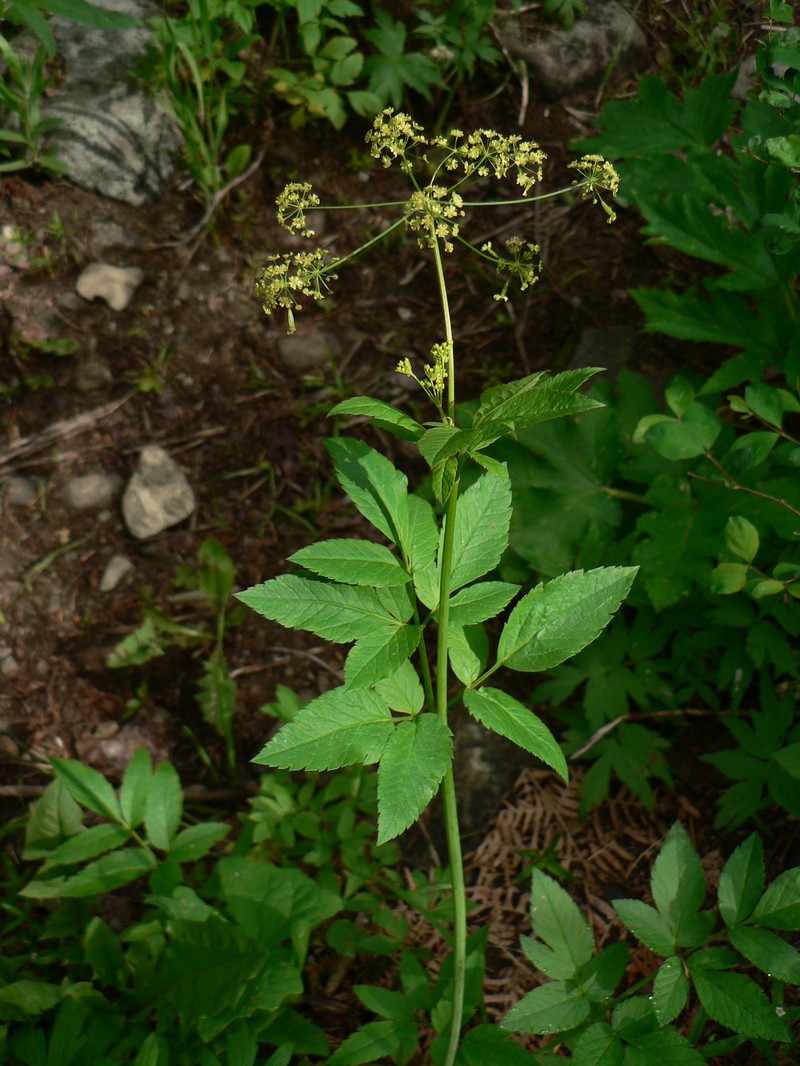
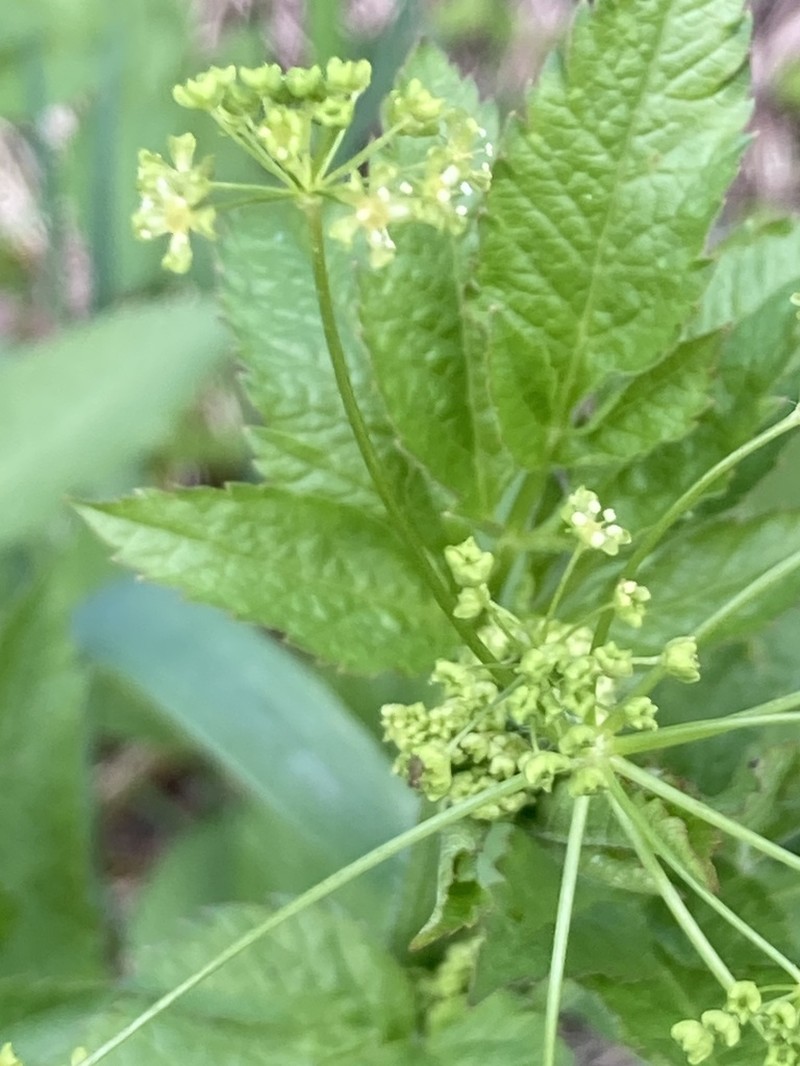
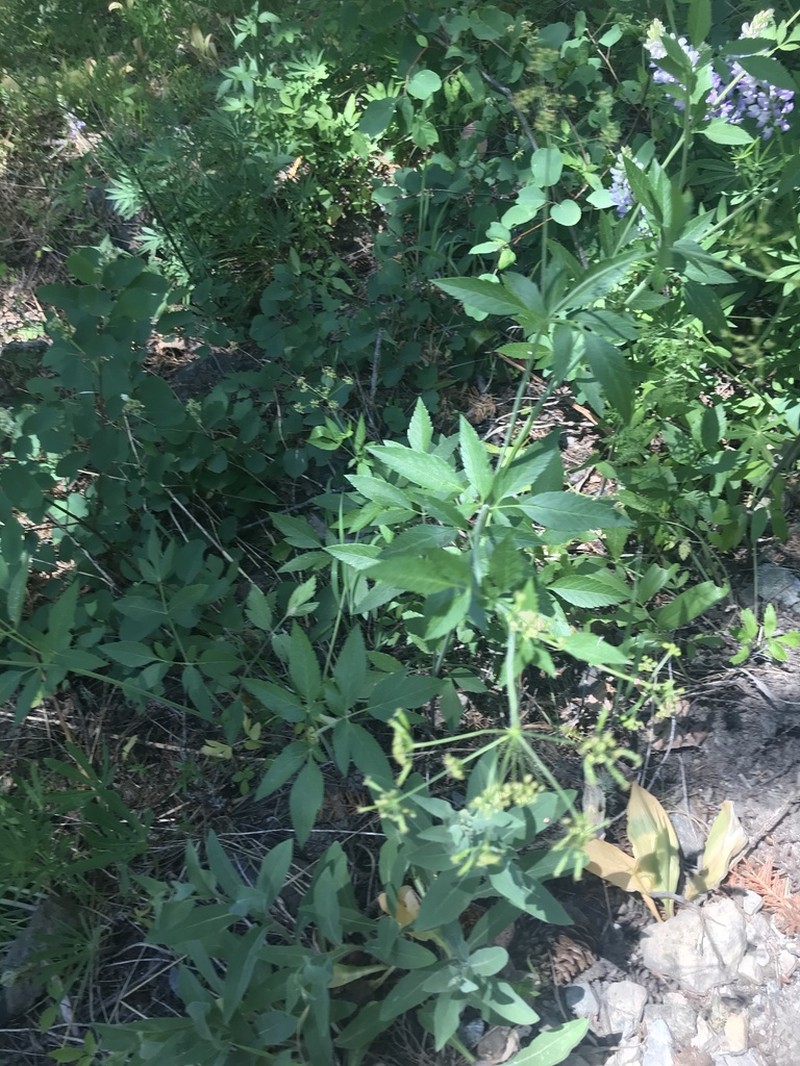
Western Sweetroot
Osmorhiza occidentalis
- Native to:
- Canada, United States
Walter Siegmund (talk)
Taxonomy
- Division:
- Magnoliophyta | - Flowering plants
- Family:
- Apiaceae
- Genus:
- Osmorhiza
- Species:
- Osmorhiza occidentalis
- USDA Symbol:
- OSOC
Growth Characteristics
- Life Cycle:
- Perennial
- Growth Habit:
- Forb/herb
- Height:
- 120 cm
- Light Requirements:
- Part Shade
- Drought Tolerance:
- Medium
- Bloom Months:
- may,jun,jul
- Bloom Colors:
- white, greenish-white
Wildlife Benefits
- Bees:
- ★☆☆☆☆ Documented bee visitation (GBIF)
- Butterflies & Moths:
- ★☆☆☆☆ Documented Lepidoptera association (GBIF)
- Caterpillars:
- ★☆☆☆☆ Recorded caterpillar host plant (HOSTS Database)
Host Plant for Caterpillars
Agonopterix rosaciliella, Greya variata
Garden & Ecology Notes
- Wildlife Value:
- butterflies, bees
- Fragrant:
- Yes
Soil Requirements
- Soil Type:
- rich, well-drained loamy soil
- pH:
- 5.5 - 7.5 (slightly acidic to neutral)
- Drainage:
- good drainage preferred
- Moisture:
- consistently moist
- Notes:
- often found in forested areas with organic matter
Propagation & Germination
- Stratification:
- Cold/moist stratification required — 30–60 days
- Germination Time:
- 14–30 days
- Notes:
- Seeds benefit from cold stratification for 30-60 days to break dormancy.
Pre-treatment: Seeds are placed in cold moist stratification for a minimum of 140 days. Seeds should be surface sown or only covered with a thin layer of perlite. Conetainers are filled and sown in late fall and irrigated thoroughly prior to winter stratification.
Establishment: Seeds are hand collected in late August when seeds turn dark brown and are easily hand stripped from the inflorescence. Seeds are collected in paper bags and kept in drying shed prior to cleaning. Germination occurs immediately after snow melt under natural conditions. Germination is reported to be higher in the presence of light for this genus.
Source: npn.rngr.net