
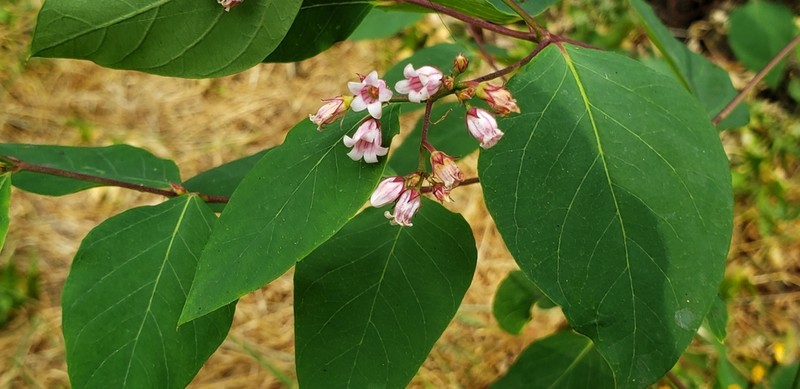
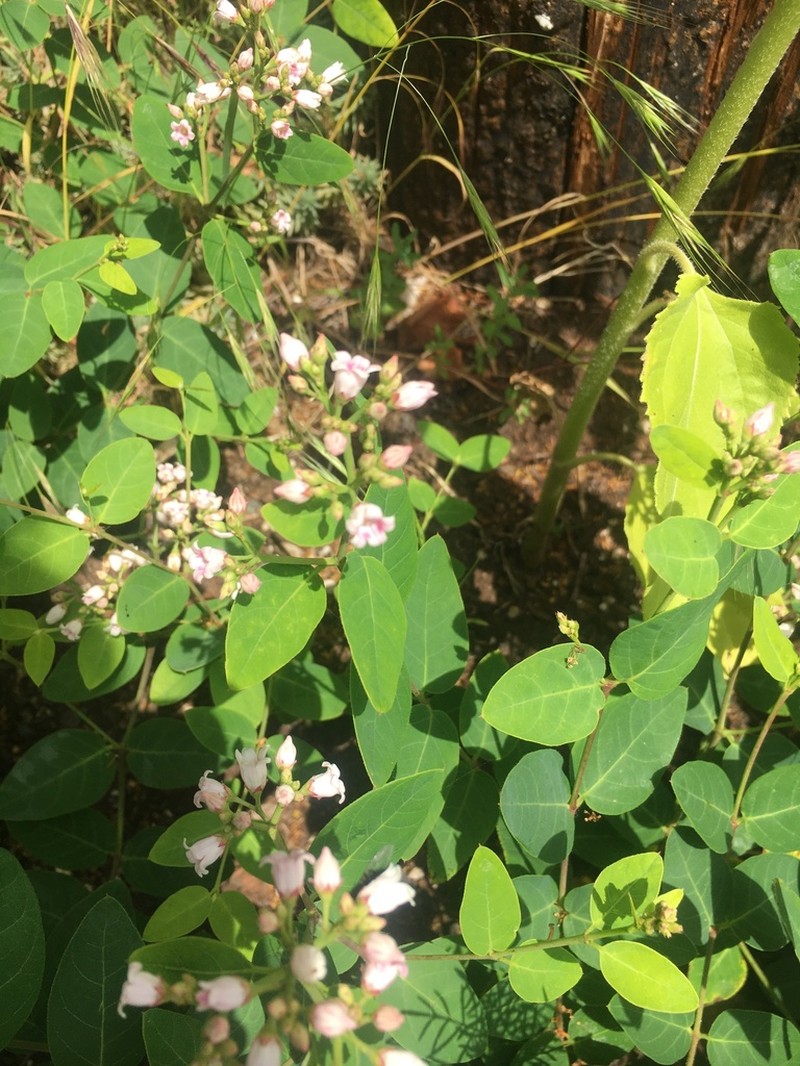
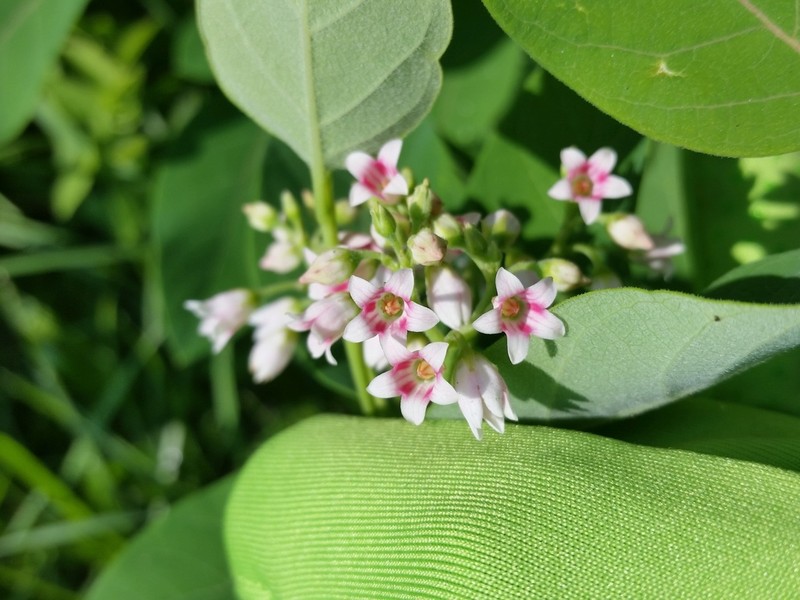
Spreading Dogbane
Apocynum androsaemifolium
- Native to:
- Canada, Labrador, Mexico, Prince Edward I., United States, Virgin Islands
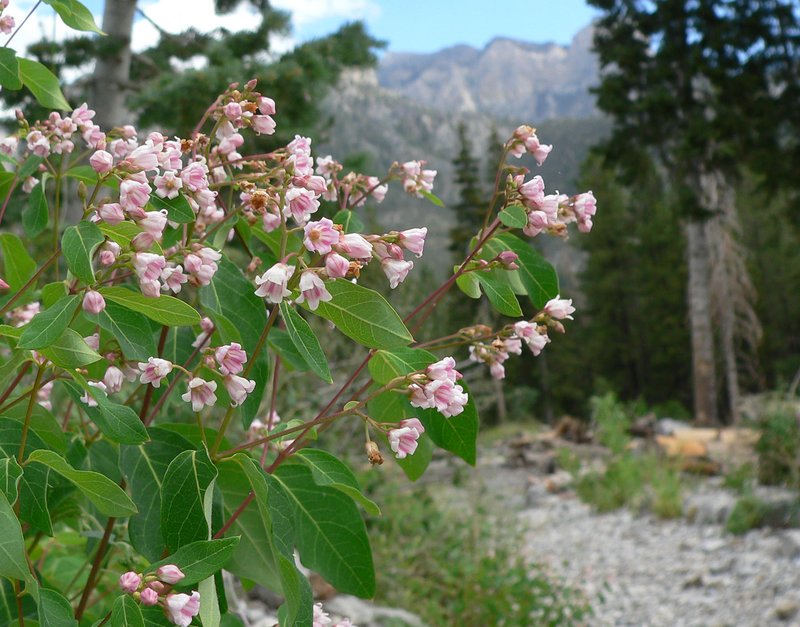
Stan Shebs
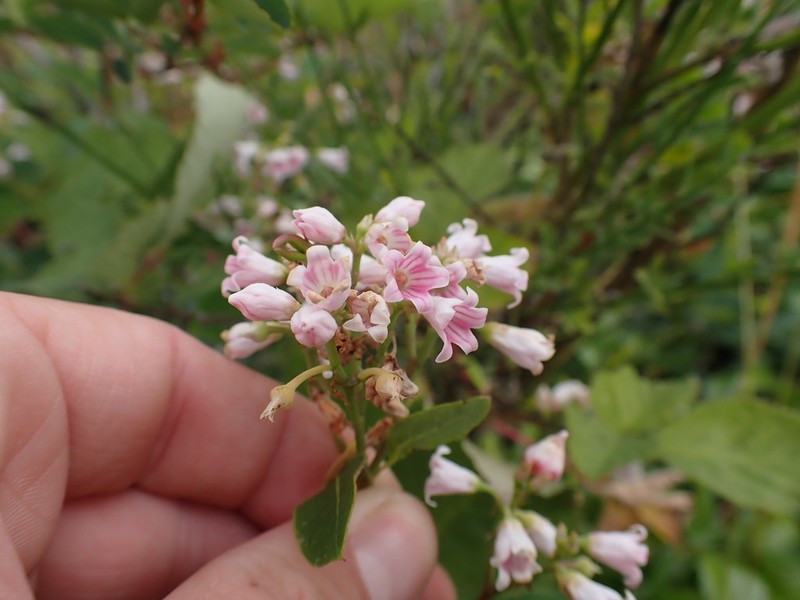
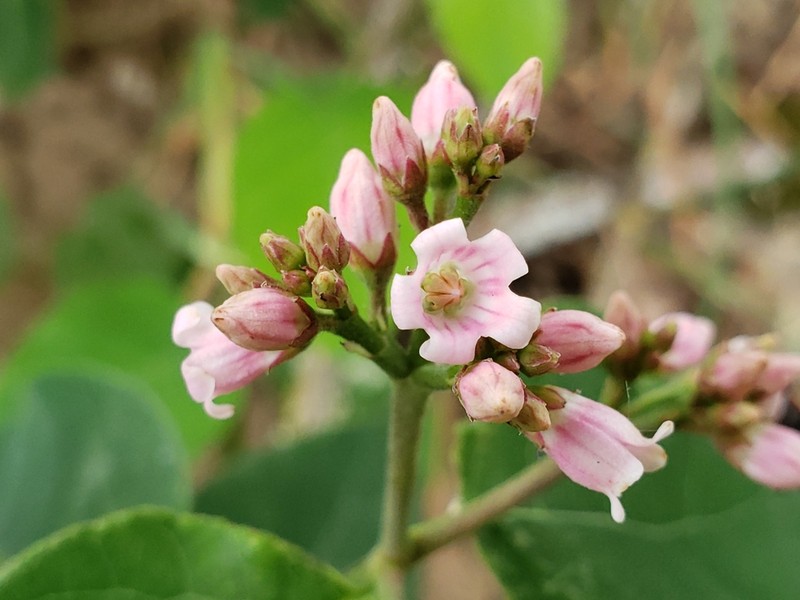
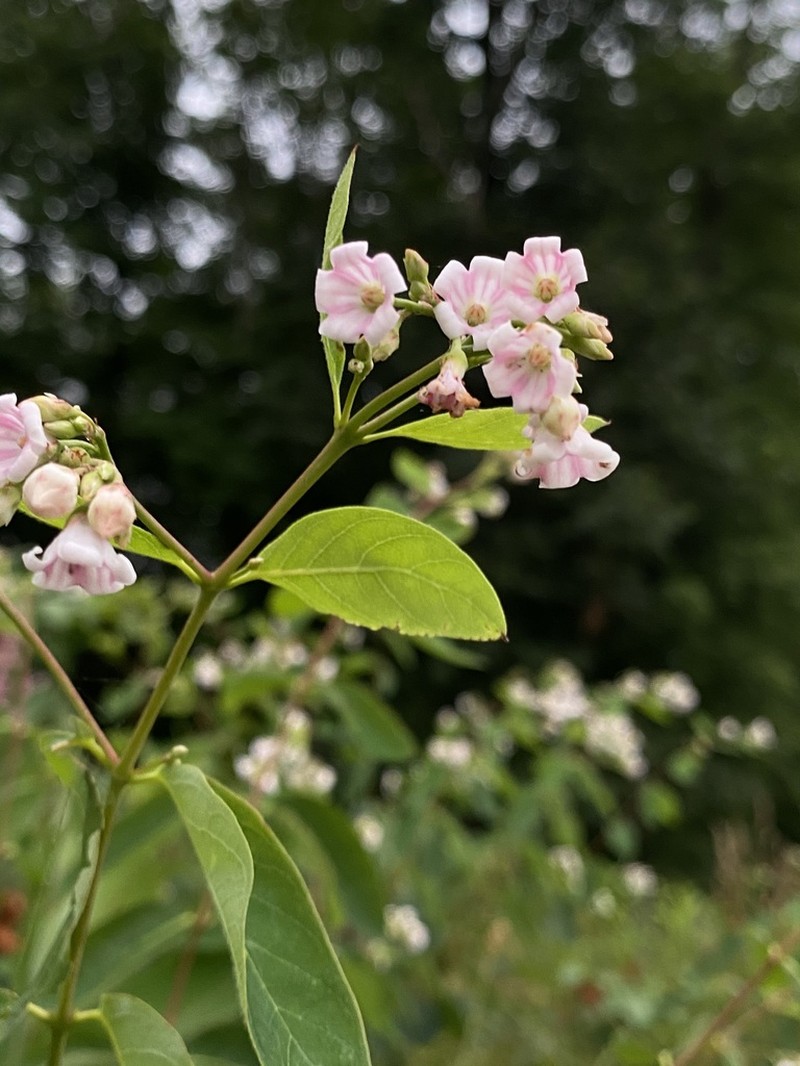
Taxonomy
- Division:
- Magnoliophyta | - Flowering plants
- Family:
- Apocynaceae
- Genus:
- Apocynum
- Species:
- Apocynum androsaemifolium
- USDA Symbol:
- APAN2
Growth Characteristics
- Life Cycle:
- Perennial
- Growth Habit:
- Forb/herb
- Height:
- 120 cm
- Light Requirements:
- Full Sun,Part Shade,Shade
- Drought Tolerance:
- Medium
- Bloom Months:
- jun,jul,aug
- Bloom Colors:
- white, pink
Wildlife Benefits
- Bees:
- ★★☆☆☆ Documented bee visitation (GBIF)
- Butterflies & Moths:
- ★★★☆☆ Documented Lepidoptera association (GBIF)
- Caterpillars:
- ★★★☆☆ Recorded caterpillar host plant (HOSTS Database)
Keystone Species Ranking
- Caterpillar Keystone:
- ★★★☆☆ Butterfly & moth species supported by this genus (NWF)
Host Plant for Caterpillars
Acronicta noctivaga, blackberry looper (Chlorochlamys chloroleucaria), Catocaline Dart (Cryptocala acadiensis), Clio Tiger Moth (Ectypia clio), Copper Underwing (Amphipyra tragopoginis), Delicate Cycnia (Cycnia tenera), dogbane saucrobotys moth (Saucrobotys futilalis), Large Ruby Tiger Moth (Phragmatobia assimilans), Lined Ruby Tiger Moth (Phragmatobia lineata), Northern Burdock Borer (Papaipema circumlucens), Oregon Cycnia (Cycnia oregonensis), Purple-lined sallow (Pyrrhia exprimens), Six-spotted Gray (Spargaloma sexpunctata), Snowberry Clearwing (Hemaris diffinis), Streaked Salt Marsh Moth (Platarctia parthenos), Striped Garden Caterpillar Moth (Trichordestra legitima), Trichordestra tacoma, ⚠️Monarch butterfly (Danaus plexippus)
Reported Fauna Sightings
Bees: Common eastern (Bombus impatiens), Crotch bumble bee (Bombus crotchii), Fernald cuckoo bumble bee (Bombus flavidus), Fuzzy-horned bumble bee (Bombus mixtus), Hunt's bumble bee (Bombus huntii), Indiscriminate cuckoo bumble bee (Bombus insularis), Nevada bumble bee (Bombus nevadensis), Red-belted bumble bee (Bombus rufocinctus), Tri-colored bumble (Bombus ternarius), Two-form bumble bee (Bombus bifarius), Western bumble bee (Bombus occidentalis), Yellow bumble bee (Bombus fervidus), Yellow-faced bumble bee (Bombus vosnesenskii) Moths:Milkweed Tussock Moth (Euchaetes egle) Butterflies:Clodius Parnassian (Parnassius clodius), Silver-spotted Skipper (Epargyreus clarus)
Garden & Ecology Notes
- Wildlife Value:
- butterflies, bees
- Deer Resistant:
- Yes
Soil Requirements
- Soil Type:
- sandy, well-drained, nutrient-poor soil
- pH:
- 5.5 - 7.5 (slightly acidic to neutral)
- Drainage:
- excellent drainage required
- Moisture:
- dry to moderate
- Notes:
- Commonly found in open woods and clearings
Propagation & Germination
- Stratification:
- Cold/moist stratification required — 30–60 days
- Germination Time:
- 14–30 days
- Notes:
- Seeds benefit from cold stratification for 4-8 weeks to break dormancy.
Pre-treatment: Mix the seeds with an equal amount of moist perlite or vermiculite. Put mixture into a sealed container and proceed with 1 month of moist cold stratification in a cool dry place. Cold store until planted (up to 3 years).
Establishment: Seeds are collected by hand from locally native plants within the eastern central Upper Peninsula. The flowers bloom in June and July. Pods, slender hanging down 7-20cm long. Seed is harvested in September. The plant is commonly found in open pine forests on slopes, prairies, thickets, and along waterways.
Source: npn.rngr.net
ORGHPS Germination Guide: Sow @ 20C. Germinates within 3 months.
Where to Buy
Nationwide Seller
- Butterfield Seeds (seeds)