
Mangabeira
Hancornia speciosa
- Native to:
- Bolivia, Brazil, Paraguay, Peru
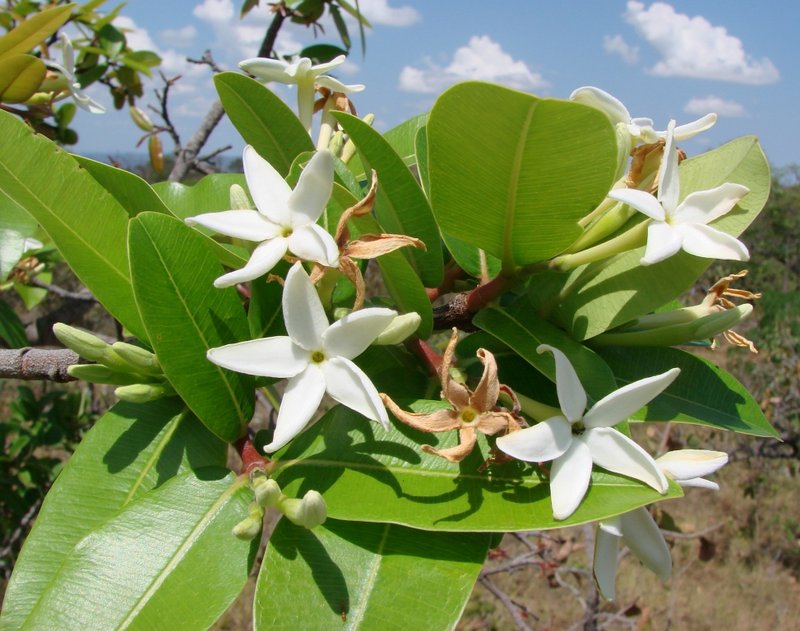
Museu Paraense Emílio Goeldi (MPEG) (en.wikipedia.org),João Medeiros (www.flickr.com),João Medeiros (www.flickr.com),João Medeiros (www.flickr.com),Museu Paraense Emílio Goeldi (MPEG) (en.wikipedia.org),Museu Paraense Emílio Goeldi (MPEG) (en.wikipedia.org),Museu Paraense Emílio Goeldi (MPEG) (en.wikipedia.org),Museu Paraense Emílio Goeldi (MPEG) (en.wikipedia.org),Museu Paraense Emílio Goeldi (MPEG) (en.wikipedia.org),Museu Paraense Emílio Goeldi (MPEG) (en.wikipedia.org),Museu Paraense Emílio Goeldi (MPEG) (en.wikipedia.org),Museu Paraense Emílio Goeldi (MPEG) (en.wikipedia.org)

Taxonomy
- Division:
- Magnoliophyta | - Flowering plants
- Family:
- Apocynaceae
- Genus:
- Hancornia
- Species:
- Hancornia speciosa
- USDA Symbol:
- HASP6
Growth Characteristics
- Height:
- 1500 cm
- Light Requirements:
- Full Sun
- Drought Tolerance:
- High
- Bloom Months:
- sep,oct,nov
- Bloom Colors:
- white
Garden & Ecology Notes
- Wildlife Value:
- birds, mammals
- Fragrant:
- Yes
- Fire Ecology:
- Fire adapted — tolerates or benefits from fire
- Fire Notes:
- Resprouts from root crown after fire in cerrado ecosystems.
Soil Requirements
- Soil Type:
- sandy, well-drained, nutrient-poor soil
- pH:
- 5.5 - 6.5 (slightly acidic to neutral)
- Drainage:
- excellent drainage required
- Moisture:
- dry to moderate
- Notes:
- native to Brazilian Cerrado, adapts to poor soils
Propagation & Germination
- Germination Time:
- 20–40 days
- Notes:
- Seeds are recalcitrant; sow fresh in well-drained substrate. No stratification needed.