
Common Winterberry
Ilex verticillata
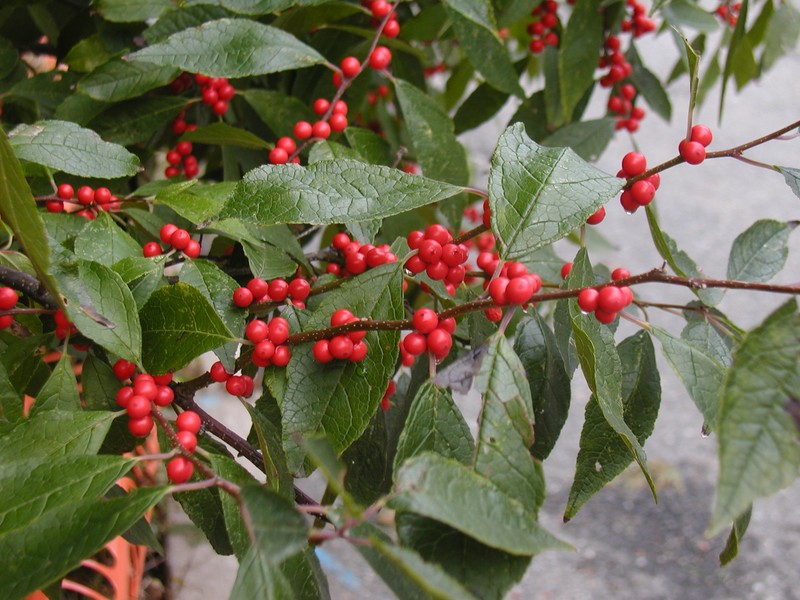
Taxonomy
- Division:
- Magnoliophyta | - Flowering plants
- Family:
- Aquifoliaceae
- Genus:
- Ilex
- Species:
- Ilex verticillata
Growth Characteristics
- Life Cycle:
- Perennial
- Growth Habit:
- Shrub , Tree
- Height:
- 20-40 ft
- Light Requirements:
- Full Sun, Part Shade, Shade
- Drought Tolerance:
- High
- Bloom Months:
- apr, may, jun, jul
- Bloom Colors:
- White, Yellow, Green, Brown
- Evergreen Shrub:
- Yes
- Landscaping Shrub:
- Yes
Native Range
United States: Alabama, Arkansas, Connecticut, District of Columbia, Delaware, Florida, Georgia, Iowa, Illinois, Indiana, Kentucky, Louisiana, Massachusetts, Maryland, Maine, Michigan, Minnesota, Missouri, Mississippi, North Carolina, New Hampshire, New Jersey, New York, Ohio, Pennsylvania, Rhode Island, South Carolina, Tennessee, Texas, Virginia, Vermont, Wisconsin, West Virginia, Canada: New Brunswick, Nova Scotia, Ontario, Prince Edward Island, Quebec
Keystone Species Ranking
- Caterpillar Keystone:
- ★★☆☆☆ Based on number of butterfly and moth species using this genus as host plant (Source: National Wildlife Federation)
- Bee Keystone:
- ★★★★★ Based on number of native bee species using this genus for pollen and nectar (Source: National Wildlife Federation)
Host Plant for Caterpillars
Reported Fauna Sightings
Soil Requirements
- Soil Type:
- moist, acidic, organic-rich soil
- pH:
- 4.5 - 6.5 (acidic to slightly acidic)
- Drainage:
- tolerates poor drainage
- Moisture:
- consistently moist
- Notes:
- prefers wetland areas like swamps and bogs
Germination Information
Pre-treatment: Requires 2 months of warm moist stratification followed by 2 months of cold moist stratification. Use a Ziploc-style bag or a small Rubbermaid-style container to mix an equal amount of seeds with either perlite or vermiculite. Add a small amount of water. Place in a room temperature setting for at least 2 months followed by cold storage for at least 2 months. Cold store until planted (up to 3 years).
Establishment: Seed is collected by hand from locally native plants. Seed has a deep dormancy, germination will be delayed to the second spring after sowing the seed. Soil is kept consistently damp during germination. Water using a fine mist or light hose setting only.
Source: npn.rngr.net