
Devilsclub
Oplopanax horridus
- Native to:
- Canada, United States
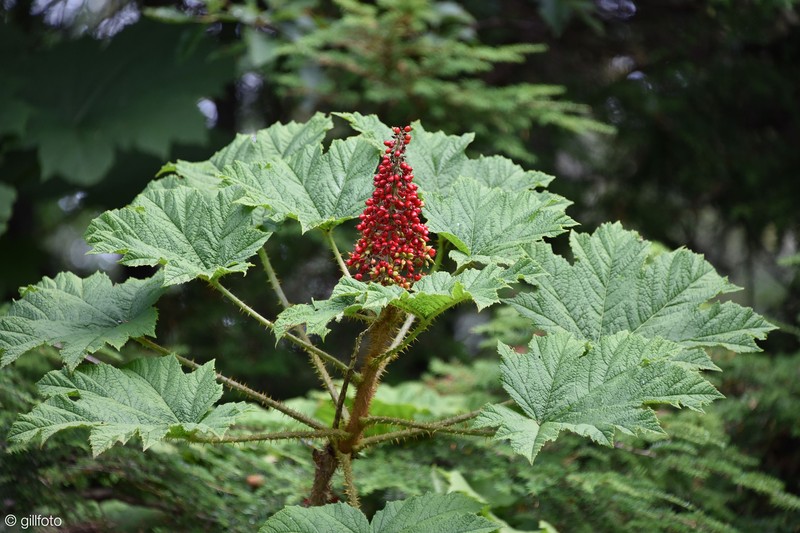
Walter Siegmund (en.wikipedia.org)
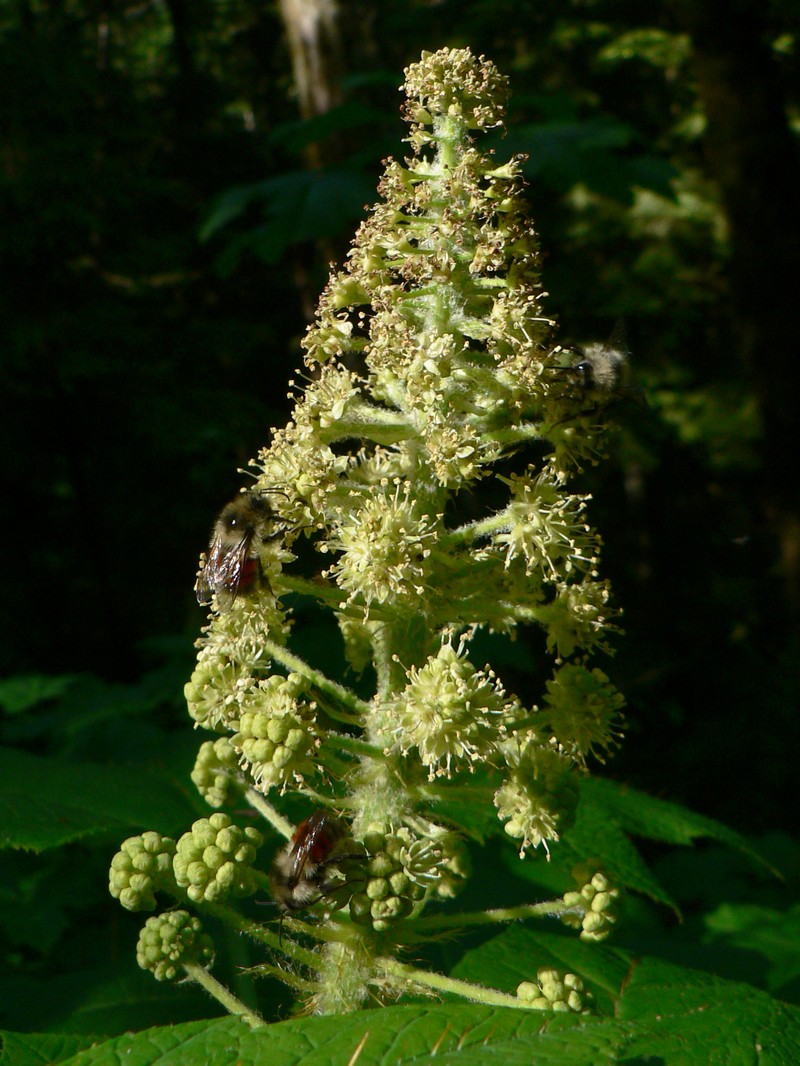
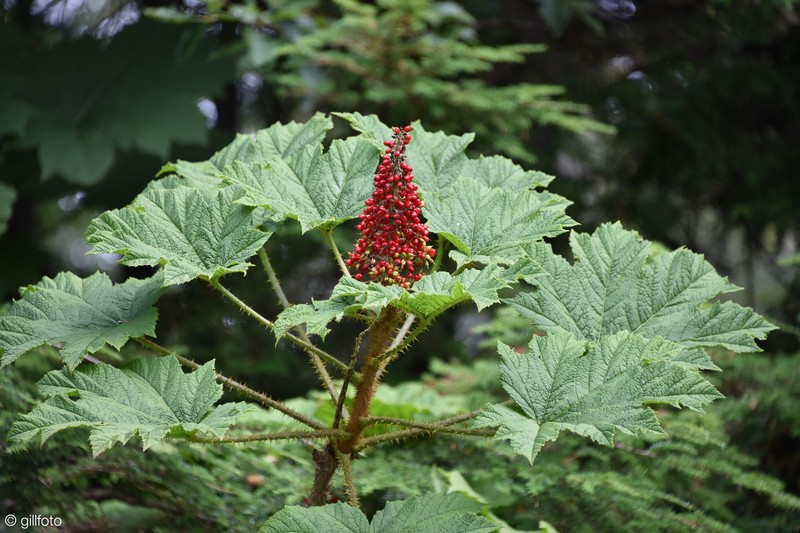
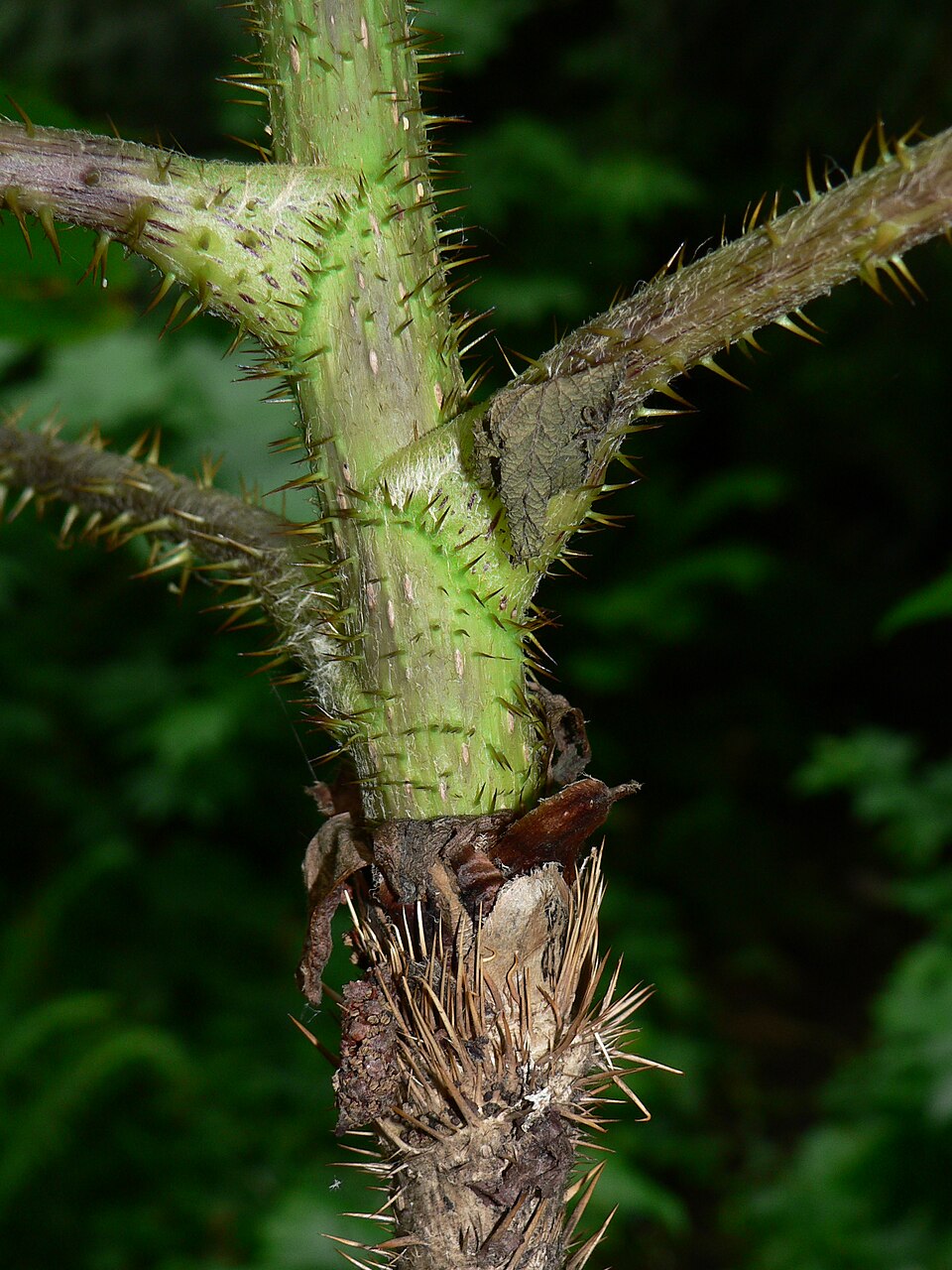
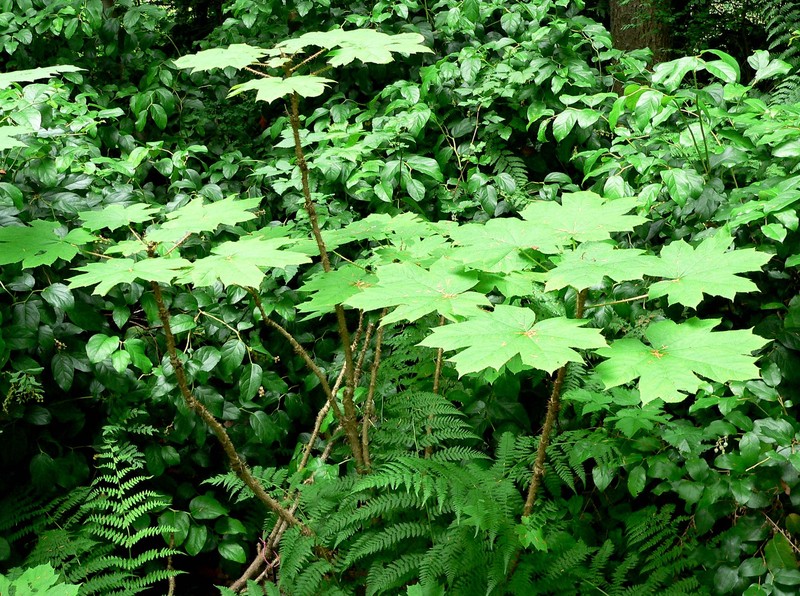
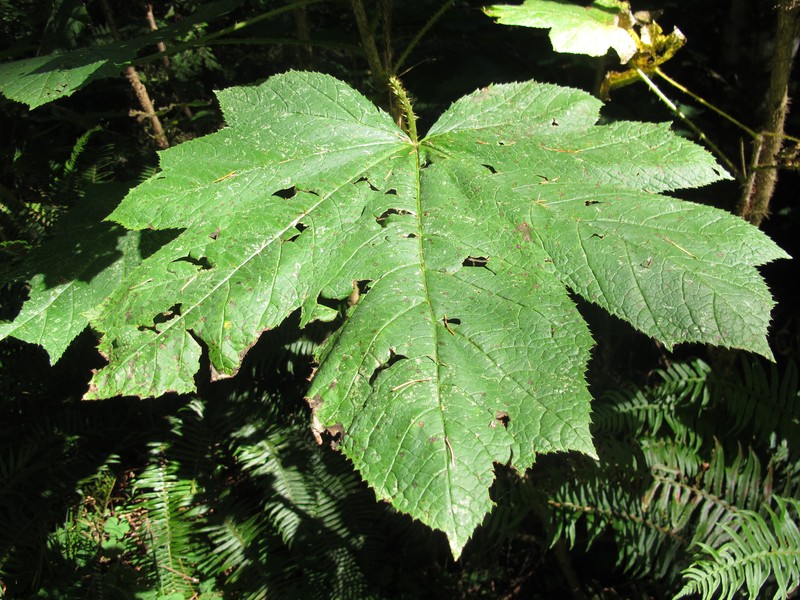
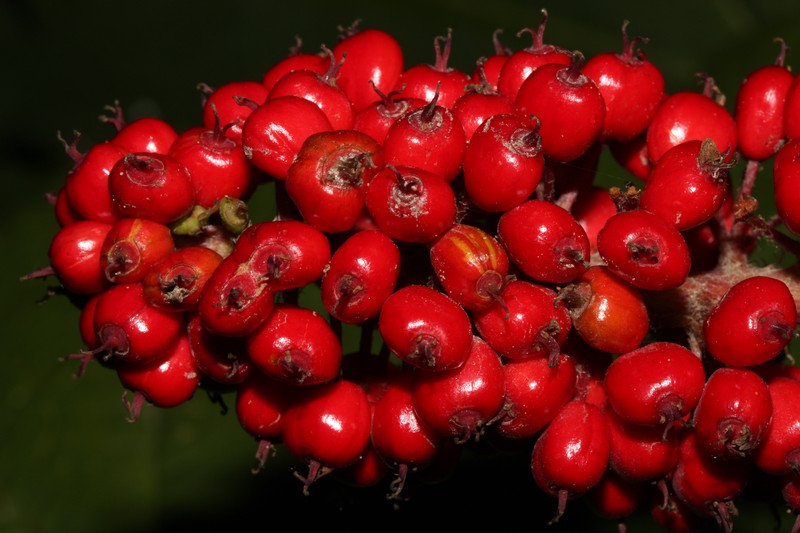
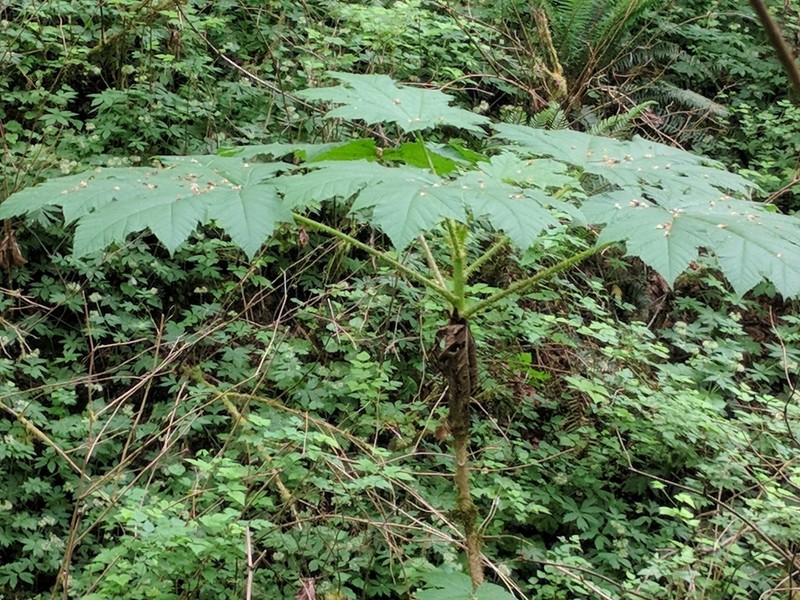
Taxonomy
- Division:
- Magnoliophyta | - Flowering plants
- Family:
- Araliaceae
- Genus:
- Oplopanax
- Species:
- Oplopanax horridus
- USDA Symbol:
- OPHO
Growth Characteristics
- Life Cycle:
- Perennial
- Growth Habit:
- Shrub
- Height:
- 300 cm
- Light Requirements:
- Full Sun,Part Shade,Shade
- Drought Tolerance:
- Low
- Bloom Months:
- may,jun
- Bloom Colors:
- white, greenish-white
Wildlife Benefits
- Bees:
- ★☆☆☆☆ Documented bee visitation (GBIF)
- Caterpillars:
- ★☆☆☆☆ Recorded caterpillar host plant (HOSTS Database)
Host Plant for Caterpillars
Garden & Ecology Notes
- Wildlife Value:
- birds, small mammals
- Fall Color:
- red
Soil Requirements
- Soil Type:
- rich, well-drained loamy soil
- pH:
- 5.0 - 6.5 (acidic to slightly acidic)
- Drainage:
- tolerates poor drainage
- Moisture:
- consistently moist
- Notes:
- thrives in forest understory with decaying organic matter
Propagation & Germination
- Stratification:
- Cold/moist stratification required — 90–120 days
- Germination Time:
- 30–60 days
- Notes:
- Seeds require cold stratification for 3-4 months; germination is often slow and erratic.
Pre-treatment: For cuttings: Treated with Domain fungicide rinse for 3 minutes, recut to 20 cm lengths, treated with 3000 ppm IBA rooting powder, and stuck with at least 2 nodes below the surface of the rooting medium. For seeds: 72 hour running water rinse, followed by a minimum of a 100 day cold, moist stratification/100 day warm, moist stratification/100 day cold, moist stratification.
Establishment: Initial establishment for seeds is slow. Seeds are collected in late August when fruit turns dark red. Cuttings are collected at bud break in early June. Both cuttings and seeds must be kept cool and moist during collection and transport to the nursery.
Source: npn.rngr.net
ORGHPS Germination Guide: Expose to fluctuating outdoor winter temps incl. freezing for 3 months. Increase light/temp in spring.
Where to Buy
Nationwide Seller
- Sheffield's Seed (seeds)