
Palmyra Palm
Borassus aethiopum
- Native to:
- Benin, Burkina, Burundi, Cameroon, Central African Republic, Chad, Comoros, Congo, DR Congo, Ethiopia, Gambia, Ghana, Guinea, Guinea-Bissau, Gulf of Guinea Is., Ivory Coast, Kenya, Madagascar, Malawi, Mali, Mozambique, Niger, Nigeria, Senegal, South Africa, Sudan-South Sudan, Tanzania, Togo, Uganda, Zambia, Zimbabwe
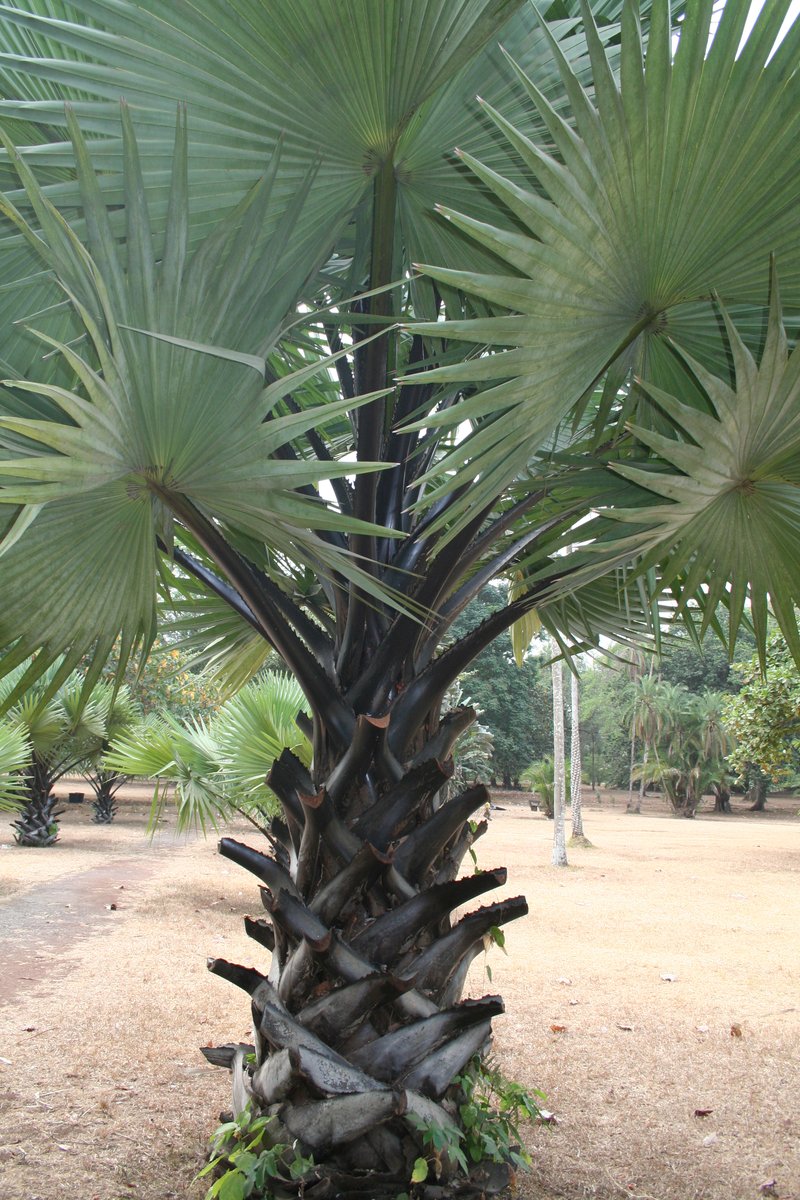
Bernard DUPONT (www.flickr.com) from FRANCE,Atamari,Marco Schmidt [1] (www.senckenberg.de),Dotun55,Akouete,Krzysztof Ziarnek, Kenraiz,AKOUETE Ata Franck,Kambai Akau,Kambai Akau,Akouete,Kambai Akau,Kambai Akau

Taxonomy
- Division:
- Magnoliophyta | - Flowering plants
- Family:
- Arecaceae
- Genus:
- Borassus
- Species:
- Borassus aethiopum
- USDA Symbol:
- BOAE
Growth Characteristics
- Height:
- 2500 cm
- Light Requirements:
- Full Sun
- Drought Tolerance:
- High
- Bloom Months:
- mar,apr,may
- Bloom Colors:
- yellow
Garden & Ecology Notes
- Wildlife Value:
- birds, mammals
- Salt Tolerant:
- Yes
- Fire Ecology:
- Fire adapted — tolerates or benefits from fire
- Fire Notes:
- Mature palms are fire-resistant; fire may promote seedling establishment in savanna ecosystems.
Soil Requirements
- Soil Type:
- well-drained, sandy to loamy soil
- pH:
- 5.5 - 7.5 (slightly acidic to neutral)
- Drainage:
- excellent drainage required
- Moisture:
- dry to moderate
- Notes:
- prefers open, sunny locations
Propagation & Germination
- Scarification:
- Seed coat scarification required before sowing
- Germination Time:
- 30–180 days
- Notes:
- Seeds require scarification and warm, moist conditions; germination can be slow and erratic.