
Coconut Palm
Cocos nucifera
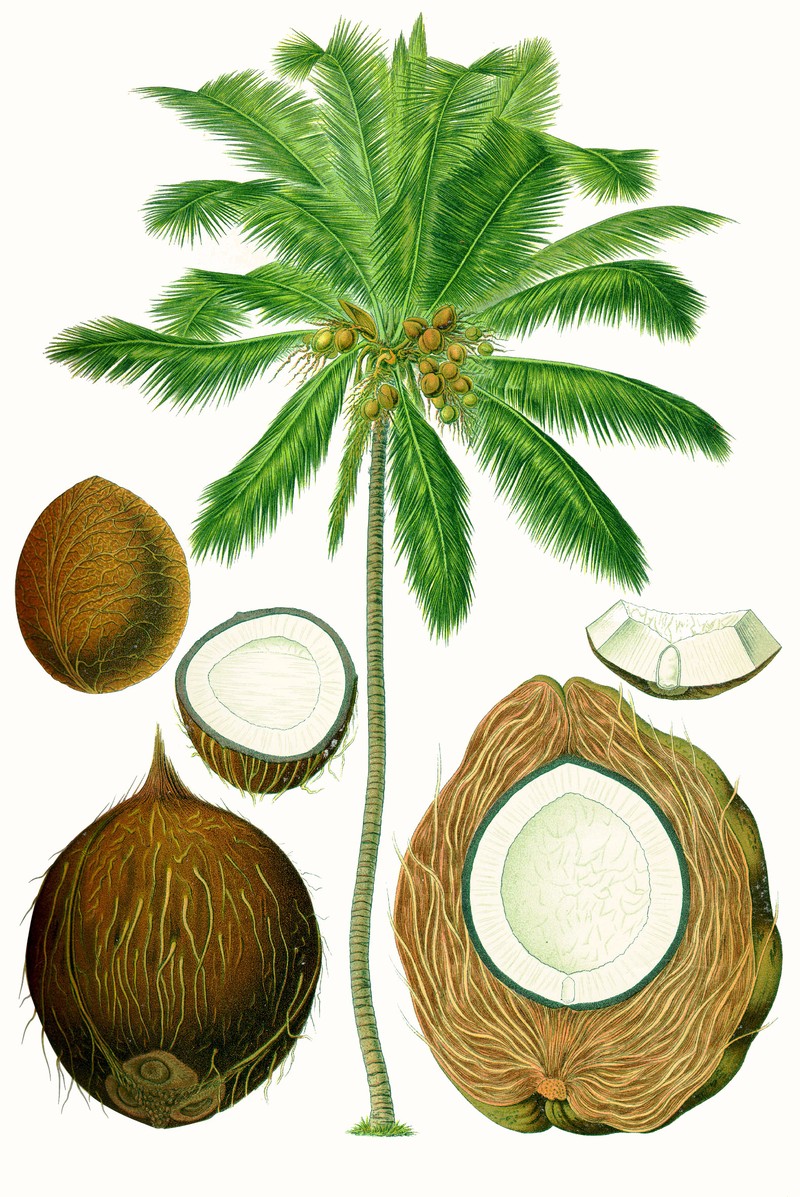
Franz Eugen Köhler, Köhler's Medizinal-Pflanzen
Taxonomy
- Division:
- Magnoliophyta | - Flowering plants
- Family:
- Arecaceae
- Genus:
- Cocos
- Species:
- Cocos nucifera
Growth Characteristics
- Life Cycle:
- Perennial
- Growth Habit:
- Tree
- Height:
- More than 40 ft
- Light Requirements:
- Full Sun
- Drought Tolerance:
- High
- Bloom Colors:
- white
- Food Forest:
- Plant contains edible parts
Native Range
United States: Florida, Georgia, Guam, Hawaii, North Carolina, Puerto Rico, Palau, South Carolina, U.S. Minor Outlying Islands, Virgin Islands
Host Plant for Caterpillars
Agonoxena argaula, Batrachedra mathesoni, Erechthias minuscula, 🛑Kukui moth (Omiodes blackburni), litchi fruit borer (Cryptophlebia ombrodelta), Palpidia pallidior, Pyroderces badia, Saddleback Caterpillar Moth (Acharia stimulea), Asbolis capucinus
Soil Requirements
- Soil Type:
- sandy, well-drained, nutrient-rich soil
- pH:
- 5.0 - 8.0 (slightly acidic to neutral)
- Drainage:
- excellent drainage required
- Moisture:
- consistently moist
- Notes:
- Thrives in coastal areas with high humidity
Germination Information
Pre-treatment: Seeds may be scarified by cutting a notch through the husk. Soaking in water for up to two weeks may hasten germination. Removal of the husk is not necessary nor recommended.
Establishment: Coconut fruits ripen throughout the year. Collection of fully mature seeds that have turned brown, but not fallen to the ground, is best. Avoid seeds with insect damage, cracks, oozing, or no water inside. Protect the area from rodents throughout the growth and establishment phases.
Source: npn.rngr.net