
Coconut Palm
Cocos nucifera
- Native to:
- American Samoa, Australia, Bismarck Archipelago, Guam, Maluku, New Guinea, Palau, Philippines, Samoa, Santa Cruz Is., Solomon Is., Tokelau-Manihiki, Tonga, U.S. Minor Outlying Islands, Vanuatu
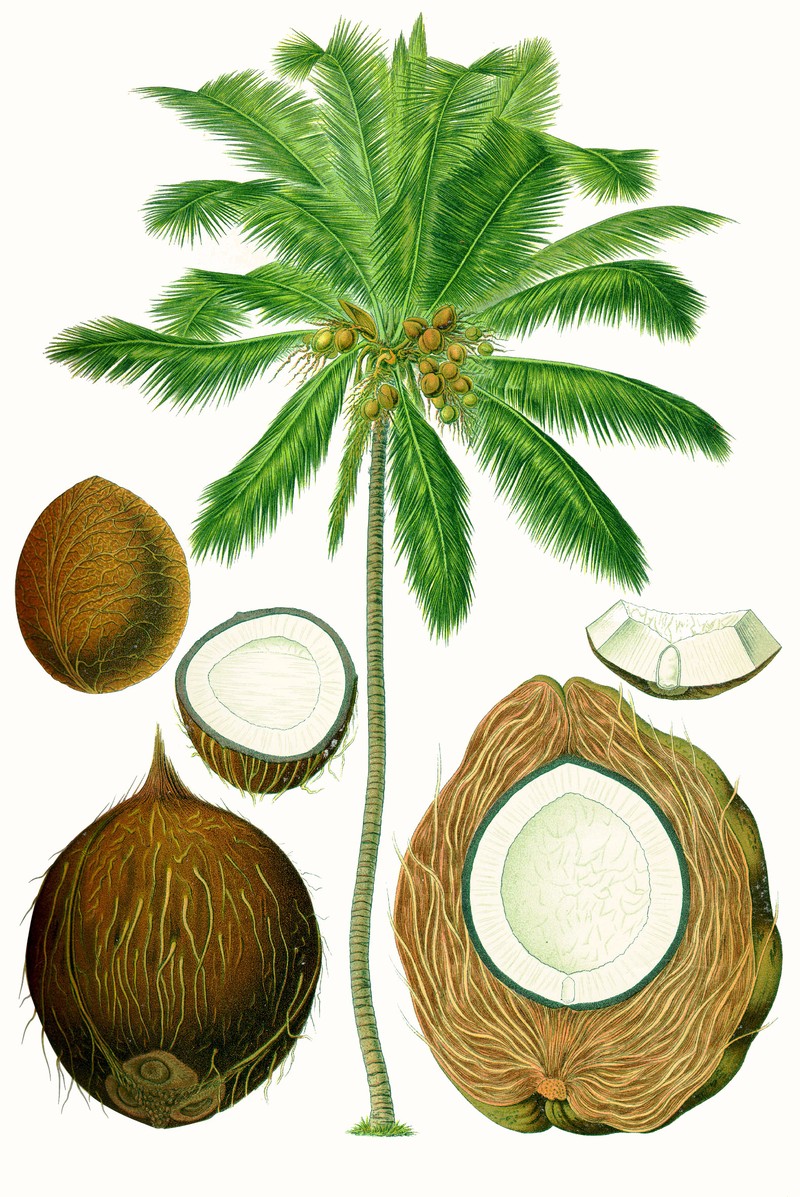
Patrick Verdier, Free On Line Photos (www.folp.free.fr)
Taxonomy
- Division:
- Magnoliophyta | - Flowering plants
- Family:
- Arecaceae
- Genus:
- Cocos
- Species:
- Cocos nucifera
- USDA Symbol:
- CONU
Growth Characteristics
- Life Cycle:
- Perennial
- Growth Habit:
- Tree
- Height:
- 3000 cm
- Light Requirements:
- Full Sun
- Drought Tolerance:
- High
- Bloom Months:
- jan,feb,mar,apr,may,jun,jul,aug,sep,oct,nov,dec
- Bloom Colors:
- yellow, white
- Food Forest:
- Contains edible parts
Wildlife Benefits
- Bees:
- ★☆☆☆☆ Documented bee visitation (GBIF)
- Butterflies & Moths:
- ★★★★★ Documented Lepidoptera association (GBIF)
- Caterpillars:
- ★★☆☆☆ Recorded caterpillar host plant (HOSTS Database)
Host Plant for Caterpillars
Batrachedra mathesoni, Erechthias minuscula, Palpidia pallidior, Pyroderces badia, Saddleback Caterpillar Moth (Acharia stimulea), Asbolis capucinus
Reported Fauna Sightings
Moths:Io moth (Automeris io)
Garden & Ecology Notes
- Wildlife Value:
- birds, small mammals
- Salt Tolerant:
- Yes
Soil Requirements
- Soil Type:
- sandy, well-drained, nutrient-rich soil
- pH:
- 5.0 - 8.0 (slightly acidic to neutral)
- Drainage:
- excellent drainage required
- Moisture:
- consistently moist
- Notes:
- Thrives in coastal areas with high humidity
Propagation & Germination
- Germination Time:
- 90–180 days
- Notes:
- Seeds germinate slowly; pre-soaking and warm, moist conditions aid germination.
Pre-treatment: Seeds may be scarified by cutting a notch through the husk. Soaking in water for up to two weeks may hasten germination. Removal of the husk is not necessary nor recommended.
Establishment: Coconut fruits ripen throughout the year. Collection of fully mature seeds that have turned brown, but not fallen to the ground, is best. Avoid seeds with insect damage, cracks, oozing, or no water inside. Protect the area from rodents throughout the growth and establishment phases.
Source: npn.rngr.net