
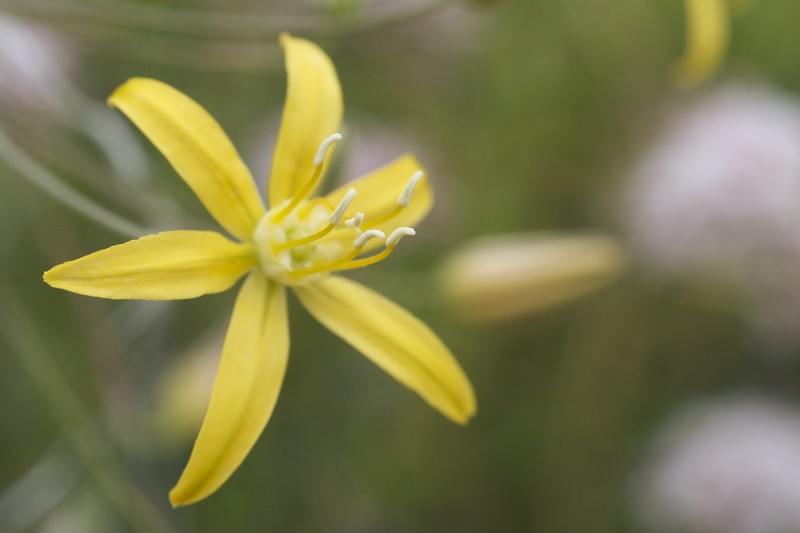
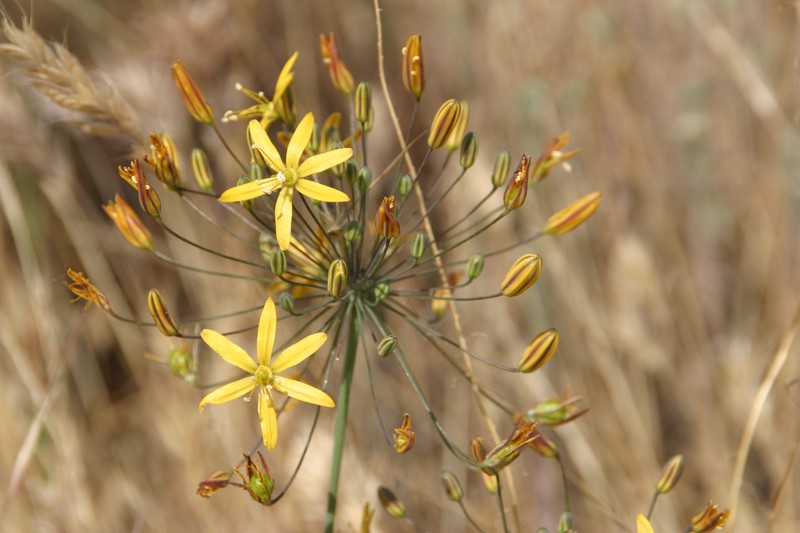
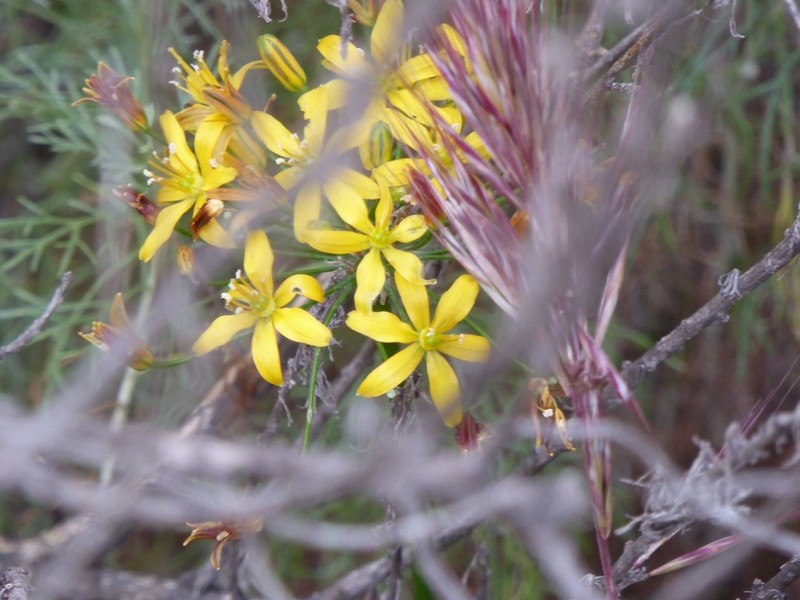
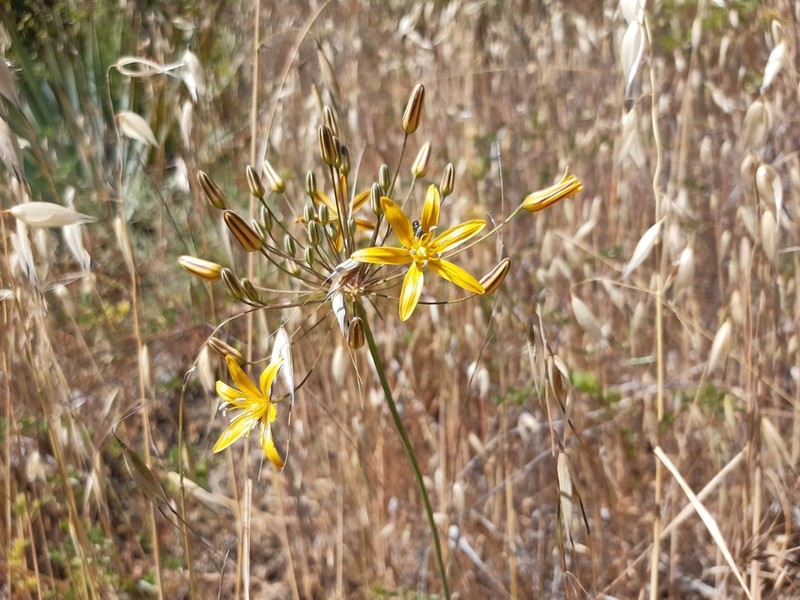
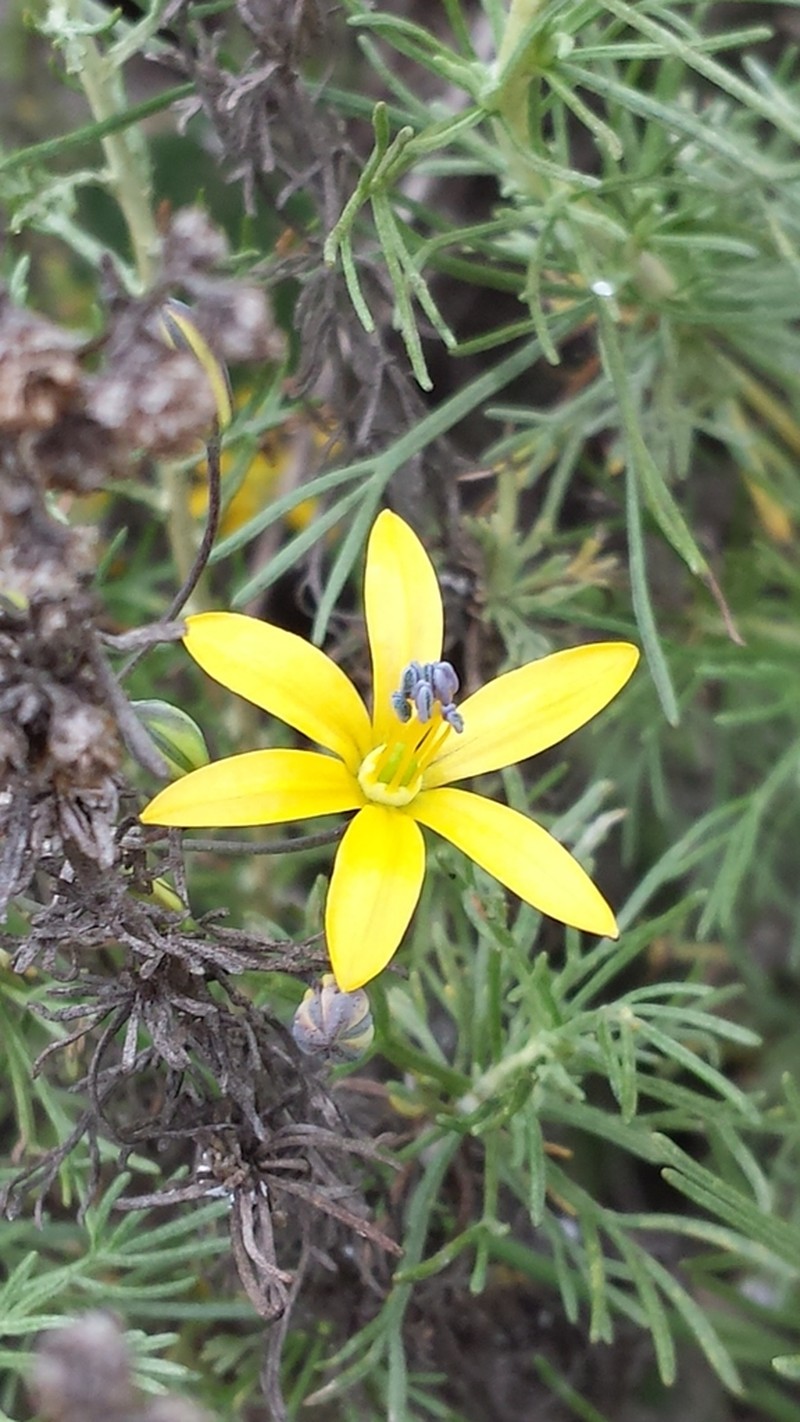
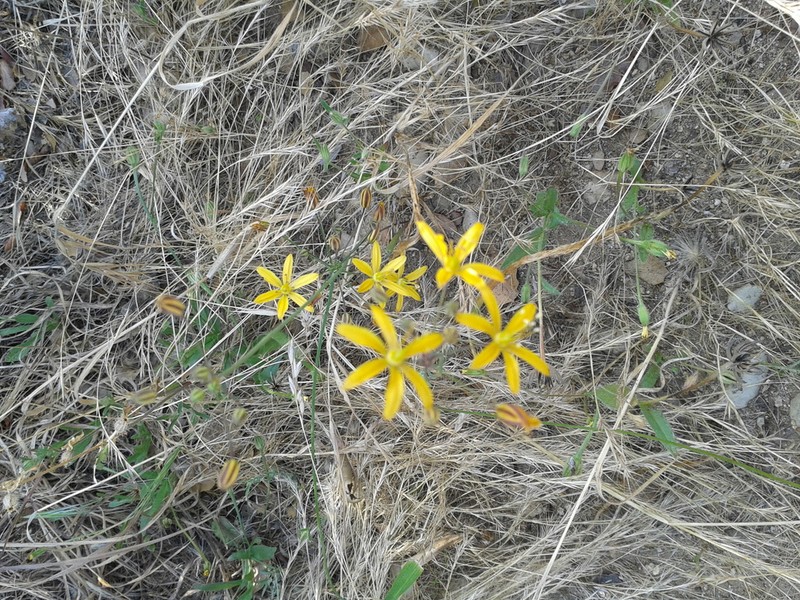
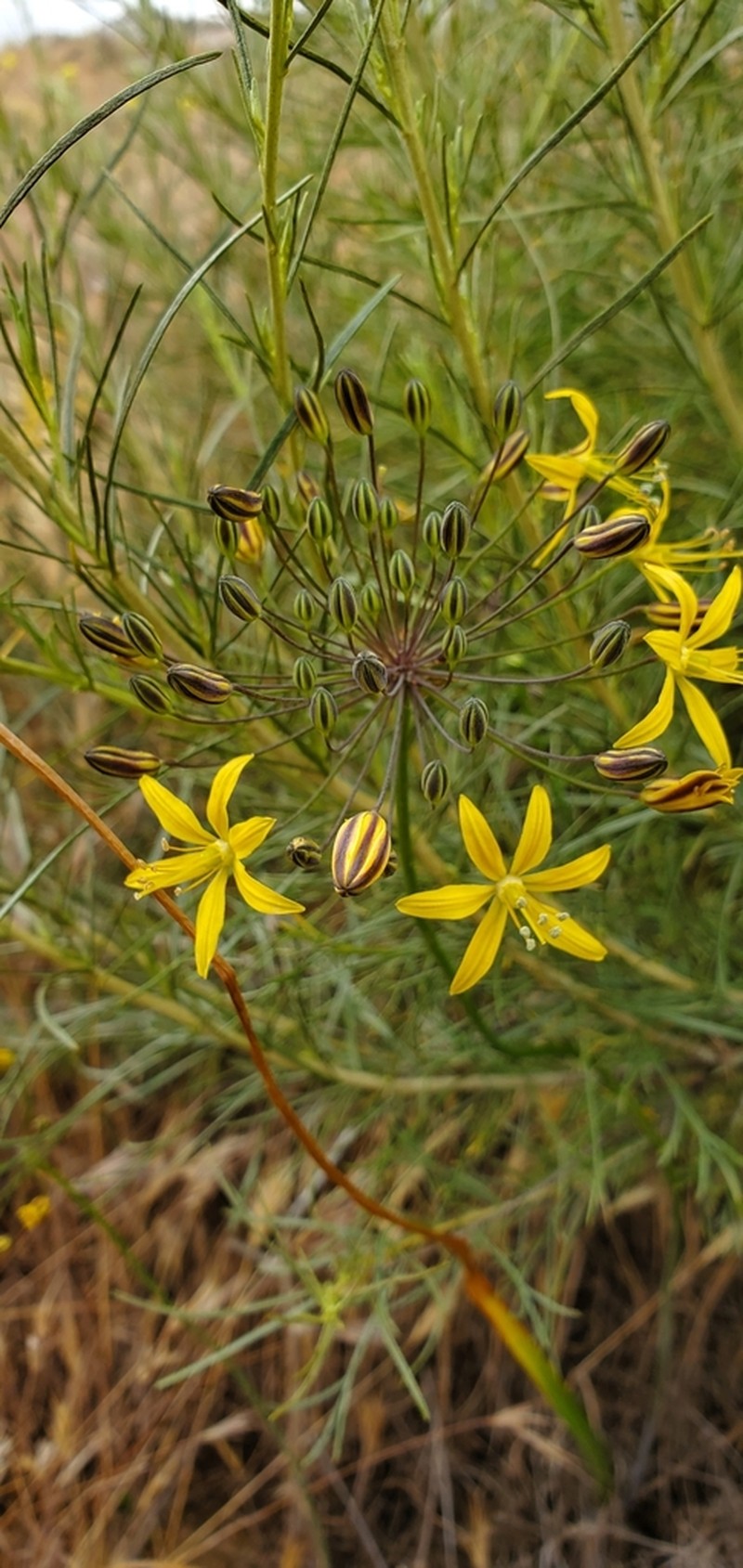
Common Goldenstar
Bloomeria crocea
- Native to:
- Mexico, United States
Eric in SF
Taxonomy
- Division:
- Magnoliophyta | - Flowering plants
- Family:
- Asparagaceae
- Genus:
- Bloomeria
- Species:
- Bloomeria crocea
- USDA Symbol:
- BLCR
Growth Characteristics
- Life Cycle:
- Perennial
- Growth Habit:
- Forb/herb
- Height:
- 60 cm
- Light Requirements:
- Full Sun
- Drought Tolerance:
- High
- Bloom Months:
- apr,may,jun
- Bloom Colors:
- yellow
Wildlife Benefits
- Bees:
- ★☆☆☆☆ Documented bee visitation (GBIF)
- Butterflies & Moths:
- ★☆☆☆☆ Documented Lepidoptera association (GBIF)
Garden & Ecology Notes
- Wildlife Value:
- bees, butterflies
- Deer Resistant:
- Yes
- Fire Ecology:
- Fire adapted — tolerates or benefits from fire
- Fire Notes:
- Bulb persists through fire; may flower more abundantly post-fire.
Soil Requirements
- Soil Type:
- sandy, well-drained, nutrient-poor soil
- pH:
- 6.0 - 7.5 (slightly acidic to neutral)
- Drainage:
- excellent drainage required
- Moisture:
- dry to moderate
- Notes:
- native to dry, open grasslands and rocky slopes
Propagation & Germination
Pre-treatment: None required
Establishment: Seeds are hand collected when seed capsules have fully matured, which is typically from mid-June to August. Optimum time for seed collection is in June and July. The Common Golden Star is frequently found in southern California and on Catalina island, inhabiting chaparral, coastal sage shrub communities and grassy slopes.
Source: npn.rngr.net