
Common Yarrow
Achillea millefolium
Also known as: Pacific yarrow, boreal yarrow, coast yarrow, common yarrow, giant yarrow, western yarrow
- Native to:
- Afghanistan, Albania, Austria, Baltic States, Belarus, Belgium, Bulgaria, Czechia-Slovakia, Denmark, Finland, Føroyar, France, Germany, Great Britain, Greece, Greenland, Hungary, Iceland, Iran, Iraq, Ireland, Italy, Kazakhstan, Kirgizstan, Krym, Kuril Is., Labrador, Lebanon-Syria, Netherlands, North Caucasus, Norway, NW. Balkan Pen., Pakistan, Poland, Portugal, Romania, Russia, Sardegna, Sicilia, Spain, Sweden, Switzerland, Tadzhikistan, Transcaucasus, Türkiye, Türkiye-in-Europe, Turkmenistan, Ukraine, United States, Uzbekistan
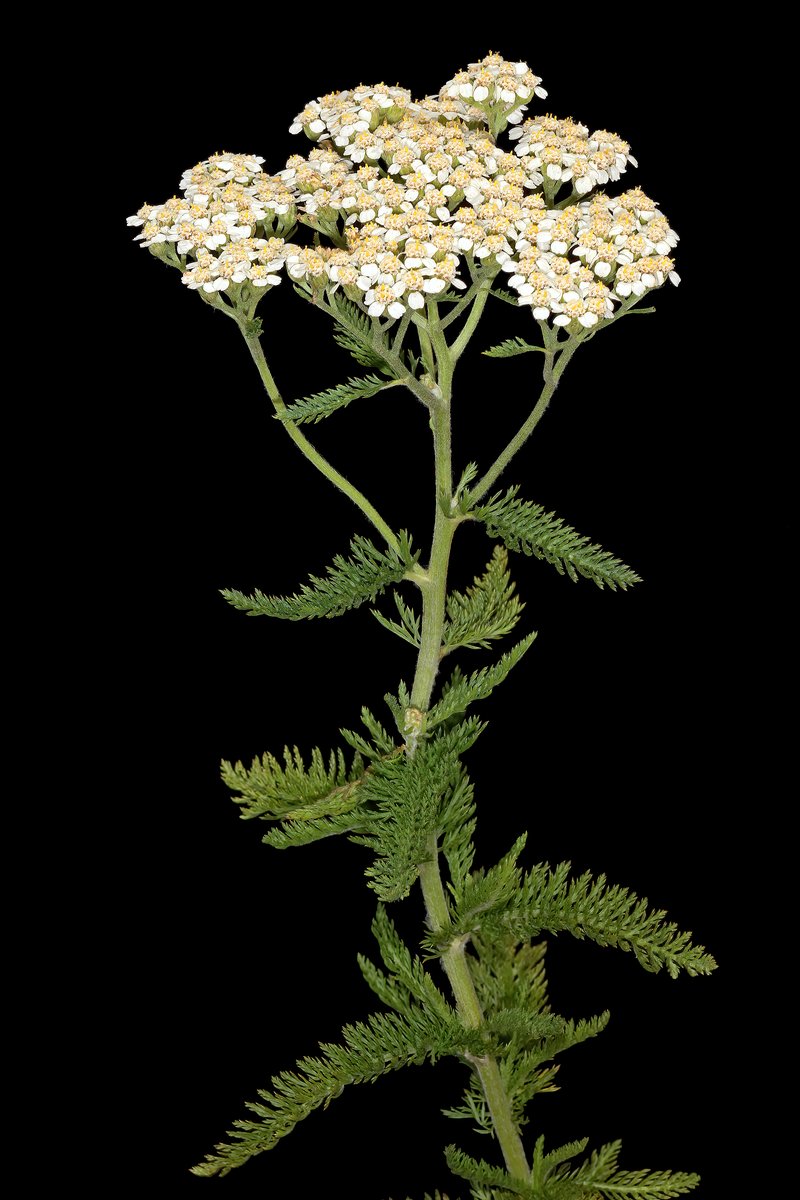
Petar Milošević
Taxonomy
- Division:
- Magnoliophyta | - Flowering plants
- Family:
- Asteraceae
- Genus:
- Achillea
- Species:
- Achillea millefolium
- USDA Symbol:
- ACMI2
Growth Characteristics
- Life Cycle:
- Perennial
- Growth Habit:
- Forb/herb
- Height:
- 90 cm
- Light Requirements:
- Full Sun,Part Shade
- Drought Tolerance:
- High
- Bloom Months:
- jun,jul,aug,sep
- Bloom Colors:
- white, pink
Wildlife Benefits
- Bees:
- ★★★☆☆ Documented bee visitation (GBIF)
- Butterflies & Moths:
- ★★★★★ Documented Lepidoptera association (GBIF)
- Caterpillars:
- ★★☆☆☆ Recorded caterpillar host plant (HOSTS Database)
Keystone Species Ranking
- Pollen Specialist Bee Keystone:
- ★☆☆☆☆ Native pollen specialist bee species supported by this genus (NWF)
Host Plant for Caterpillars
Reported Fauna Sightings
Garden & Ecology Notes
- Wildlife Value:
- butterflies, bees
- Deer Resistant:
- Yes
- Fragrant:
- Yes
Soil Requirements
- Soil Type:
- poor, sandy, well-drained soil
- pH:
- 5.5 - 7.0 (slightly acidic to neutral)
- Drainage:
- excellent drainage required
- Moisture:
- dry to moderate
- Notes:
- prefers open, sunny locations
Propagation & Germination
- Stratification:
- None required
- Germination Time:
- 7–14 days
- Notes:
- Seeds germinate readily without pretreatment; surface sow and keep moist at 18-21°C.
Pre-treatment: Seeds can be placed in 0-1°C (32-34°F) for a 10-day cold stratification treatment and then exposed to 22-25°C (72-77°F). Some protocols suggest no pre-treatment is necessary.
Establishment: There are variations in pre-treatment protocols, with some suggesting a cold stratification treatment while others suggest no pre-treatment is necessary. The germination temperature also varies slightly between protocols. The plant is a circumboreal species found throughout North America, Europe and Asia.
Source: npn.rngr.net
ORGHPS Germination Guide: Sow @ 20C. Germinates within 3 months. Requires light / surface sow (fine seed).
Where to Buy
Nationwide Seller
- Prairie Moon Nursery (nursery and seeds)
- Sheffield's Seed (seeds)
- Wild Seed Project (seeds)
- Native Plants Nursery (nursery)
- Native Plants Nursery (nursery)
- Ernst Seeds (seeds)
- North Creek Nurseries (nursery)