
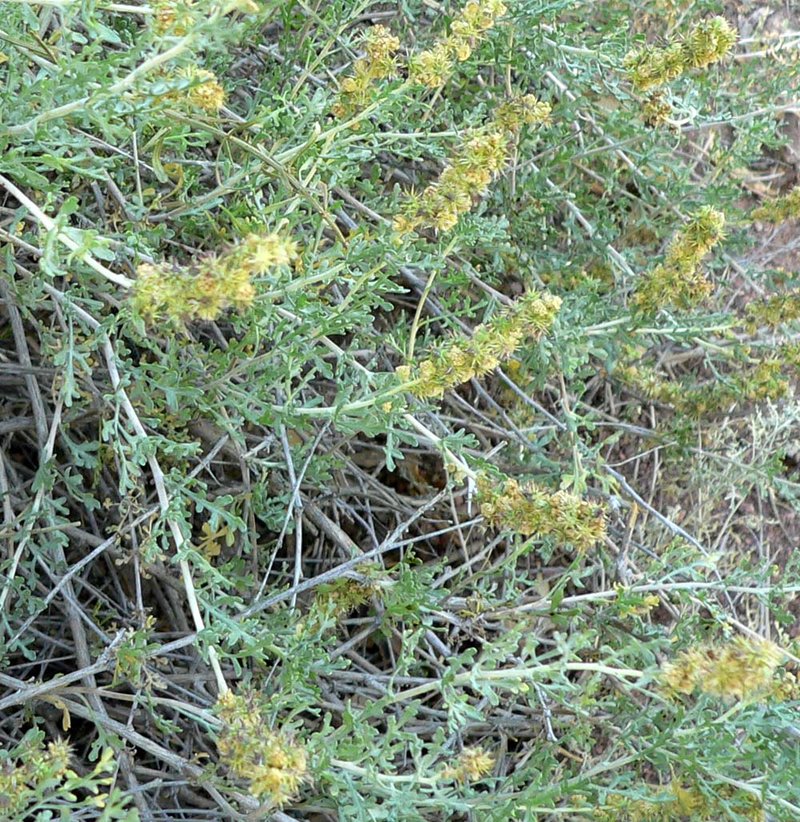
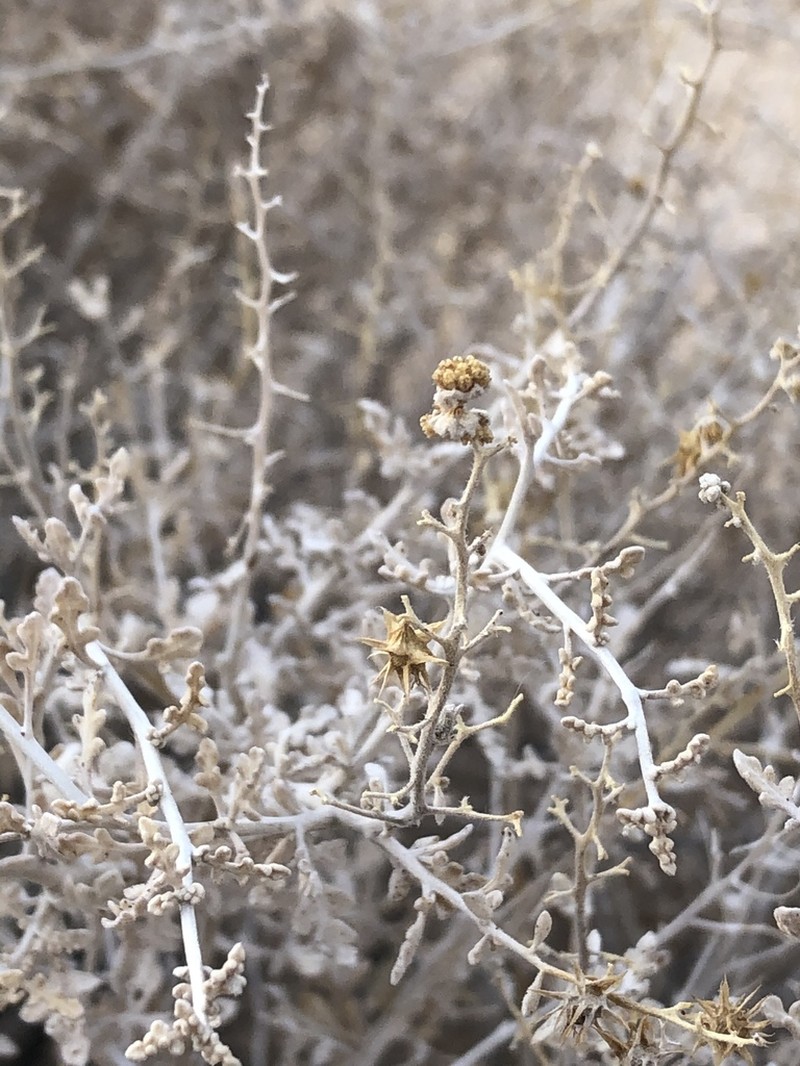
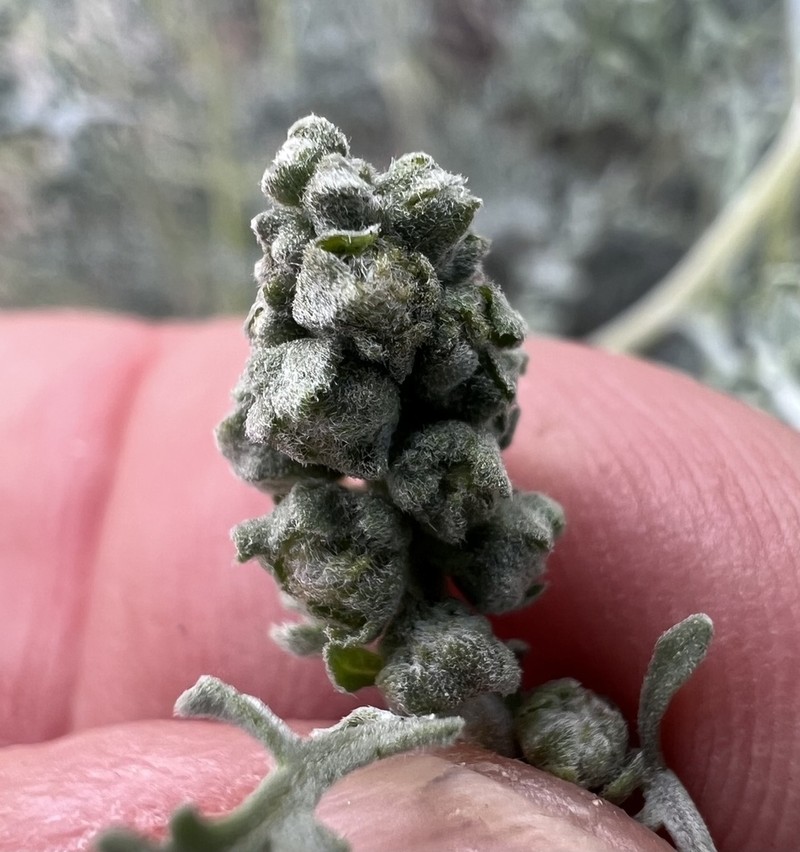
Burrobush
Ambrosia dumosa
- Native to:
- Mexico, United States
Stan Shebs
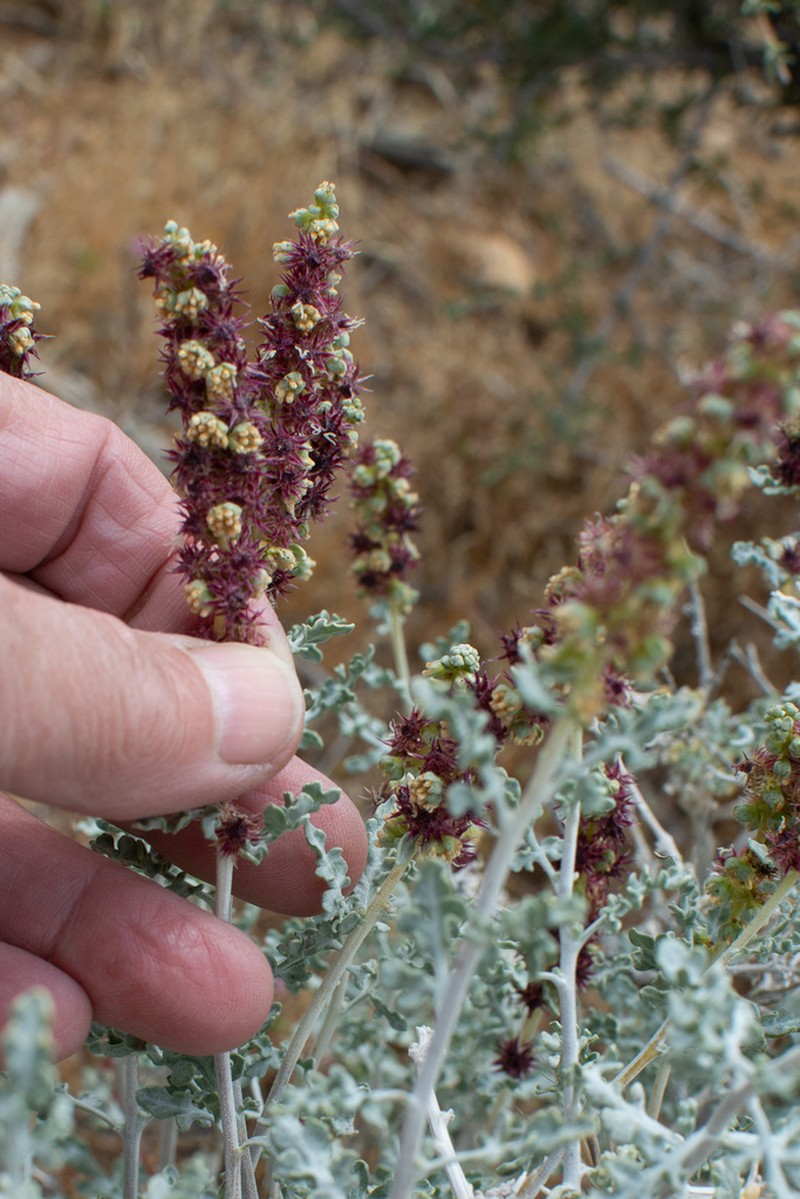
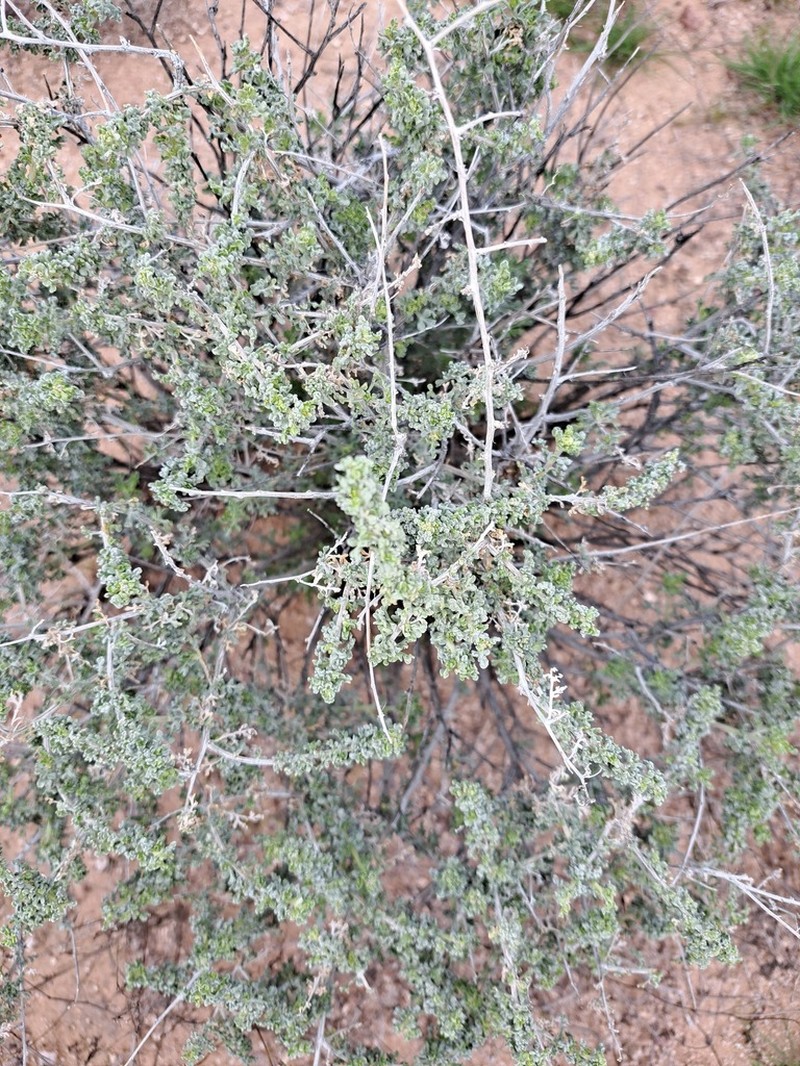
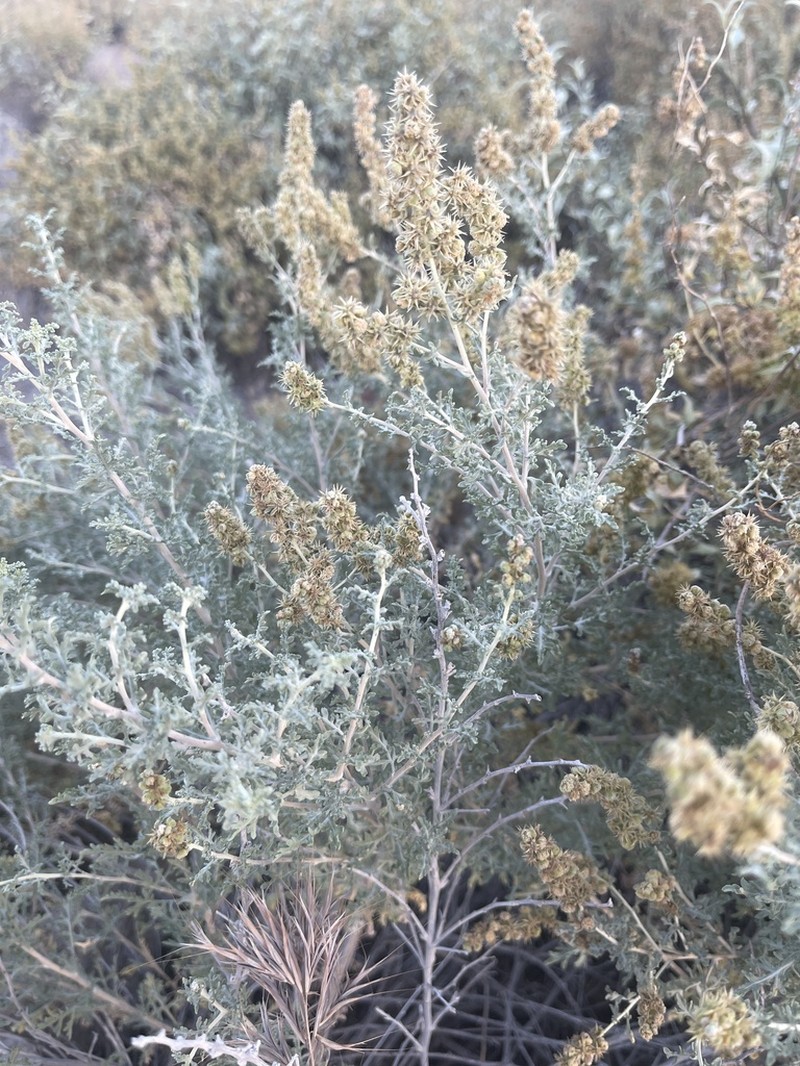
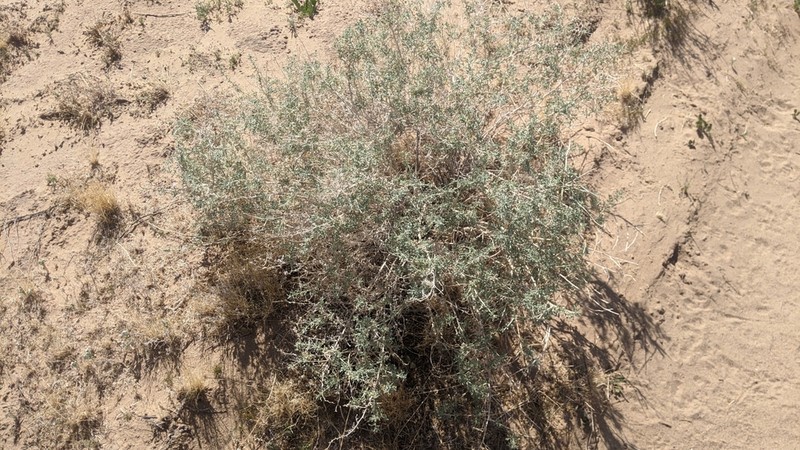
Taxonomy
- Division:
- Magnoliophyta | - Flowering plants
- Family:
- Asteraceae
- Genus:
- Ambrosia
- Species:
- Ambrosia dumosa
- USDA Symbol:
- AMDU2
Growth Characteristics
- Life Cycle:
- Perennial
- Growth Habit:
- Shrub , Subshrub
- Height:
- 60 cm
- Light Requirements:
- Full Sun
- Drought Tolerance:
- High
- Bloom Months:
- feb,mar,apr,may
- Bloom Colors:
- greenish-yellow
Wildlife Benefits
- Butterflies & Moths:
- ★★★★☆ Documented Lepidoptera association (GBIF)
- Caterpillars:
- ★☆☆☆☆ Recorded caterpillar host plant (HOSTS Database)
Host Plant for Caterpillars
Animomyia morta, Carolella beevorana, Omnivorous Leafroller (Platynota stultana), Schinia dobla, southern emerald (Synchlora frondaria)
Garden & Ecology Notes
- Wildlife Value:
- birds, small mammals
- Deer Resistant:
- Yes
- Salt Tolerant:
- Yes
- Fire Ecology:
- Fire adapted — tolerates or benefits from fire
- Fire Notes:
- Resprouts from root crown after fire; common in post-fire Mojave Desert communities.
Soil Requirements
- Soil Type:
- sandy, nutrient-poor, well-drained soil
- pH:
- 6.0 - 8.0 (neutral to slightly alkaline)
- Drainage:
- excellent drainage required
- Moisture:
- dry to moderate
- Notes:
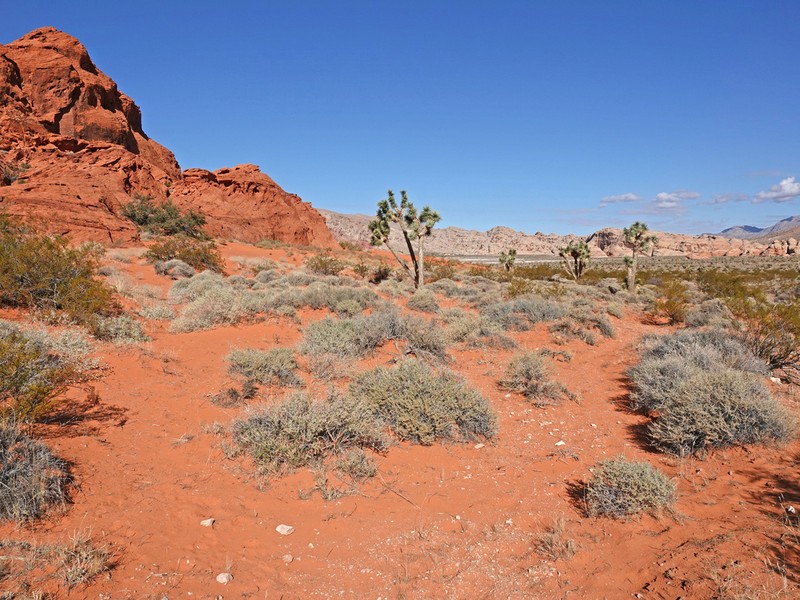
- Common in desert environments, adapted to arid conditions
Propagation & Germination
Pre-treatment: Seeds are soaked/leached in water for 10 to 24 hrs to remove any inhibitors and allow full imbibition of seeds prior to sowing. In some cases, seeds are not treated prior to sowing.
Establishment: Seeds are hand collected either in May of the previous year or when achenes have fully matured. Ambrosia dumosa is found in the Mojave and Sonoran deserts of CA, Nevada, Utah, Arizona and northern Baja California, and the western edge of the Colorado desert in southern California and Arizona.
Source: npn.rngr.net