
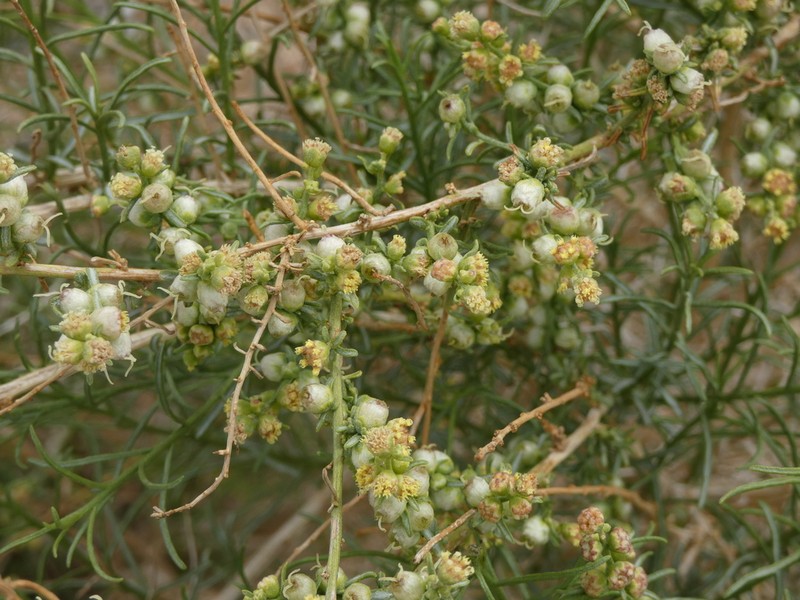
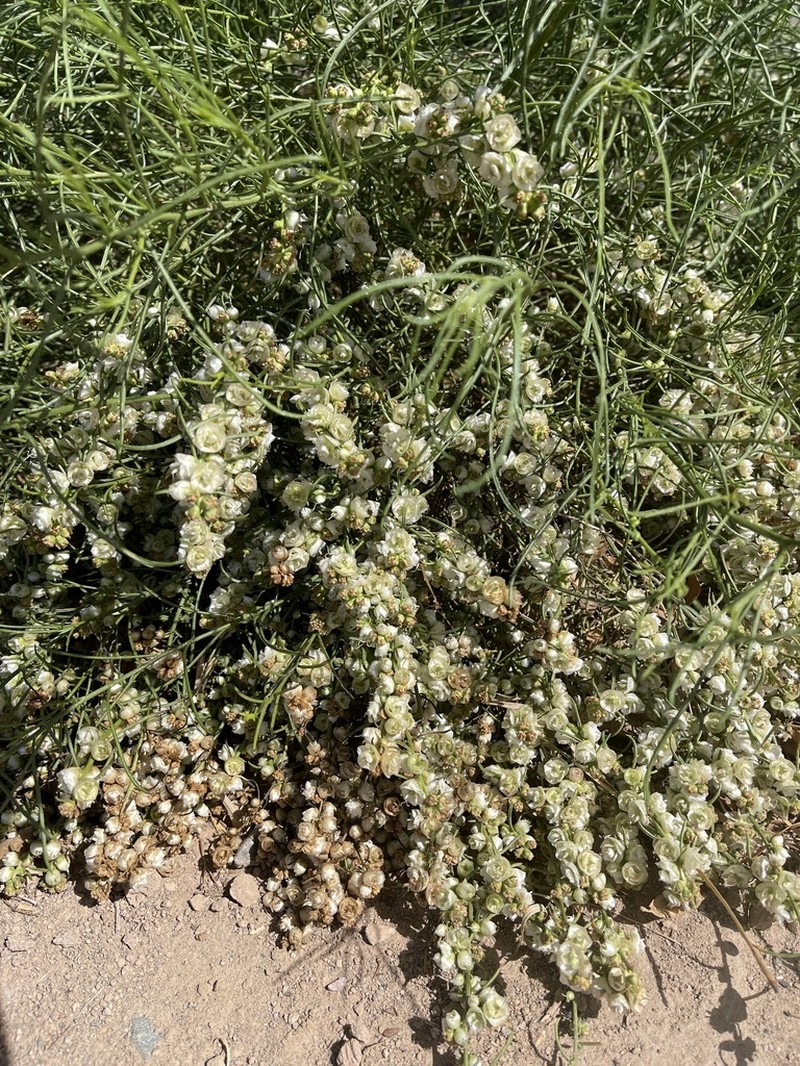
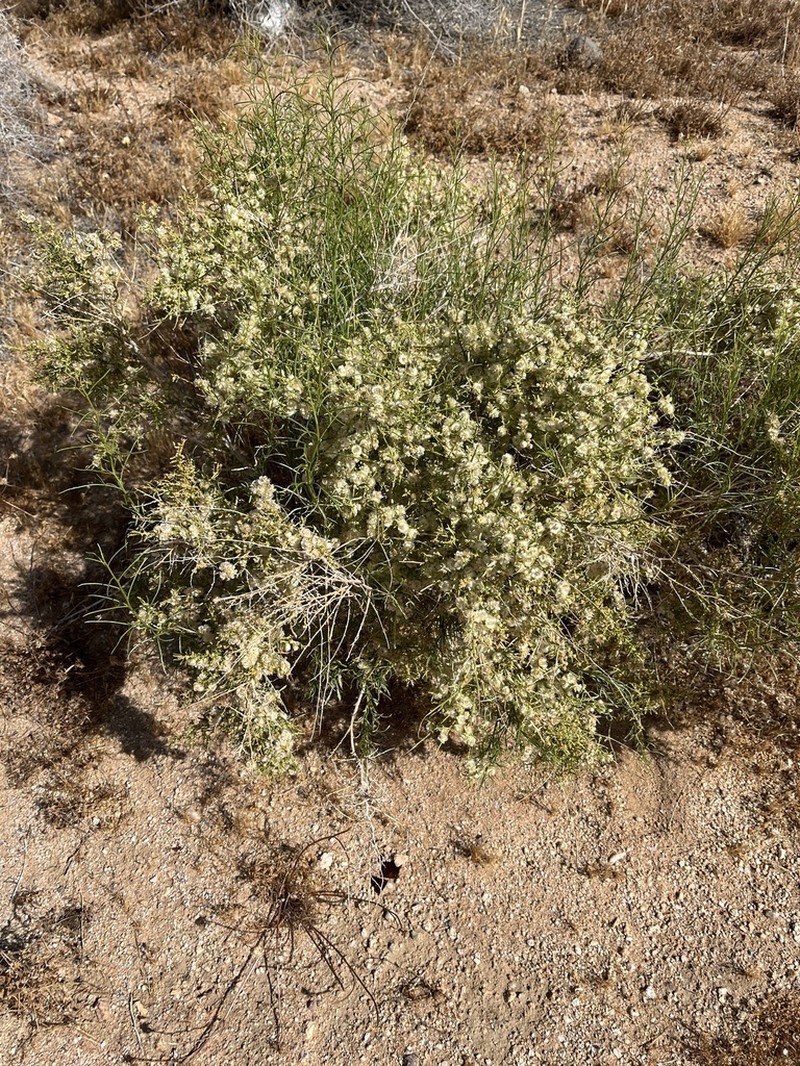
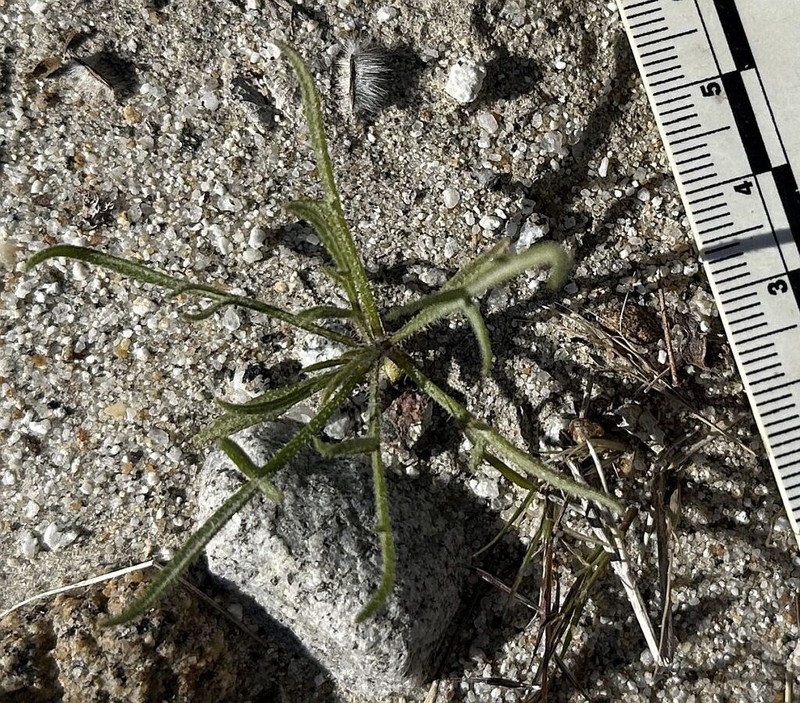
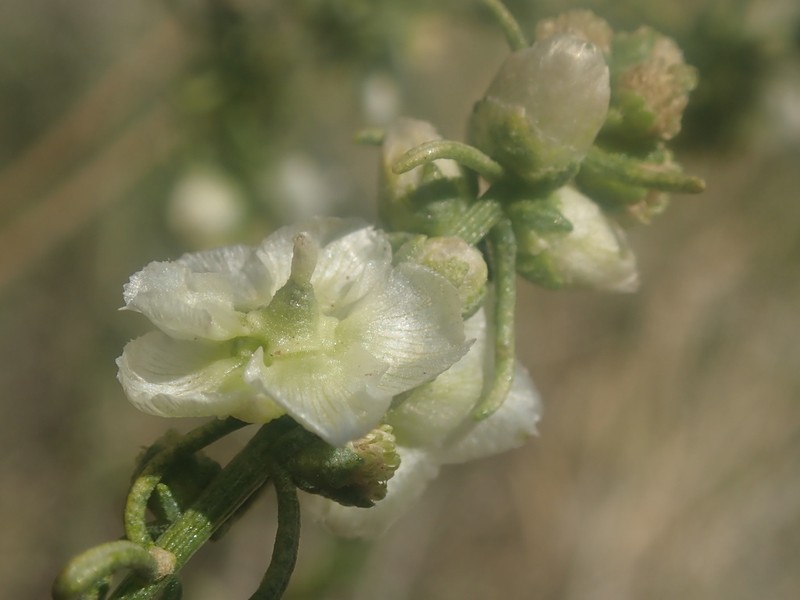
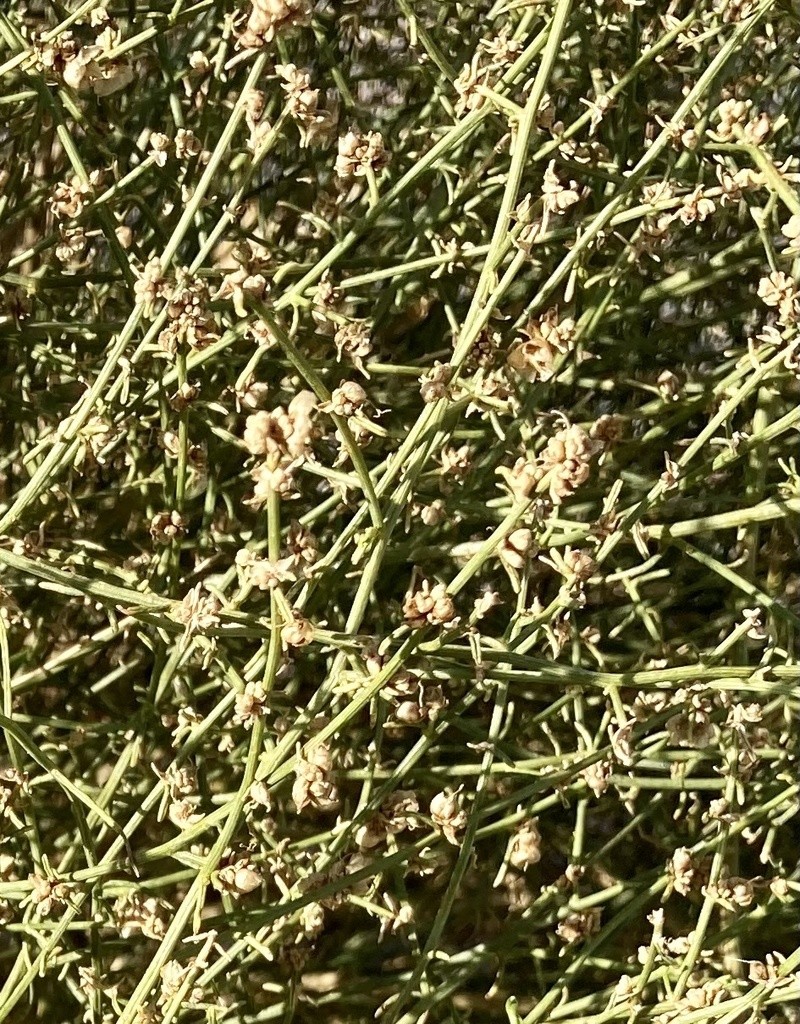
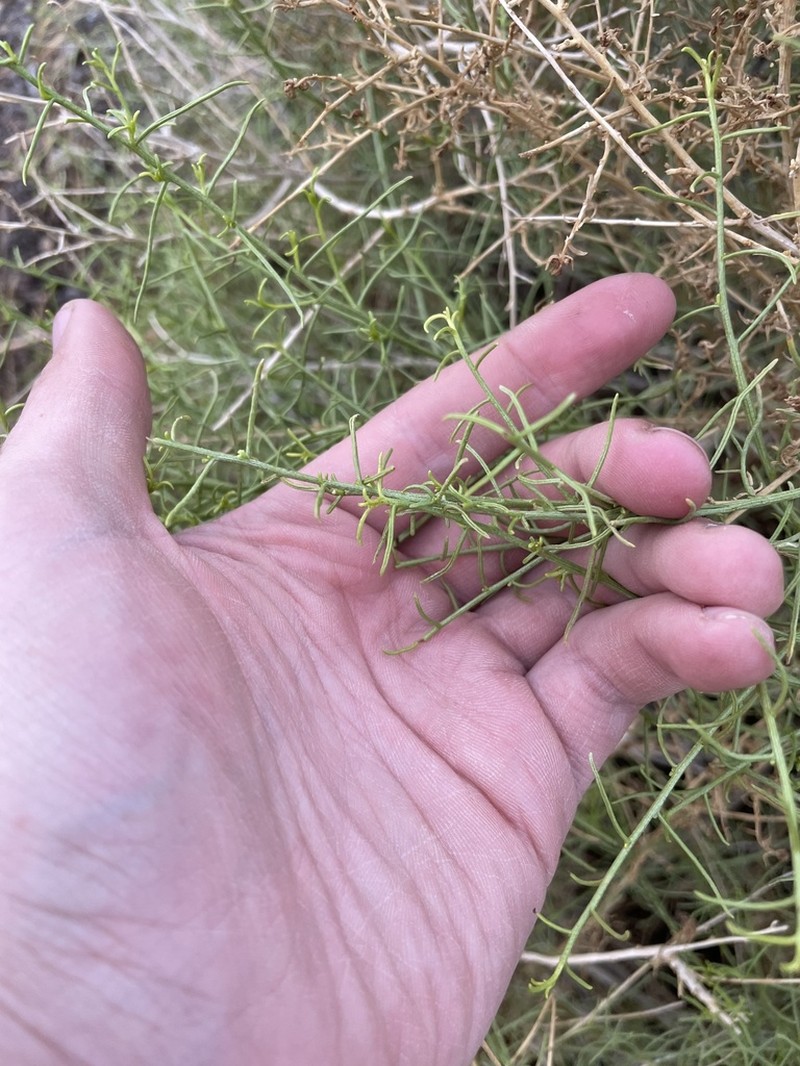
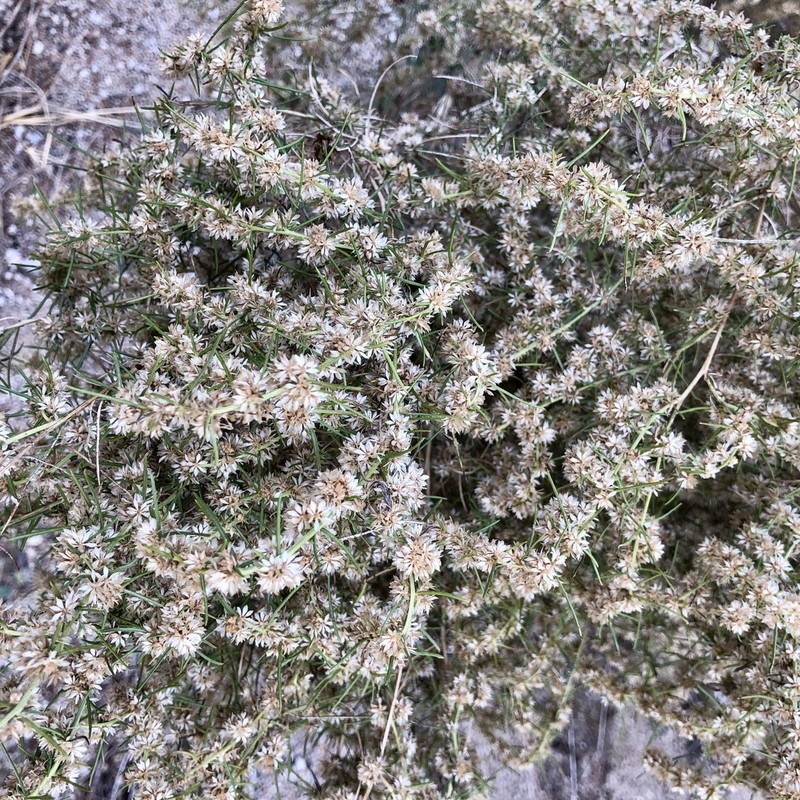
Burrobrush
Ambrosia salsola
- Native to:
- Mexico, United States
iNaturalist: © david99 (iNaturalist #248807482)
Taxonomy
- Division:
- Magnoliophyta | - Flowering plants
- Family:
- Asteraceae
- Genus:
- Ambrosia
- Species:
- Ambrosia salsola
- USDA Symbol:
- HYSA
Growth Characteristics
- Life Cycle:
- Perennial
- Growth Habit:
- Subshrub
- Height:
- 300 cm
- Light Requirements:
- Full Sun
- Drought Tolerance:
- High
- Bloom Months:
- mar,apr,may,jun,jul,aug,sep,oct,nov
- Bloom Colors:
- yellow
Wildlife Benefits
- Butterflies & Moths:
- ★☆☆☆☆ Documented Lepidoptera association (GBIF)
- Caterpillars:
- ★☆☆☆☆ Recorded caterpillar host plant (HOSTS Database)
Host Plant for Caterpillars
Somatolophia cuyama
Garden & Ecology Notes
- Wildlife Value:
- birds, small mammals
- Deer Resistant:
- Yes
- Salt Tolerant:
- Yes
- Fire Ecology:
- Fire adapted — tolerates or benefits from fire
- Fire Notes:
- Resprouts from root crown after fire; seeds germinate readily in post-fire conditions.
Soil Requirements
- Soil Type:
- sandy, well-drained, nutrient-poor soil
- pH:
- 6.0 - 8.0 (neutral to slightly alkaline)
- Drainage:
- excellent drainage required
- Moisture:
- dry to moderate
- Notes:
- Common in arid desert regions
Propagation & Germination
Pre-treatment: Seeds are soaked in water for 3 to 4 hours to remove any inhibitors and allow full imbibition prior to sowing. Seeds are directly sown into containers using a growing medium of 2 parts sand, 1 part mulch, and 2 parts perlite. Osmocote time release fertilizer is incorporated into the medium at the approximate rate of 22g per 6l PVC containers.
Establishment: Seeds are hand collected during the summer months when achenes matured. Hymenoclea salsola is common in the Mojave and Colorado deserts in sandy washes and rocky places; from southern California north to San Joaquin Valley and east to Nevada, Utah and Arizona and south to Lower California.
Source: npn.rngr.net