
Heartleaf Arnica
Arnica cordifolia
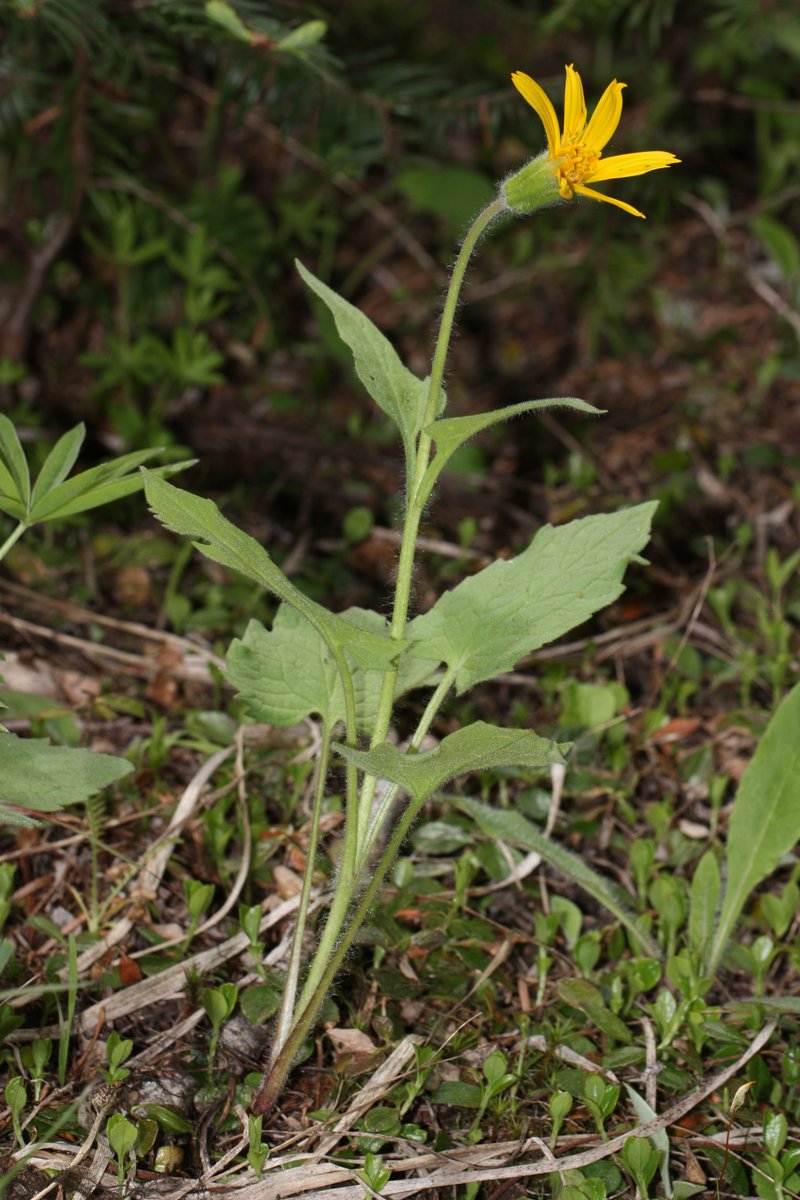
Taxonomy
- Division:
- Magnoliophyta | - Flowering plants
- Family:
- Asteraceae
- Genus:
- Arnica
- Species:
- Arnica cordifolia
Growth Characteristics
- Life Cycle:
- Perennial
- Growth Habit:
- Forb/herb
- Height:
- 2-3 ft
- Light Requirements:
- Part Shade
- Drought Tolerance:
- Medium
- Bloom Months:
- may, jun, jul, aug
- Bloom Colors:
- Yellow
Native Range
United States: Alaska, Arizona, California, Colorado, Idaho, Michigan, Montana, North Dakota, New Mexico, Nevada, Oregon, South Dakota, Utah, Washington, Wyoming, Canada: Alberta, British Columbia, Manitoba, Northwest Territories, Ontario, Saskatchewan, Yukon
Host Plant for Caterpillars
Reported Fauna Sightings
Soil Requirements
- Soil Type:
- rich, well-drained loamy soil
- pH:
- 5.5 - 7.0 (slightly acidic to neutral)
- Drainage:
- good drainage required
- Moisture:
- dry to moderate
- Notes:
- prefers open woods and forest edges
Germination Information
Pre-treatment: 60 day cold, moist stratification. Seeds are imbibed in water for 4 hours and placed in fine mesh bags buried in moist peat moss in ventilated containers under refrigeration at 1 to 3C.
Establishment: Cold, moist stratification of high elevation seed sources may increase germination percentages and germination uniformity. However, this may not be necessary for lower elevation seed sources. The seed coat is very thin, and is susceptible to insect damage and rot. Seed production under tree canopy is poor. Locate populations in full sun or in open forests or meadows for seed collection. Seeds are hand collected in July and August when achenes are easily separated from receptacle. Seeds are grey at maturity. Seeds are collected in paper bags and kept in a well ventilated drying shed prior to cleaning.
Source: npn.rngr.net