
Hairy Arnica
Arnica mollis
- Native to:
- Canada, United States
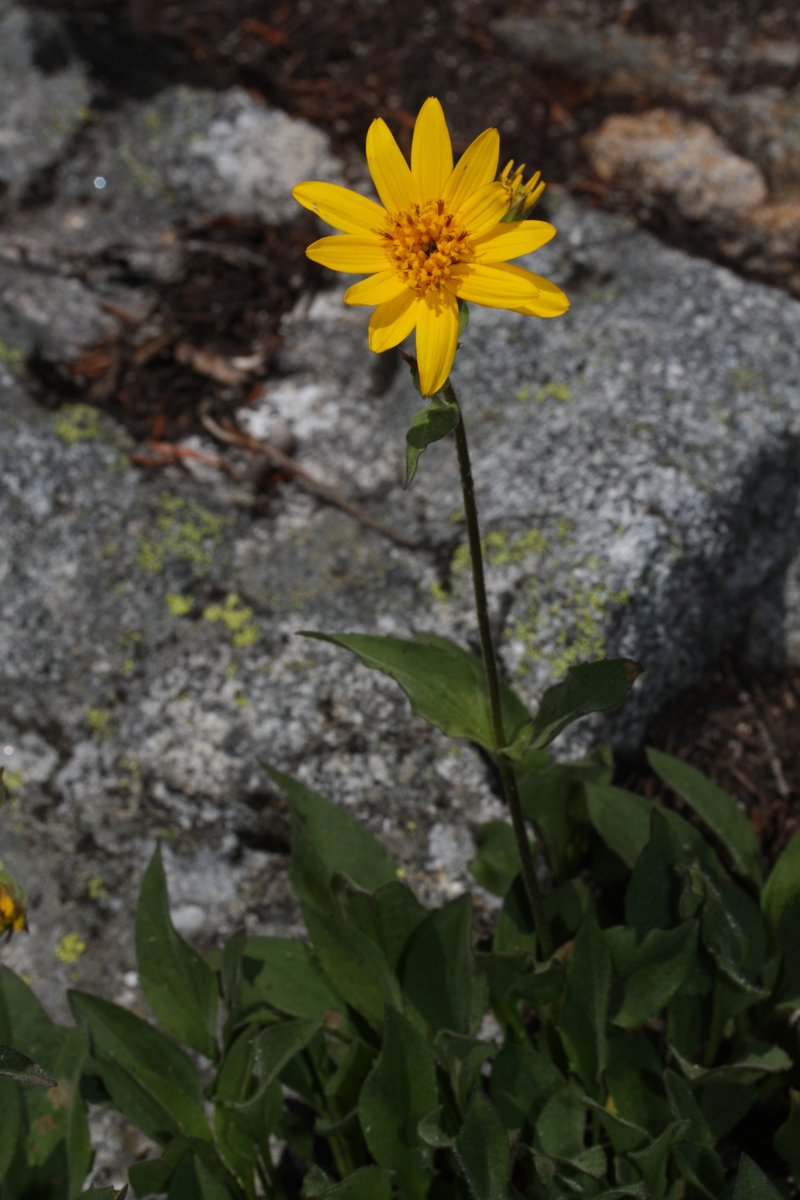
Walter Siegmund (talk)
Taxonomy
- Division:
- Magnoliophyta | - Flowering plants
- Family:
- Asteraceae
- Genus:
- Arnica
- Species:
- Arnica mollis
- USDA Symbol:
- ARMO4
Growth Characteristics
- Life Cycle:
- Perennial
- Growth Habit:
- Forb/herb
- Height:
- 80 cm
- Light Requirements:
- Full Sun
- Drought Tolerance:
- Low
- Bloom Months:
- jul,aug
- Bloom Colors:
- yellow
Wildlife Benefits
- Bees:
- ★☆☆☆☆ Documented bee visitation (GBIF)
- Butterflies & Moths:
- ★☆☆☆☆ Documented Lepidoptera association (GBIF)
Reported Fauna Sightings
Garden & Ecology Notes
- Wildlife Value:
- bees, butterflies
Soil Requirements
- Soil Type:
- moist, well-drained loamy soil
- pH:
- 5.5 - 7.0 (slightly acidic to neutral)
- Drainage:
- good drainage required
- Moisture:
- consistently moist
- Notes:
- prefers high-altitude meadows and open forests
Propagation & Germination
- Stratification:
- Cold/moist stratification required — 30–60 days
- Germination Time:
- 14–30 days
- Notes:
- Seeds benefit from cold moist stratification for 4-8 weeks.
Pre-treatment: Seeds do not require dormancy breaking. However, they can be placed into a 60 day cold moist stratification in the refrigerator at 3C. Seeds are moistened with distilled water and wrapped in paper towels and placed in an open plastic bag. Check seeds weekly for moisture.
Establishment: Seeds are collected in early September at high elevations when the pappus turns tan and is fully extended. Seeds are grey at maturity. Seeds are hand collected in paper bags and kept in a drying shed prior to cleaning. A. mollis is found in moist soil of meadows, open forest, and along streams and is most common in the subalpine zone. It ranges from Alaska to California and south through the Rocky Mountain states to Colorado.
Source: npn.rngr.net