
Biennial Wormwood
Artemisia biennis
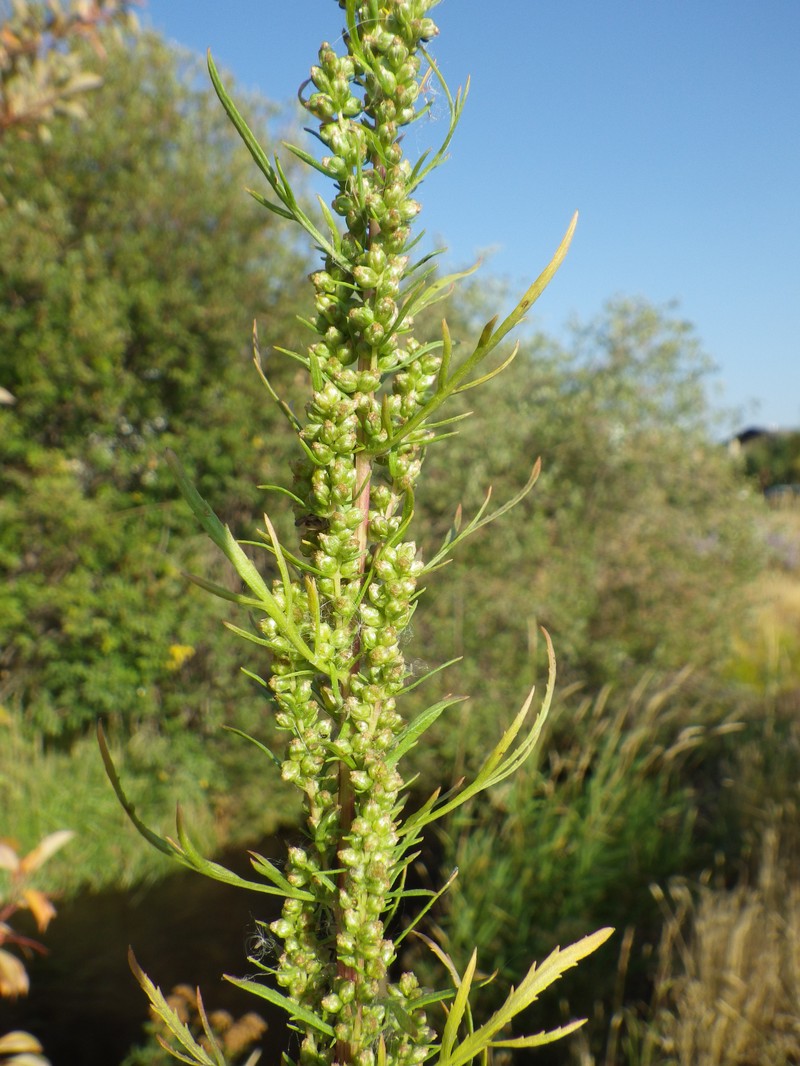
Matt Lavin from Bozeman, Montana, USA
Taxonomy
- Division:
- Magnoliophyta | - Flowering plants
- Family:
- Asteraceae
- Genus:
- Artemisia
- Species:
- Artemisia biennis
Growth Characteristics
- Life Cycle:
- Annual | Biennial
- Growth Habit:
- Forb/herb
- Height:
- 4-6 ft
- Light Requirements:
- Full Sun
- Drought Tolerance:
- Medium
- Bloom Months:
- may, jun, jul, aug, sep, oct, nov
- Bloom Colors:
- greenish-yellow, yellow
Native Range
United States: Alaska, Arizona, California, Colorado, Connecticut, Delaware, Iowa, Idaho, Illinois, Indiana, Kansas, Kentucky, Massachusetts, Maryland, Maine, Michigan, Minnesota, Missouri, Montana, North Dakota, Nebraska, New Hampshire, New Jersey, New Mexico, Nevada, New York, Ohio, Oregon, Pennsylvania, Rhode Island, South Carolina, South Dakota, Tennessee, Utah, Vermont, Washington, Wisconsin, West Virginia, Wyoming, Canada: Alberta, British Columbia, Manitoba, New Brunswick, Nova Scotia, Northwest Territories, Ontario, Prince Edward Island, Quebec, Saskatchewan, Yukon
Keystone Species Ranking
- Caterpillar Keystone:
- ★★☆☆☆ Based on number of butterfly and moth species using this genus as host plant (Source: National Wildlife Federation)
Soil Requirements
- Soil Type:
- sandy, well-drained, nutrient-poor soil
- pH:
- 6.0 - 8.0 (slightly acidic to neutral)
- Drainage:
- excellent drainage required
- Moisture:
- dry to moderate
- Notes:
- Commonly found in disturbed areas and roadsides
Germination Information
Pre-treatment: 5 month outdoor cold, moist stratification
Establishment: Seeds are hand collected in mid September when achenes turn grey and are easily removed from the disk. Seeds are collected in paper bags and kept in a well ventilated drying shed prior to cleaning. A. biennis is a biennial which occupies very sandy soils from low to high elevations, throughout the Pacific Northwest, but is widely introduced elsewhere in the United States as a weed, where it is found in waste places.
Source: npn.rngr.net