
Coastal Sagebrush

Artemisia californica
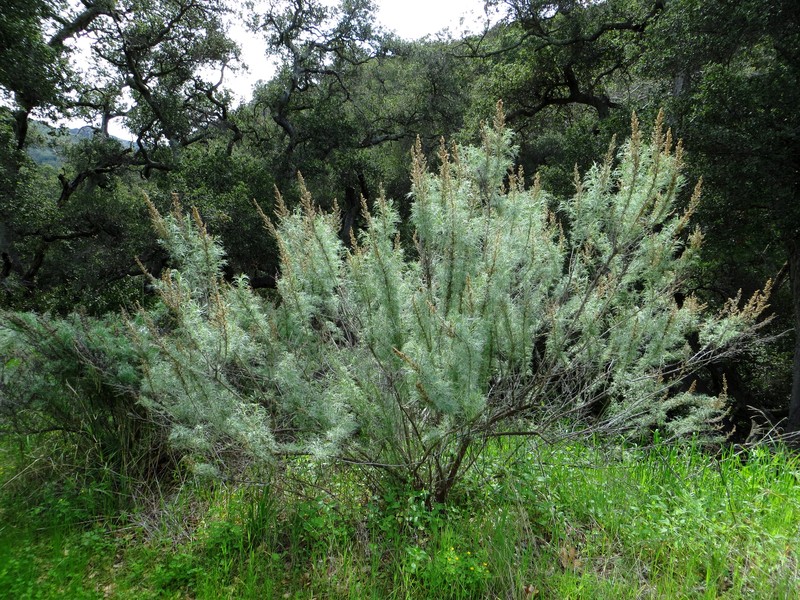
Coastal Sagebrush

Antandrus (talk) (

Taxonomy

Division:
Magnoliophyta | - Flowering plants
Family:
Asteraceae
Genus:
Artemisia
Species:
Artemisia californica

Growth Characteristics

Life Cycle:
Perennial
Growth Habit:
Shrub
Height:
8-12 ft
Light Requirements:
Full Sun
Drought Tolerance:
High
Bloom Months:
jun, jul, aug, sep, oct, nov
Bloom Colors:
Pink, Yellow, Green
Evergreen Shrub:
Yes
Landscaping Shrub:
Yes

Native Range

United States: California

Keystone Species Ranking

Caterpillar Keystone:
★★☆☆☆ Based on number of butterfly and moth species using this genus as host plant (Source: National Wildlife Federation)

Host Plant for Caterpillars

Aseptis susquesa, Bucculatrix koebelella, Cheteoscelis faseolaria, Coleophora sp. E, Eupithecia acutipennis, Lasionycta ochracea, Miodera stigmata, Pero macdunnoughi, Phaneta pallidarcis, Plataea personaria, Ptycerata sp., Synchlora erata, Wavy-lined Emerald (Synchlora aerata)

Reported Fauna Sightings

Bees: Yellow bumble bee (Bombus fervidus), Yellow bumble bee (Bombus fervidus)

Soil Requirements

Soil Type:
sandy, well-drained, nutrient-poor soil
pH:
6.0 - 8.0 (slightly acidic to neutral)
Drainage:
excellent drainage required
Moisture:
dry to moderate
Notes:
Thrives in coastal sage scrub environments

Germination Information

Pre-treatment: Seeds germinate at 23 C in light. Seed germination is stimulated by the presence of charred wood or aqueous extracts of it. 5% increase in germination as compared to control.

Establishment: Seeds are collected between October 1st and January 1st. Mature inflorescences are brown. Seed is light to dark brown at maturity. It is important to pull achenes out of seed head at time of collection to check for maturity. Seeds should not be green. A. californica is found on dry slopes and fans, below 900 meters elevation, in coastal scrub and strand communities; from Marin and Napa counties south to Lower California.

Source: npn.rngr.net