
Deltoid Balsamroot
Balsamorhiza deltoidea
- Native to:
- Canada, United States
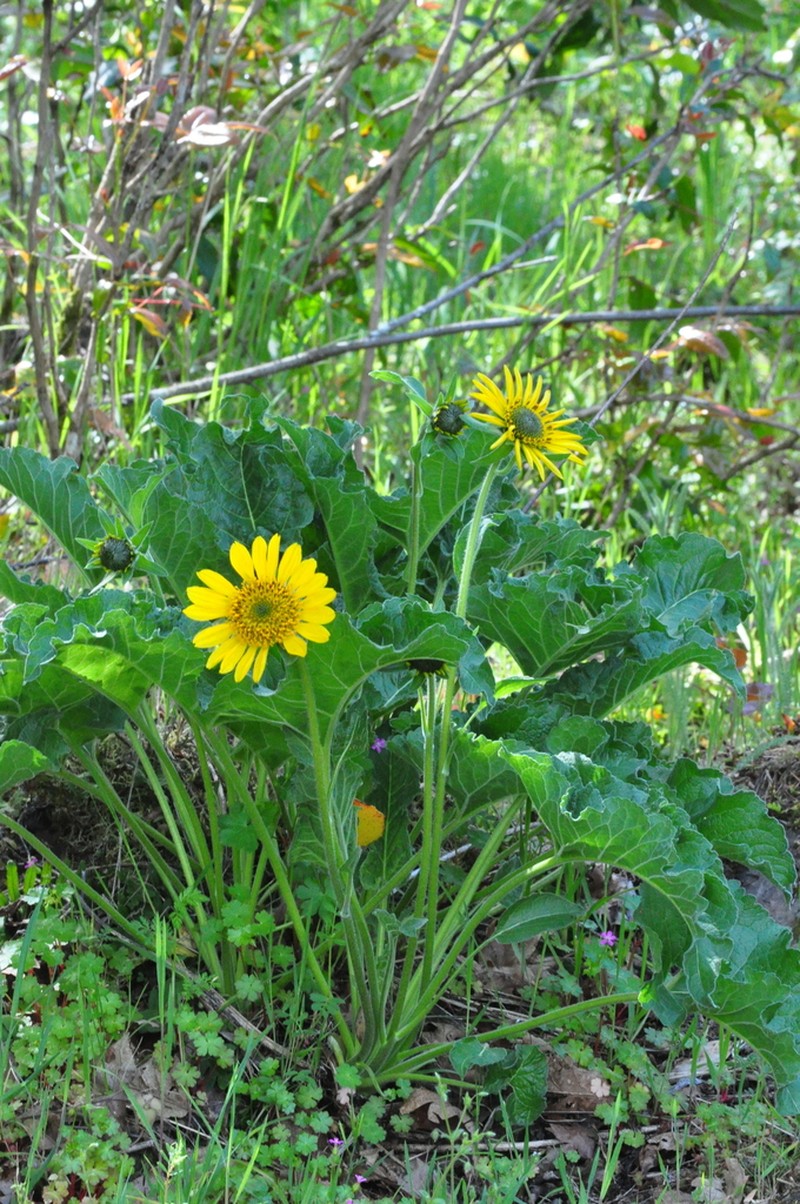
iNaturalist: © carexobnupta (iNaturalist #76205832)
Taxonomy
- Division:
- Magnoliophyta | - Flowering plants
- Family:
- Asteraceae
- Genus:
- Balsamorhiza
- Species:
- Balsamorhiza deltoidea
- USDA Symbol:
- BADE2
Growth Characteristics
- Life Cycle:
- Perennial
- Growth Habit:
- Forb/herb
- Height:
- 90 cm
- Light Requirements:
- Full Sun
- Drought Tolerance:
- High
- Bloom Months:
- apr,may,jun
- Bloom Colors:
- yellow
Wildlife Benefits
- Bees:
- ★☆☆☆☆ Documented bee visitation (GBIF)
- Butterflies & Moths:
- ★★☆☆☆ Documented Lepidoptera association (GBIF)
Reported Fauna Sightings
Garden & Ecology Notes
- Wildlife Value:
- bees, butterflies
- Fire Ecology:
- Fire adapted — tolerates or benefits from fire
- Fire Notes:
- Resprouts from deep taproot after fire; benefits from post-fire conditions.
Soil Requirements
- Soil Type:
- well-drained, rocky or sandy soil
- pH:
- 6.0 - 7.5 (slightly acidic to neutral)
- Drainage:
- excellent drainage required
- Moisture:
- dry to moderate
- Notes:
- thrives in open, sunny habitats
Propagation & Germination
- Stratification:
- Cold/moist stratification required — 30–60 days
- Germination Time:
- 14–30 days
- Notes:
- Seeds benefit from cold stratification for 30-60 days to break dormancy.
Pre-treatment: Sow seeds into cone-tainers filled with Sunshine #1 (a peat-based media) amended with micro-nutrients (Micromax) and a slow-release fertilizer (Osmocote 14-14-14). Cover with poly-ethylene bags and place in a walk-in cooler for 90 days. Alternatively, outdoor cold-moist stratification for 90 days can be used. Use of smoke water can improve germination.
Establishment: Seed collection occurs mid-July through October. Use bird netting over seed production field to prevent birds from taking all viable seed. Cut heads individually as they ripen. Heads are ripe when seed will loosen with light rubbing. Found in grassy slopes, open forests, shrubby areas from California to British Columbia.
Source: npn.rngr.net