
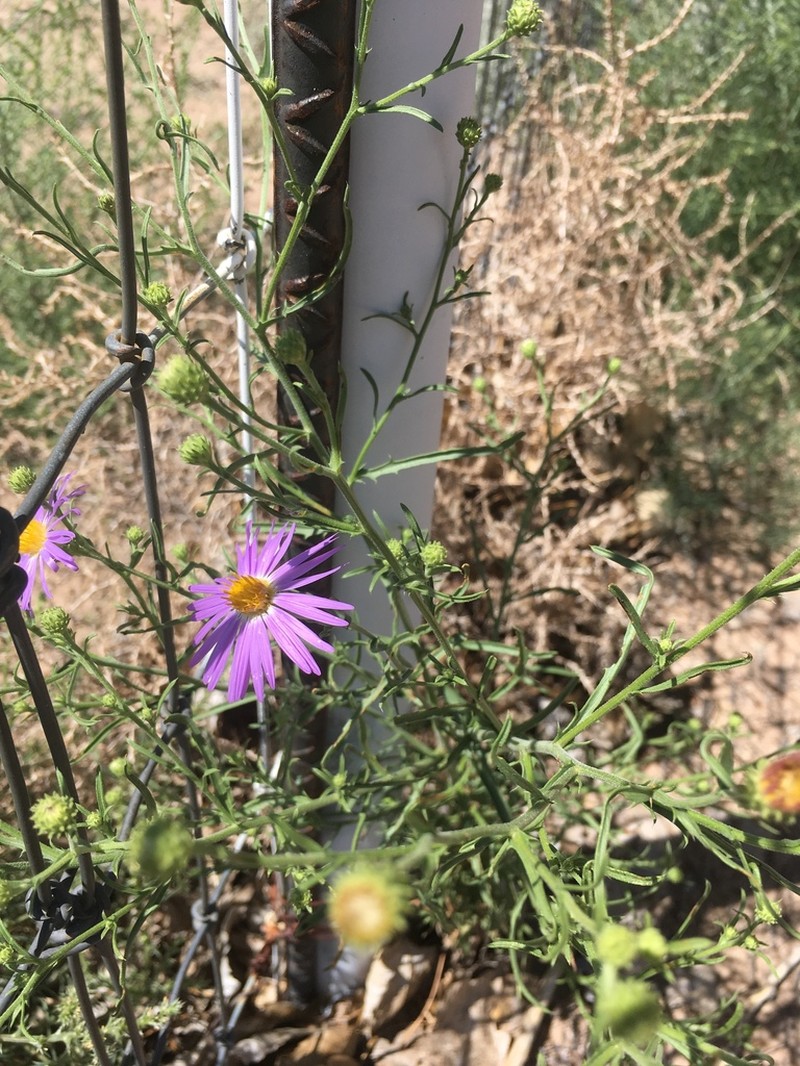
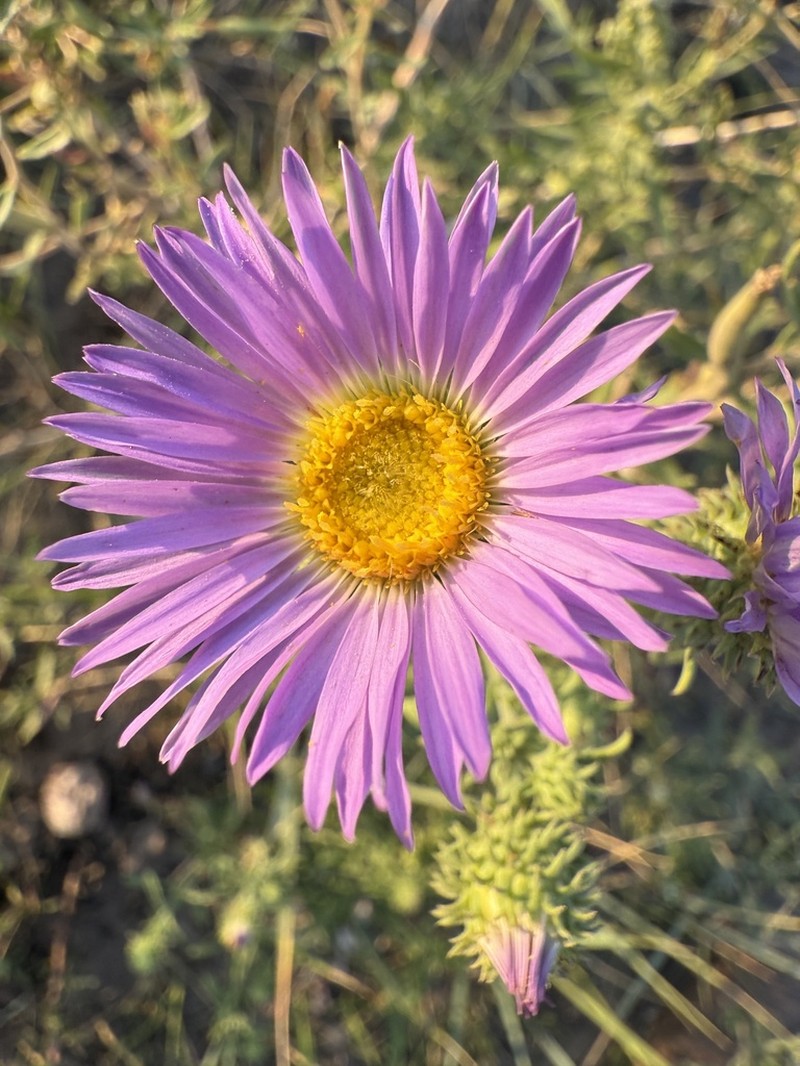
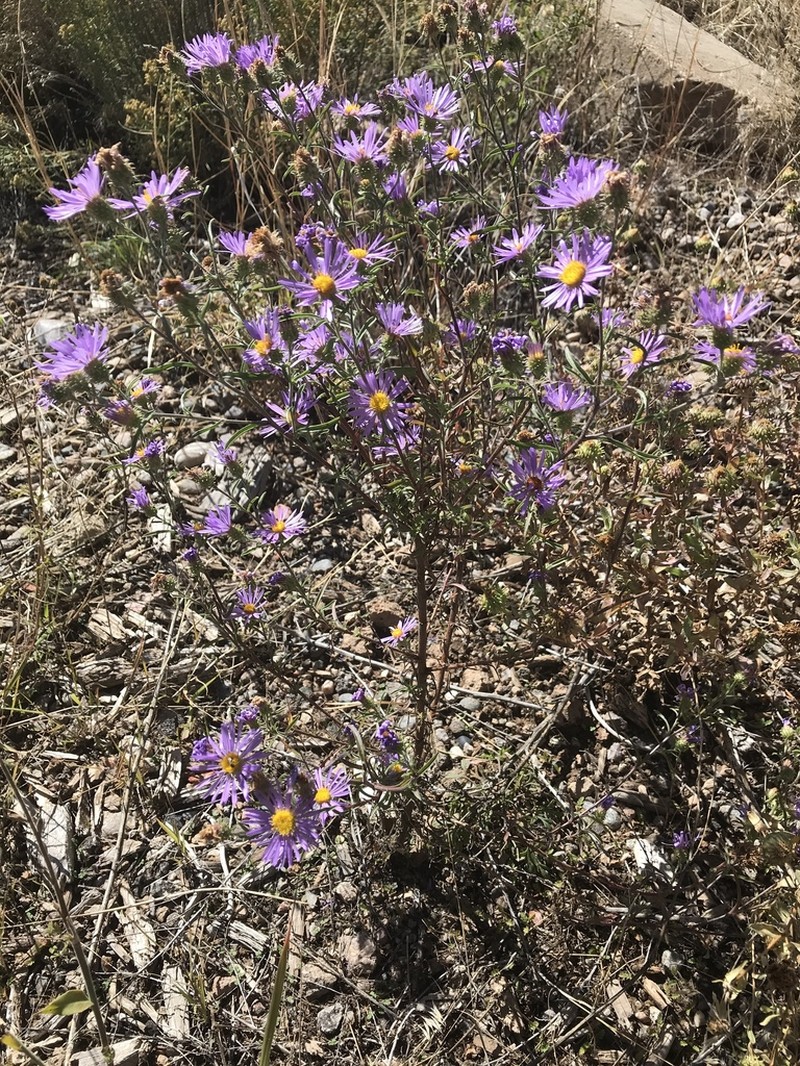
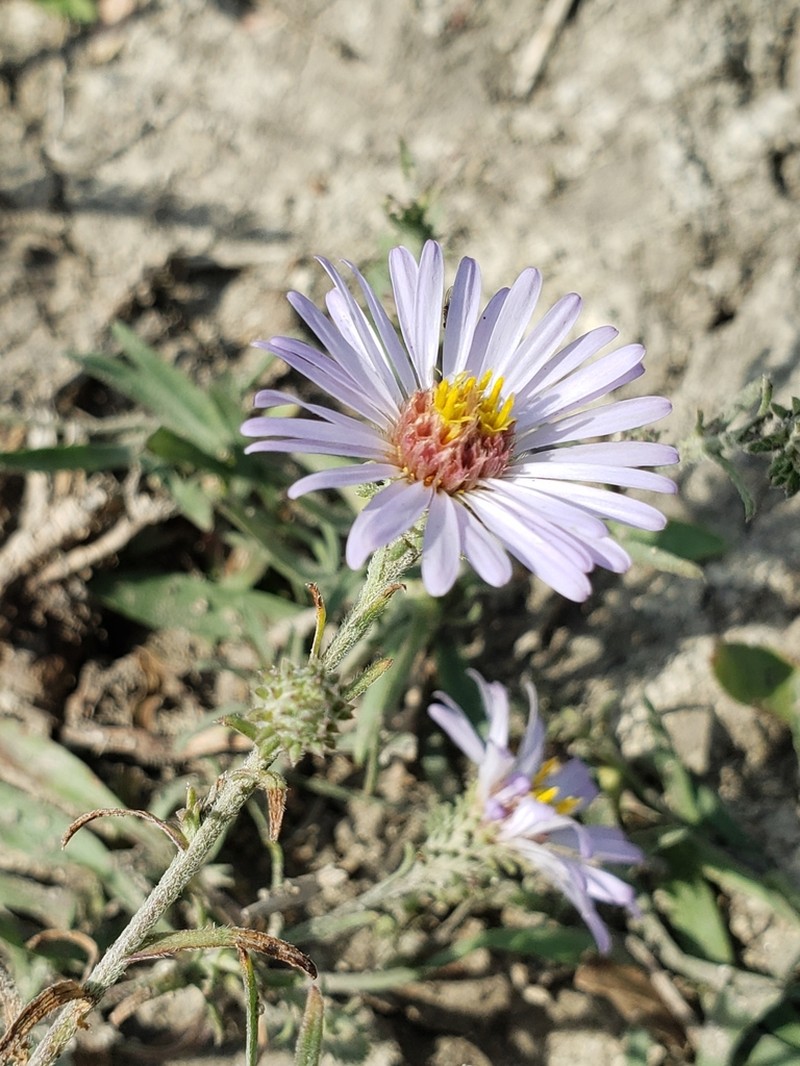
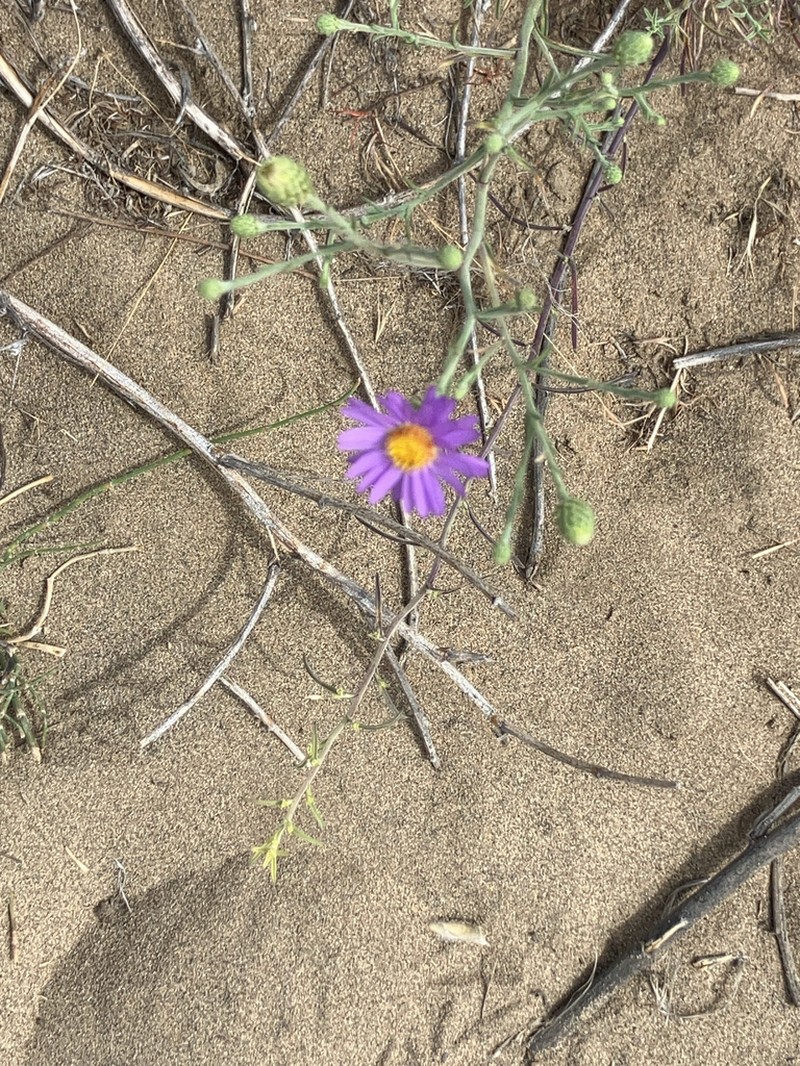
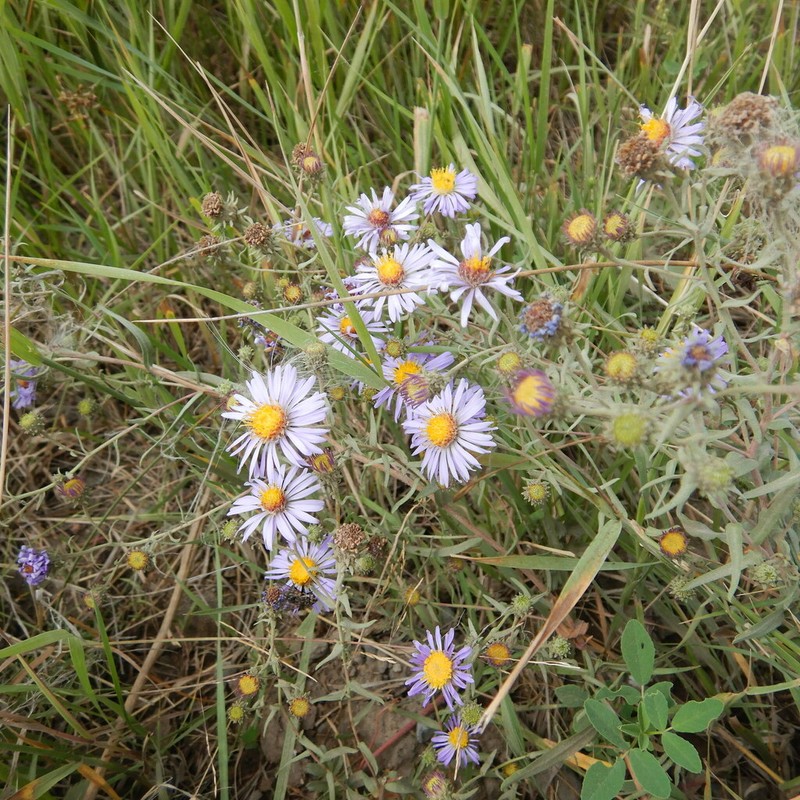
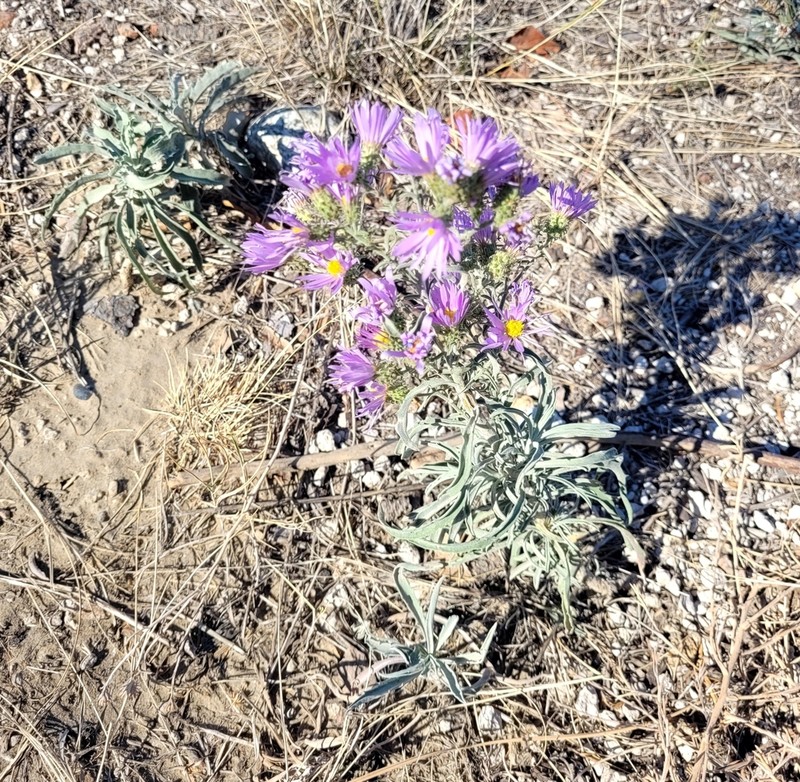
Hoary Tansyaster
Dieteria canescens
- Native to:
- Canada, Mexico, United States
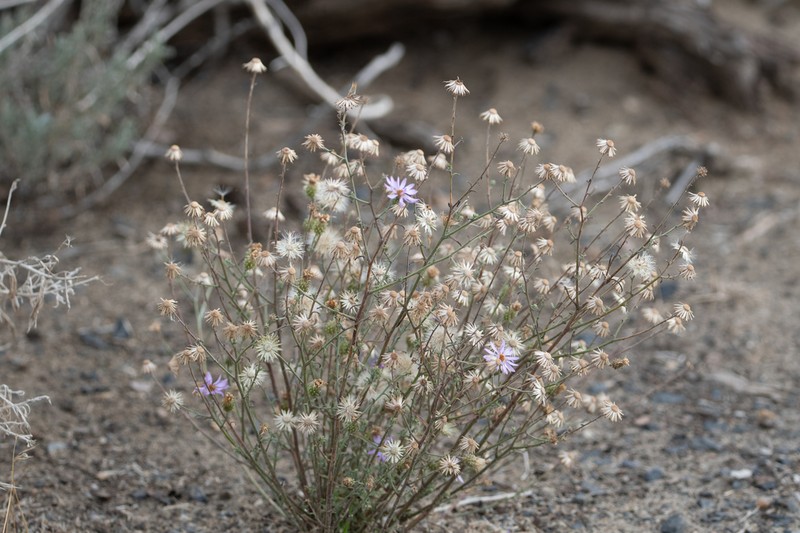
iNaturalist: © kiwikiu (iNaturalist #116889795)
Taxonomy
- Division:
- Magnoliophyta | - Flowering plants
- Family:
- Asteraceae
- Genus:
- Dieteria
- Species:
- Dieteria canescens
- USDA Symbol:
- MACA2
Growth Characteristics
- Life Cycle:
- Annual | Biennial | Perennial
- Growth Habit:
- Forb/herb
- Height:
- 90 cm
- Light Requirements:
- Full Sun
- Drought Tolerance:
- High
- Bloom Months:
- jul,aug,sep,oct
- Bloom Colors:
- purple, blue, violet
Wildlife Benefits
- Bees:
- ★☆☆☆☆ Documented bee visitation (GBIF)
- Butterflies & Moths:
- ★★☆☆☆ Documented Lepidoptera association (GBIF)
- Caterpillars:
- ★★☆☆☆ Recorded caterpillar host plant (HOSTS Database)
Host Plant for Caterpillars
Reported Fauna Sightings
Garden & Ecology Notes
- Wildlife Value:
- bees, butterflies
- Deer Resistant:
- Yes
- Fire Ecology:
- Fire adapted — tolerates or benefits from fire
- Fire Notes:
- Resprouts from root crown after fire; benefits from post-fire seed germination.
Soil Requirements
- Soil Type:
- sandy, well-drained, nutrient-poor soil
- pH:
- 6.0 - 8.0 (neutral to slightly alkaline)
- Drainage:
- excellent drainage required
- Moisture:
- dry to moderate
- Notes:
- commonly found in arid and semi-arid regions
Propagation & Germination
- Stratification:
- Cold/moist stratification required — 30–60 days
- Germination Time:
- 14–30 days
- Notes:
- Seeds germinate readily after cold stratification; surface sow and keep moist.
Pre-treatment: Seeds are stored in cool-dry conditions with temperatures of approximately 50°F and relative humidity of 20 to 30%. Seeds are then pre-chilled for 35 days at 4°C in the dark. Additional water is added as necessary.
Establishment: Seeding in warm conditions where the temperature does not drop below 41°F at night will significantly lower the percent of seeds that will germinate. This species is best seeded directly onto a soil medium as the roots quickly penetrate the germination blotters. Extracting them from the paper means losing a large portion of the seedling root, but about 90% survived when planted in containers. Seed maturation is indeterminate. After collection, the seed is thoroughly dried and placed in a standard freezer for 48 hours to remove insect pests. It is then stored in brown glass jars at room temperature prior to propagation trials.
Source: npn.rngr.net
Where to Buy
Nationwide Seller
- Native Seed Group (seeds)