
Tennessee Purple Coneflower
Echinacea tennesseensis
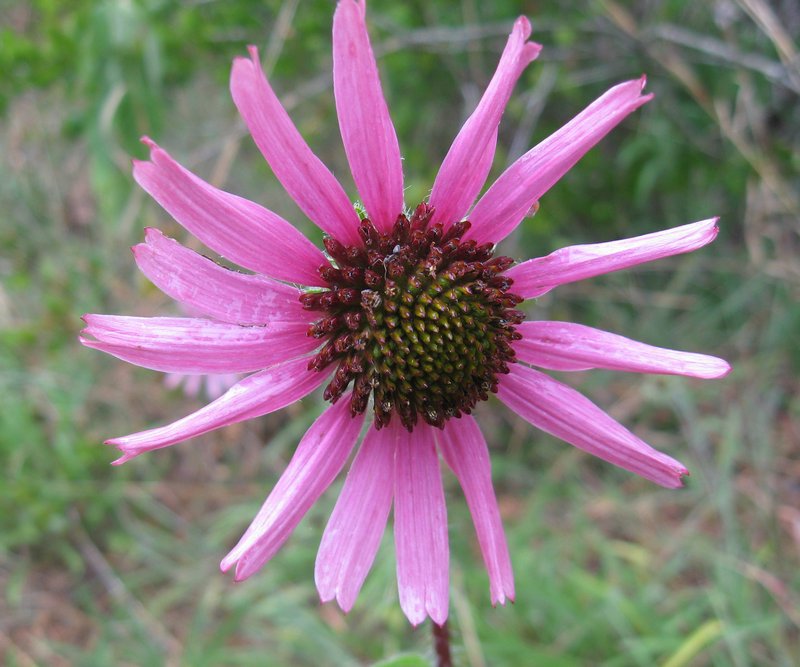
Mason Brock (Masebrock)
Taxonomy
- Division:
- Magnoliophyta | - Flowering plants
- Family:
- Asteraceae
- Genus:
- Echinacea
- Species:
- Echinacea tennesseensis
Growth Characteristics
- Life Cycle:
- Perennial
- Growth Habit:
- Forb/herb
- Height:
- 2-3 ft
- Light Requirements:
- Full Sun, Part Shade
- Drought Tolerance:
- Medium
- Bloom Months:
- jun, jul, aug
- Bloom Colors:
- Orange, Purple
Native Range
United States: Tennessee
Keystone Species Ranking
- Bee Keystone:
- ★★★★★ Based on number of native bee species using this genus for pollen and nectar (Source: National Wildlife Federation)
Reported Fauna Sightings
Bees: American bumble bee (Bombus pensylvanicus), American bumble bee (Bombus pensylvanicus), Brown-belted bumble bee (Bombus griseocollis), Brown-belted bumble bee (Bombus griseocollis), Common eastern bumble bee (Bombus impatiens), Common eastern bumble bee (Bombus impatiens), Lemon cuckoo bumble bee (Bombus citrinus), Lemon cuckoo bumble bee (Bombus citrinus), Southern plains bumble bee (Bombus fraternus), Southern plains bumble bee (Bombus fraternus)
Soil Requirements
- Soil Type:
- rocky, well-drained, calcareous soil
- pH:
- 6.0 - 7.0 (slightly acidic to neutral)
- Drainage:
- excellent drainage required
- Moisture:
- dry to moderate
- Notes:
- native to limestone barrens and cedar glades
Germination Information
Pre-treatment: Seeds are soaked for 24 hours in a 1mmol solution of ethephon, then placed in cold storage for four weeks. Alternatively, GA3 at 1mM concentration can be used.
Establishment: E. tennesseensis is endemic to Tennessee, growing in limestone soils in cedar glade habitat. Germination was found to be greater in light than dark according to one protocol.
Source: npn.rngr.net