
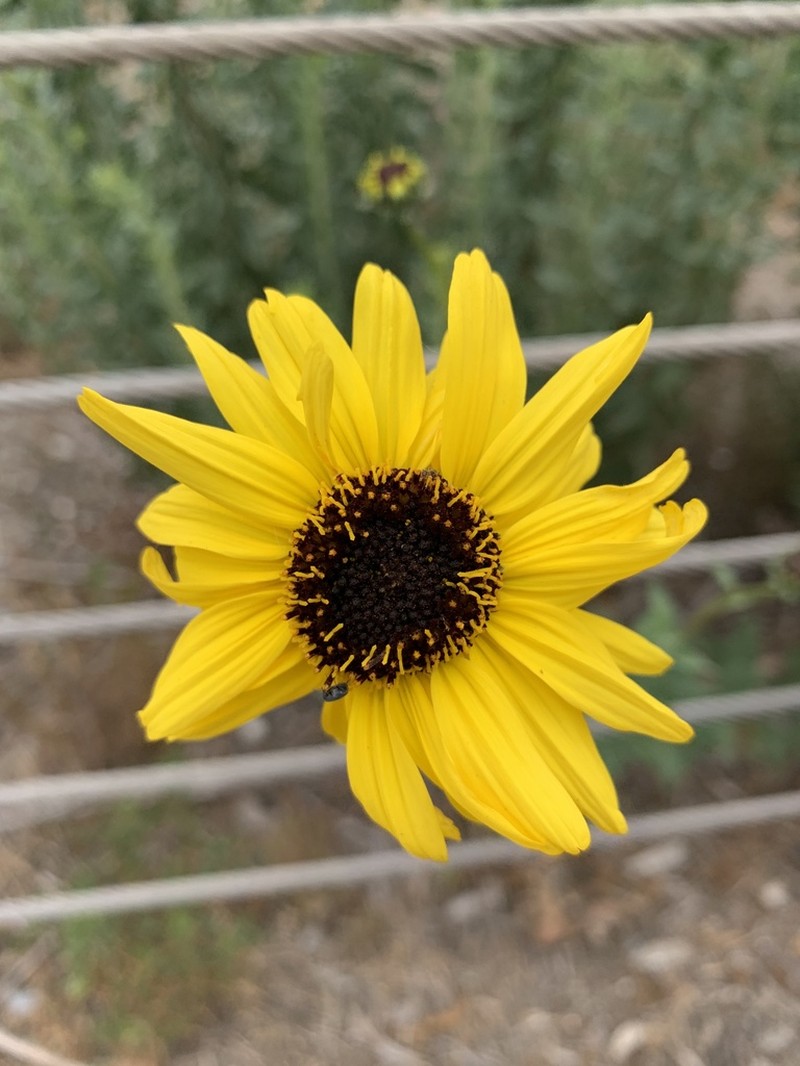
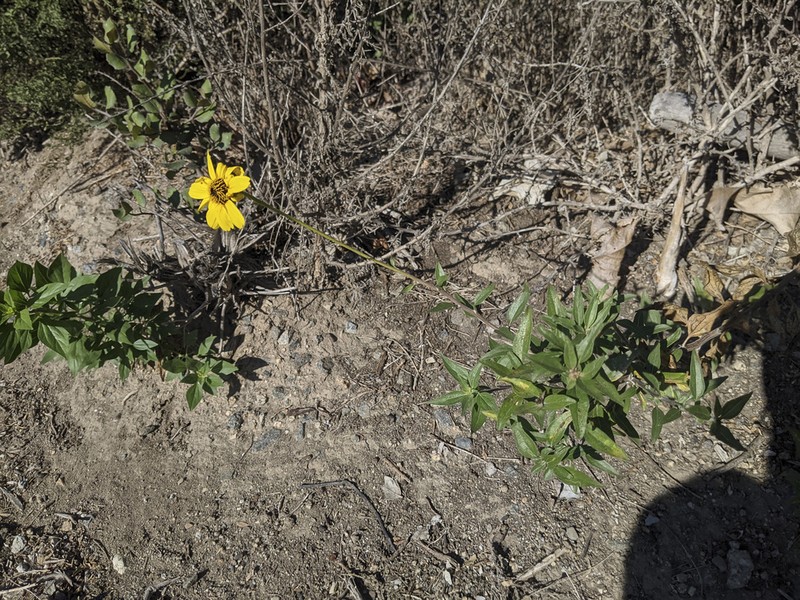
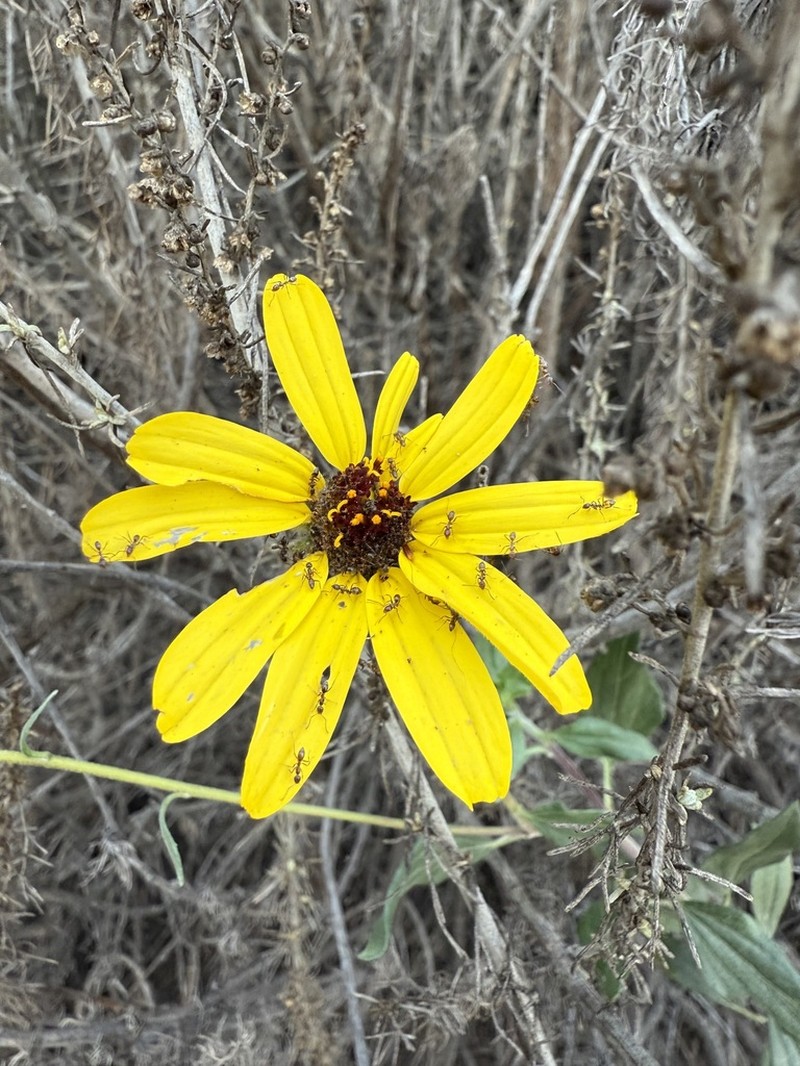
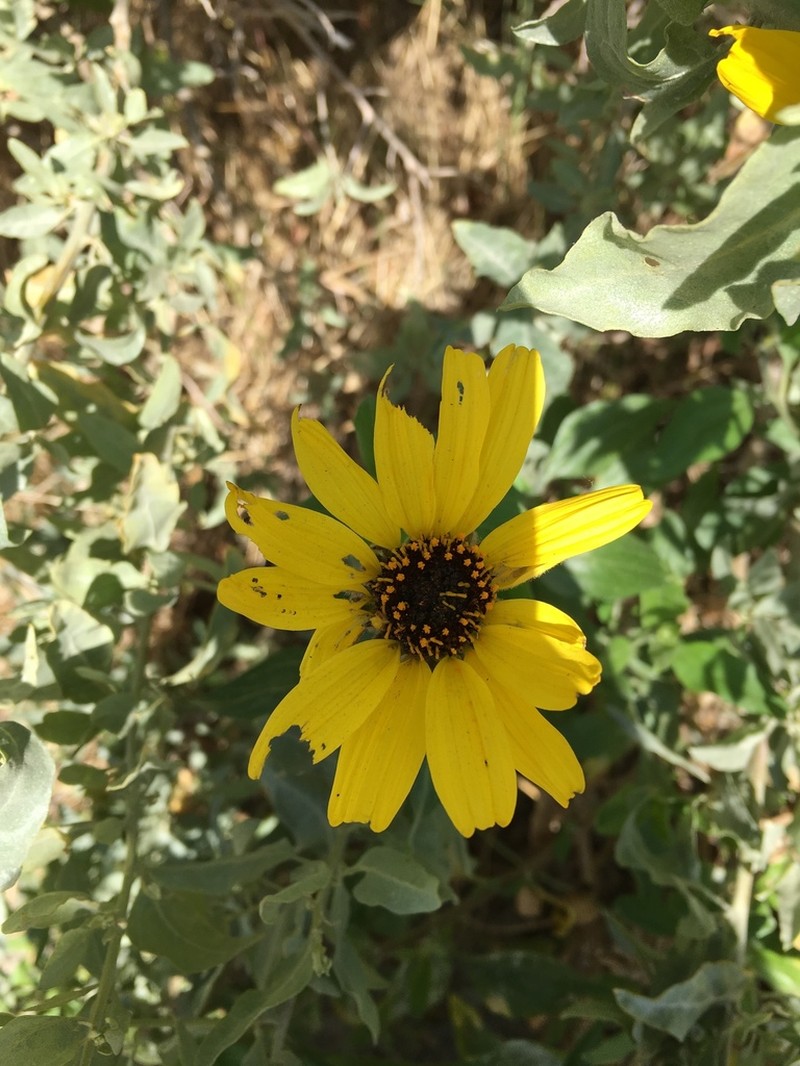
California Brittlebush
Encelia californica
- Native to:
- Mexico, United States
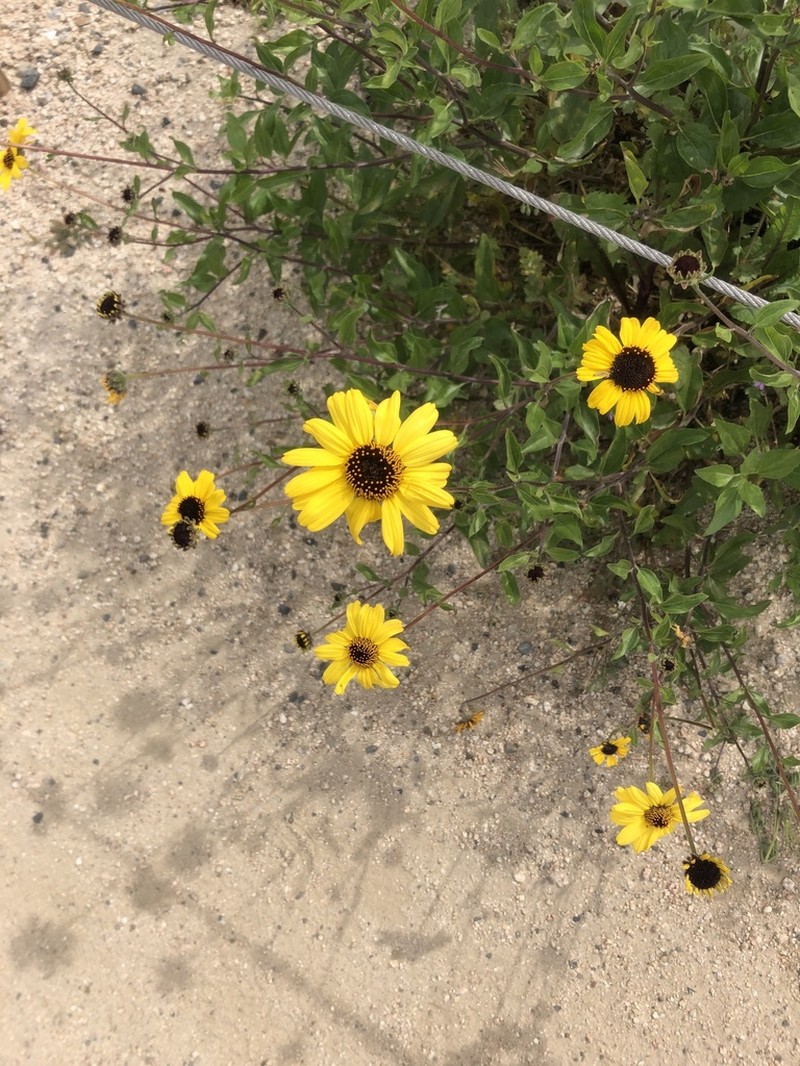
iNaturalist: © haleyheesch (iNaturalist #21636709)
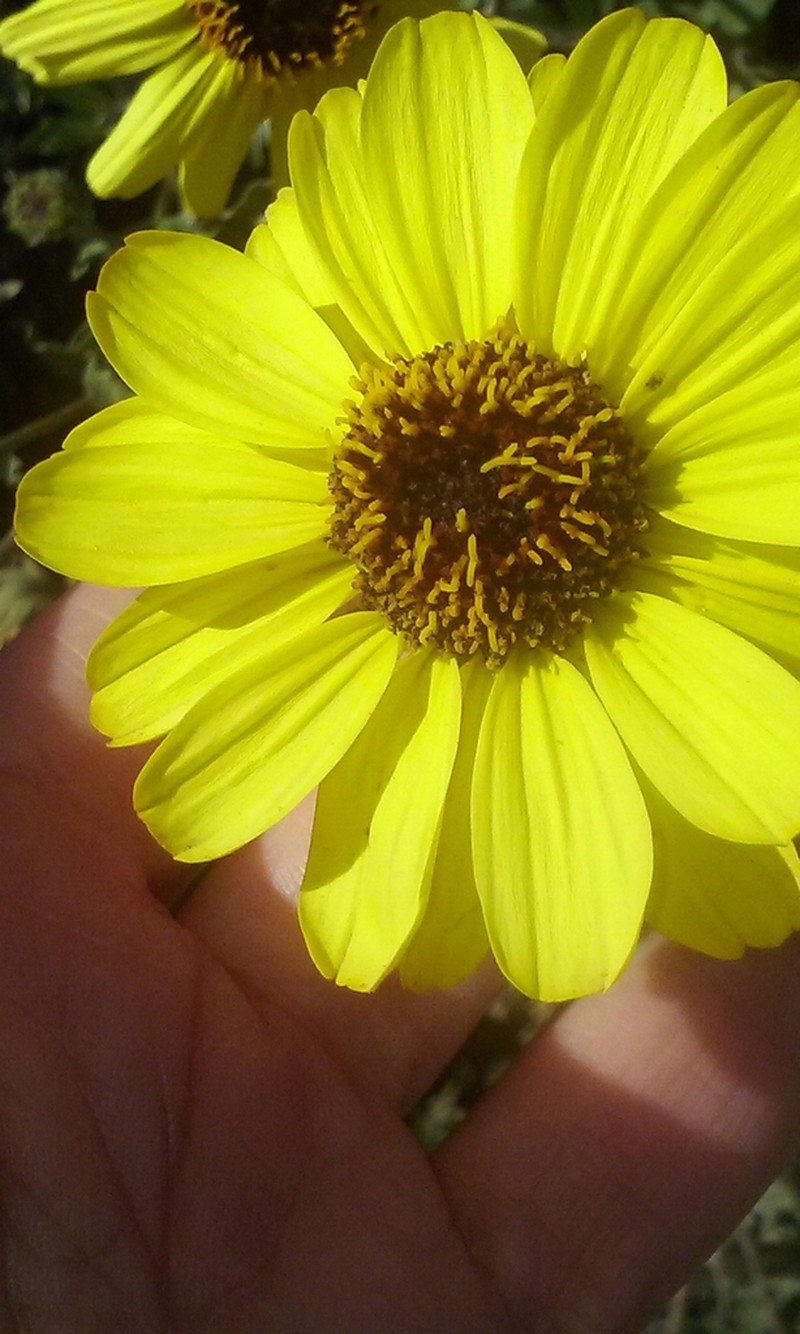
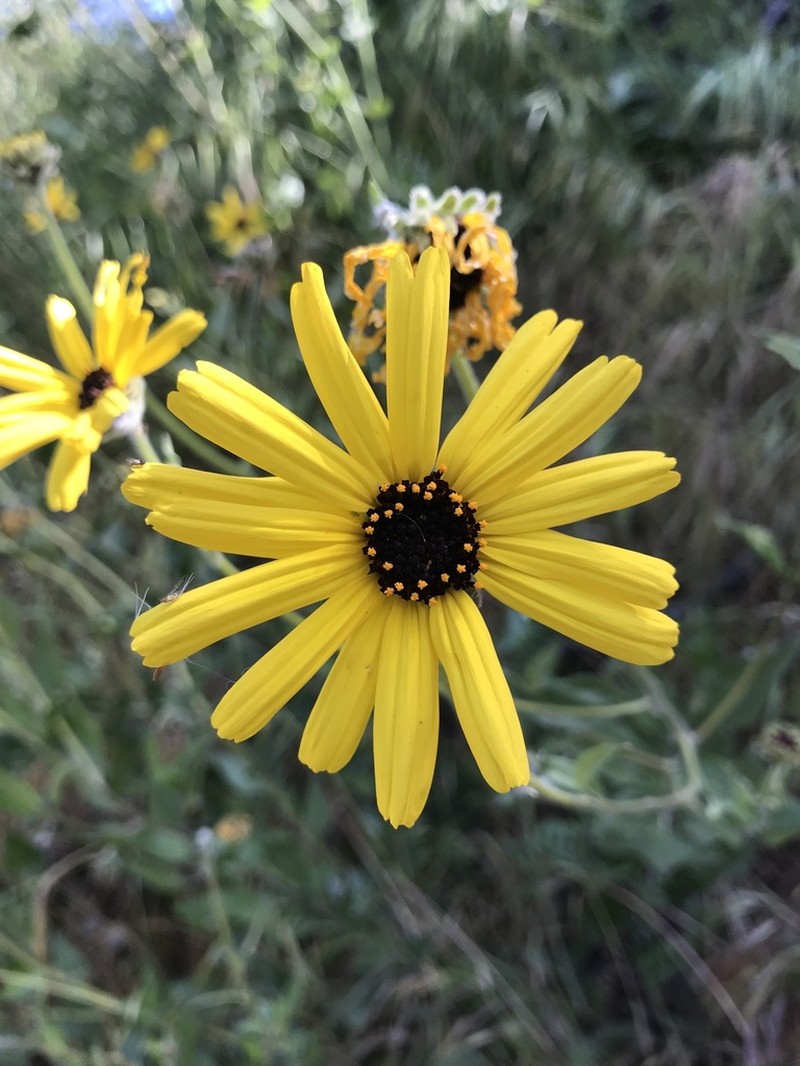
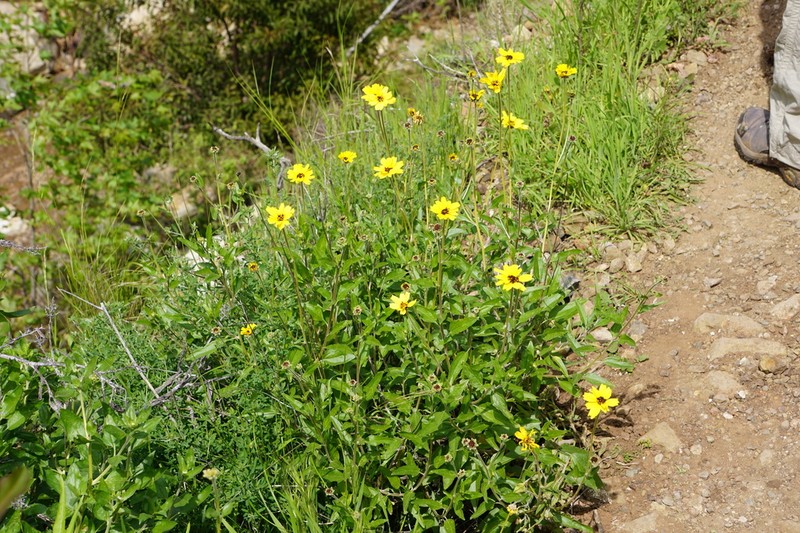
Taxonomy
- Division:
- Magnoliophyta | - Flowering plants
- Family:
- Asteraceae
- Genus:
- Encelia
- Species:
- Encelia californica
- USDA Symbol:
- ENCA
Growth Characteristics
- Life Cycle:
- Perennial
- Growth Habit:
- Shrub , Subshrub
- Height:
- 150 cm
- Light Requirements:
- Full Sun
- Drought Tolerance:
- High
- Bloom Months:
- feb,mar,apr,may,jun
- Bloom Colors:
- yellow
- Evergreen Shrub:
- Yes
- Landscaping Shrub:
- Yes
Wildlife Benefits
- Bees:
- ★★★★☆ Documented bee visitation (GBIF)
- Butterflies & Moths:
- ★★★★☆ Documented Lepidoptera association (GBIF)
- Caterpillars:
- ★☆☆☆☆ Recorded caterpillar host plant (HOSTS Database)
- Hummingbirds:
- ★☆☆☆☆ Documented hummingbird visits (GBIF)
Keystone Species Ranking
- Pollen Specialist Bee Keystone:
- ★★★★★ Native pollen specialist bee species supported by this genus (NWF)
Host Plant for Caterpillars
Carolella busckana, dwarf tawny wave (Cyclophora nanaria), Fatal Metalmark (Calephelis nemesis)
Reported Fauna Sightings
Bees: Anthophora curta, Black-tailed bumble (Bombus melanopygus), Brachymelecta californica, Ceratina acantha, Ceratina arizonensis, ⚠️Western honey bee (Apis mellifera), Zadontomerus Ashmead Hummingbirds: Anna's Hummingbird (Calypte anna) Butterflies:American Lady (Vanessa virginiensis), Fiery Skipper (Hylephila phyleus), Funereal Duskywing (Erynnis funeralis), Gray Hairstreak (Strymon melinus), Marine Blue (Leptotes marina), ⚠️Monarch butterfly (Danaus plexippus), Painted Lady (Vanessa cardui), West Coast Lady (Vanessa annabella), Western Pygmy Blue (Brephidium exilis)
Garden & Ecology Notes
- Wildlife Value:
- birds, butterflies, bees
- Deer Resistant:
- Yes
- Salt Tolerant:
- Yes
- Fire Ecology:
- Fire adapted — tolerates or benefits from fire
- Fire Notes:
- Resprouts from root crown after fire; seeds also germinate in post-fire conditions.
Soil Requirements
- Soil Type:
- sandy, well-drained, nutrient-poor soil
- pH:
- 6.0 - 8.0 (slightly acidic to neutral)
- Drainage:
- excellent drainage required
- Moisture:
- dry to moderate
- Notes:
- native to coastal sage scrub and chaparral habitats
Propagation & Germination
- Stratification:
- None required
- Germination Time:
- 7–21 days
- Notes:
- Seeds germinate readily without pretreatment; sow on surface of well-drained medium.
Pre-treatment: Single-step cold-moist stratification for temperate woodland species. for 60–120 days
Source: Claude AI