
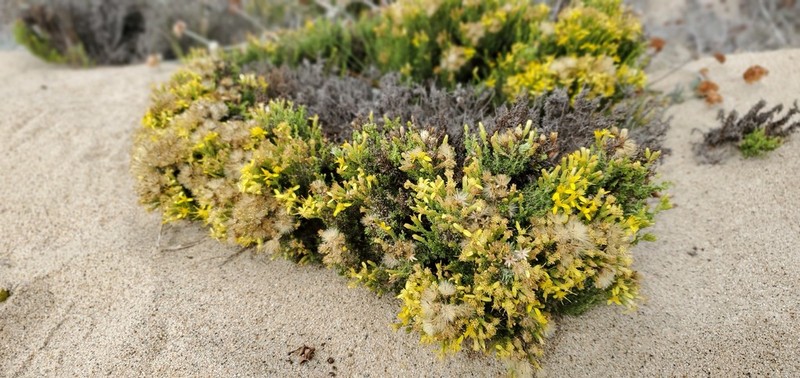
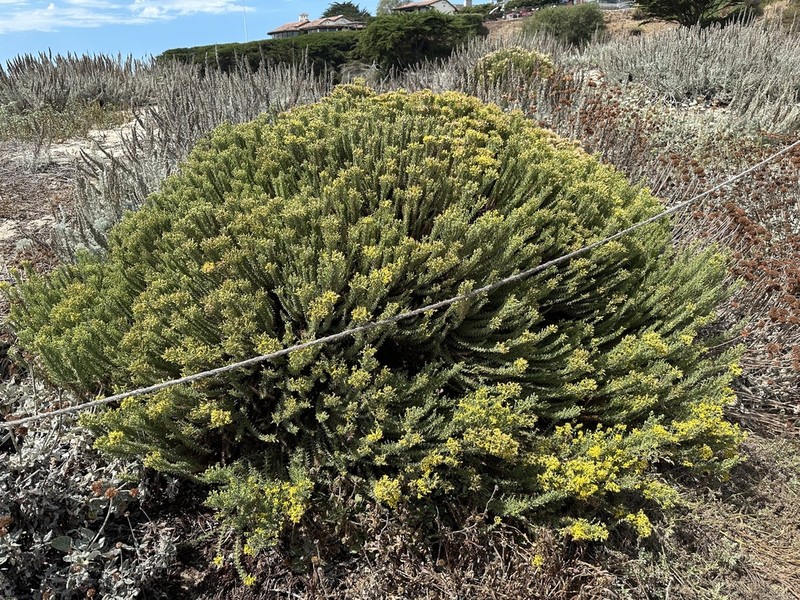
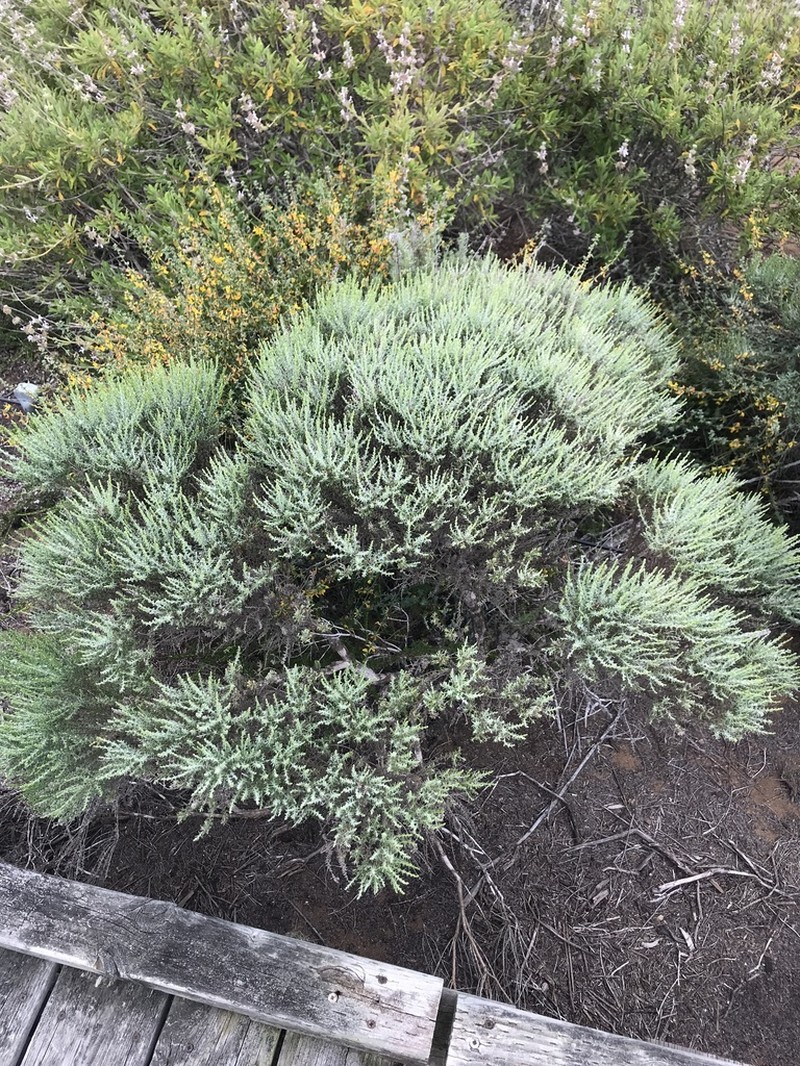
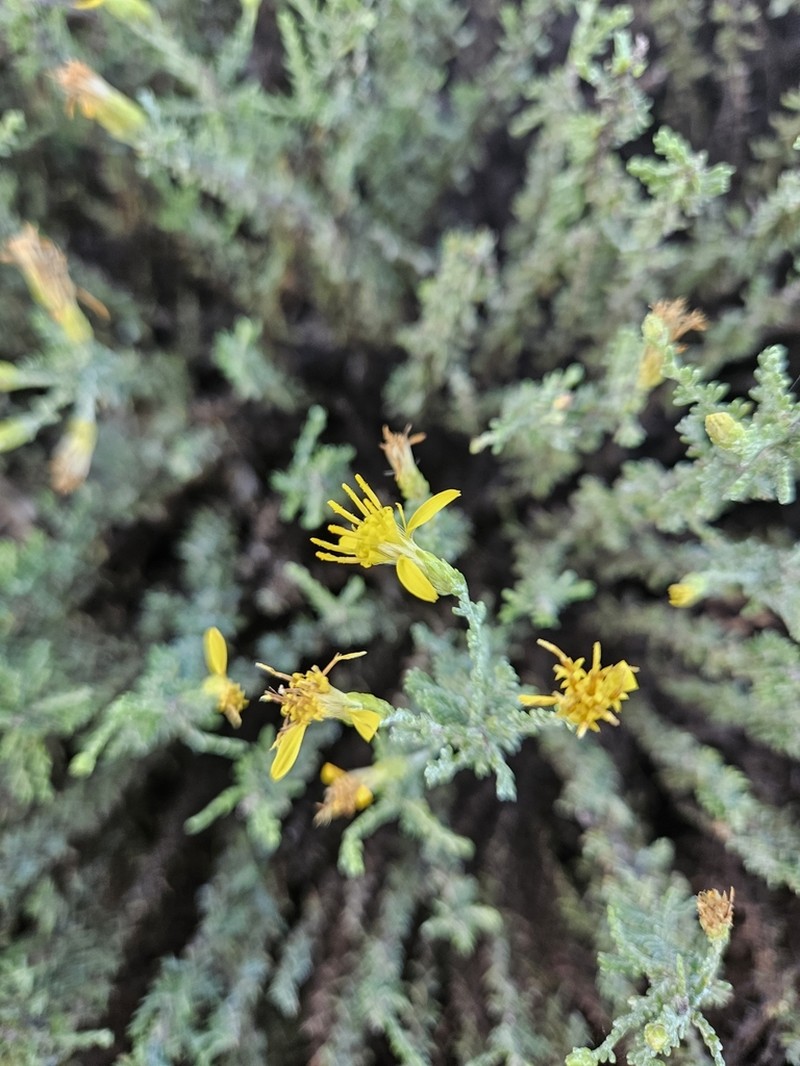
California Goldenbush
Ericameria ericoides
- Native to:
- United States
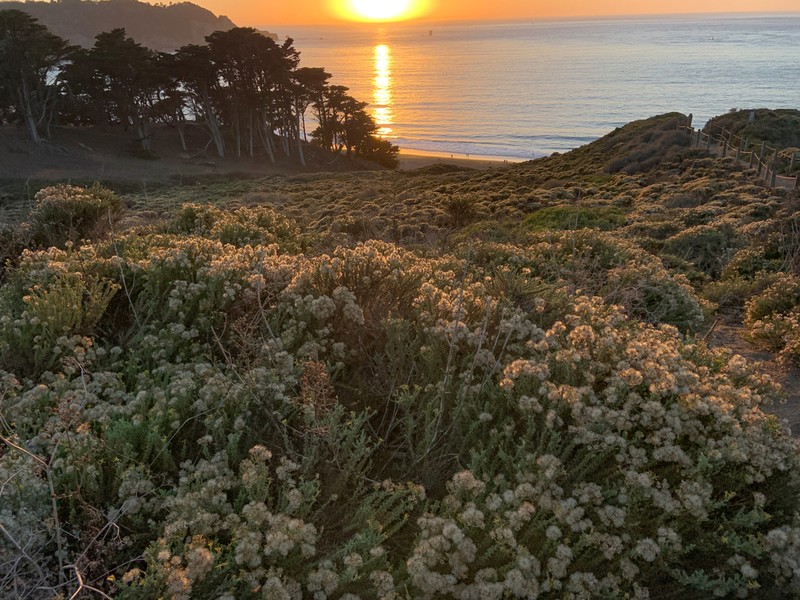
iNaturalist: © farinosa (iNaturalist #62725914)
Taxonomy
- Division:
- Magnoliophyta | - Flowering plants
- Family:
- Asteraceae
- Genus:
- Ericameria
- Species:
- Ericameria ericoides
- USDA Symbol:
- ERER11
Growth Characteristics
- Life Cycle:
- Perennial
- Growth Habit:
- Shrub
- Height:
- 150 cm
- Light Requirements:
- Full Sun
- Drought Tolerance:
- High
- Bloom Months:
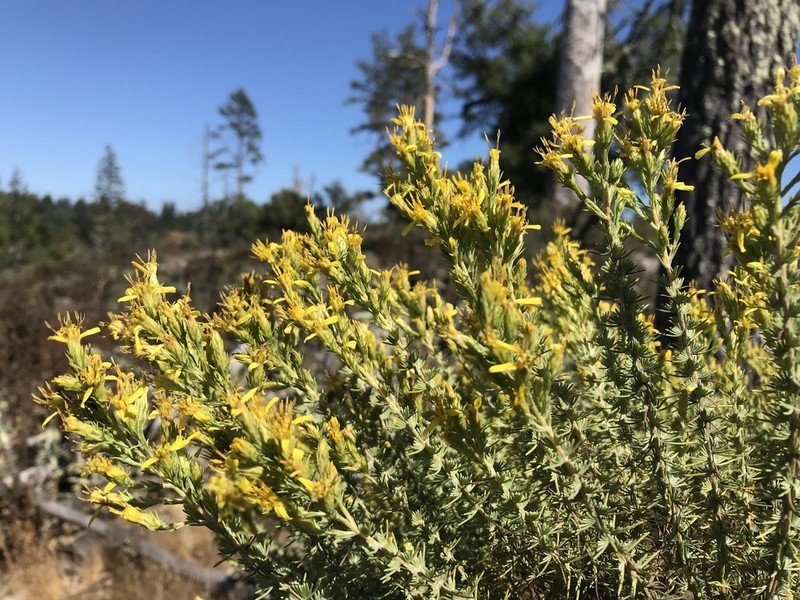
- aug,sep,oct,nov
- Bloom Colors:
- yellow
- Evergreen Shrub:
- Yes
- Landscaping Shrub:
- Yes
Wildlife Benefits
- Bees:
- ★☆☆☆☆ Documented bee visitation (GBIF)
- Butterflies & Moths:
- ★★☆☆☆ Documented Lepidoptera association (GBIF)
- Caterpillars:
- ★☆☆☆☆ Recorded caterpillar host plant (HOSTS Database)
Keystone Species Ranking
- Pollen Specialist Bee Keystone:
- ★★★★★ Native pollen specialist bee species supported by this genus (NWF)
Host Plant for Caterpillars
Aristotelia argentifera, Gnorimoschema ericameriae
Reported Fauna Sightings
Moths:Gnorimoschema ericameriae
Garden & Ecology Notes
- Wildlife Value:
- bees, butterflies, birds
- Deer Resistant:
- Yes
- Salt Tolerant:
- Yes
- Fire Ecology:
- Fire adapted — tolerates or benefits from fire
- Fire Notes:
- Resprouts from root crown after fire; seeds also germinate in post-fire conditions.
Soil Requirements
- Soil Type:
- sandy, well-drained, nutrient-poor soil
- pH:
- 5.5 - 7.5 (slightly acidic to neutral)
- Drainage:
- excellent drainage required
- Moisture:
- dry to moderate
- Notes:
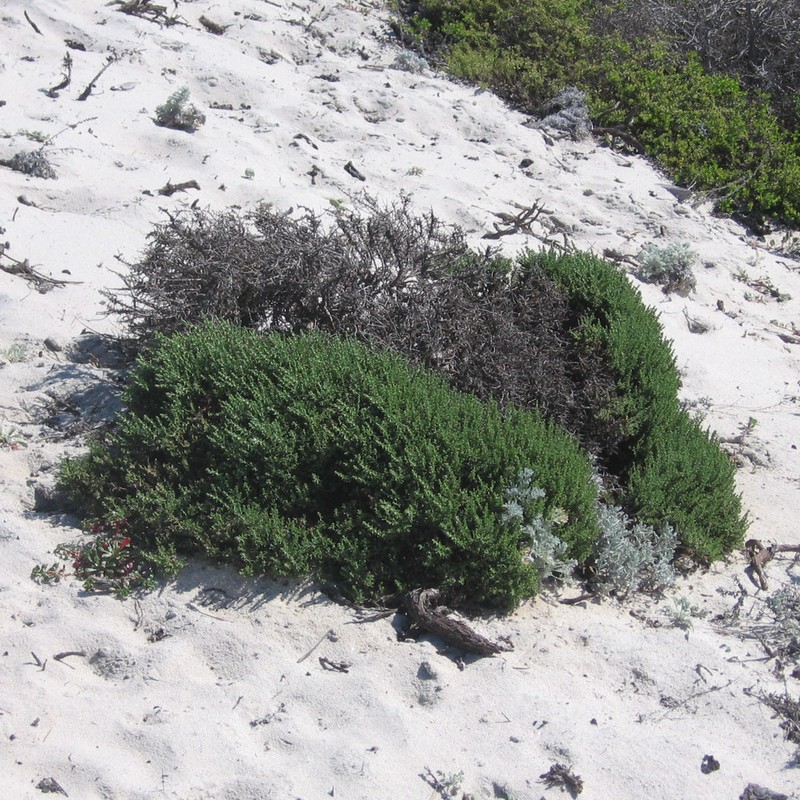
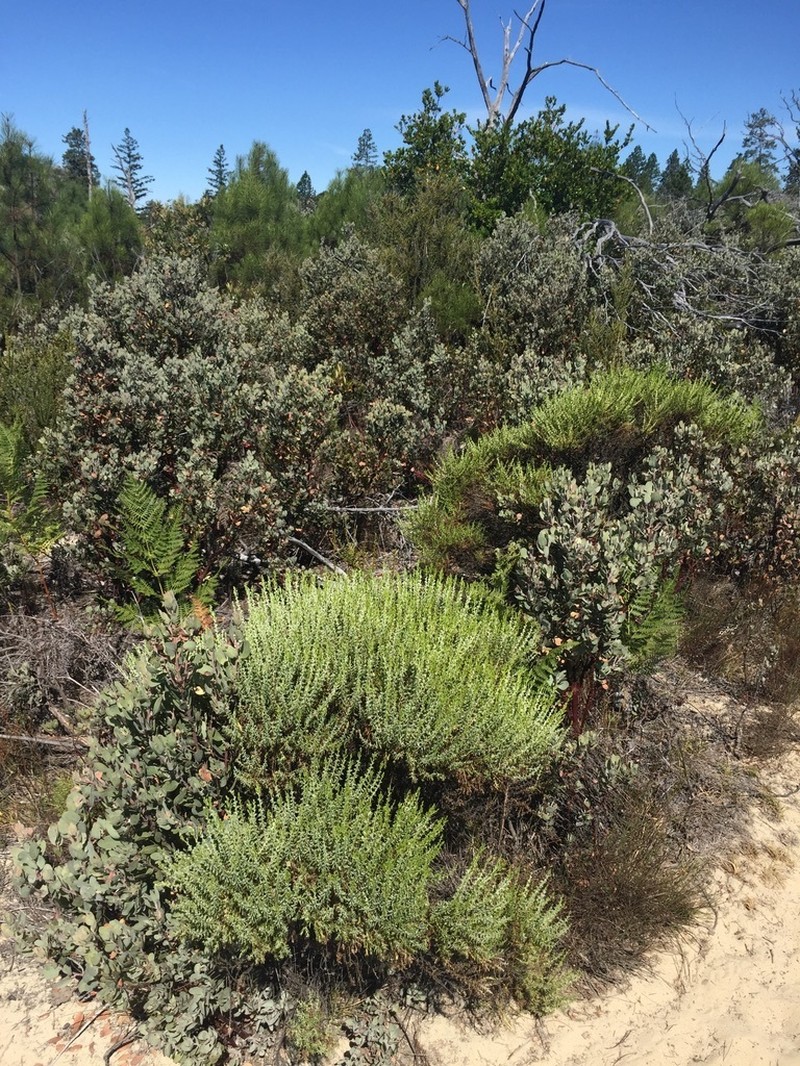
- native to coastal dunes and sandy areas
Propagation & Germination
- Stratification:
- Cold/moist stratification required — 30–60 days
- Germination Time:
- 14–30 days
- Notes:
- Seeds benefit from cold stratification for 30-60 days to break dormancy.
Pre-treatment: None required
Establishment: Seeds are collected between June 20th and November 15th. Mature inflorescences are brown. Seed is light gray at maturity. E. ericoides is found in sand dunes near the coast from Point Reyes to Los Angeles County, California.
Source: npn.rngr.net