
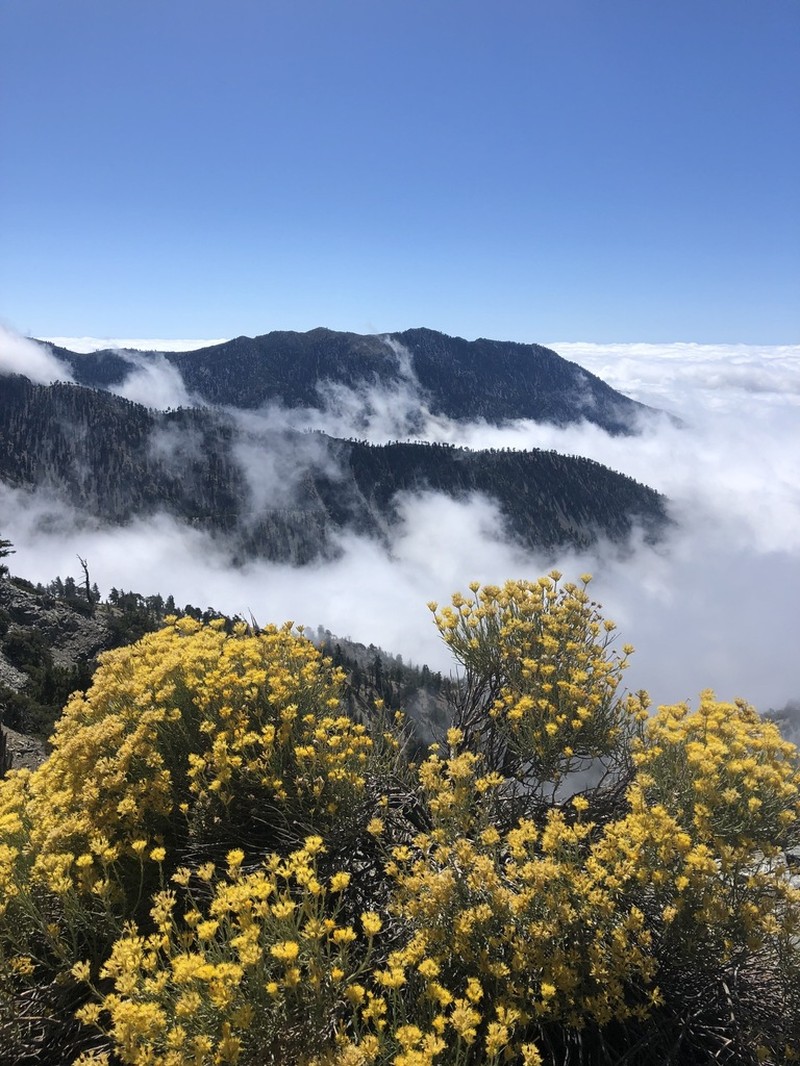
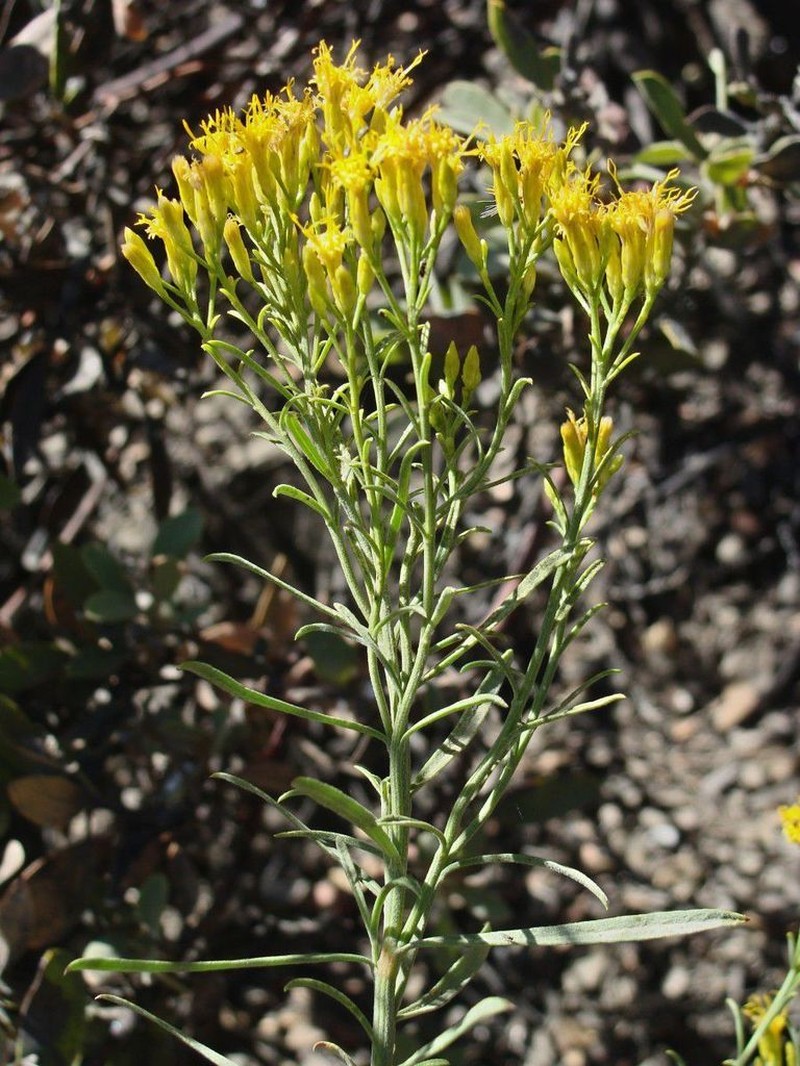
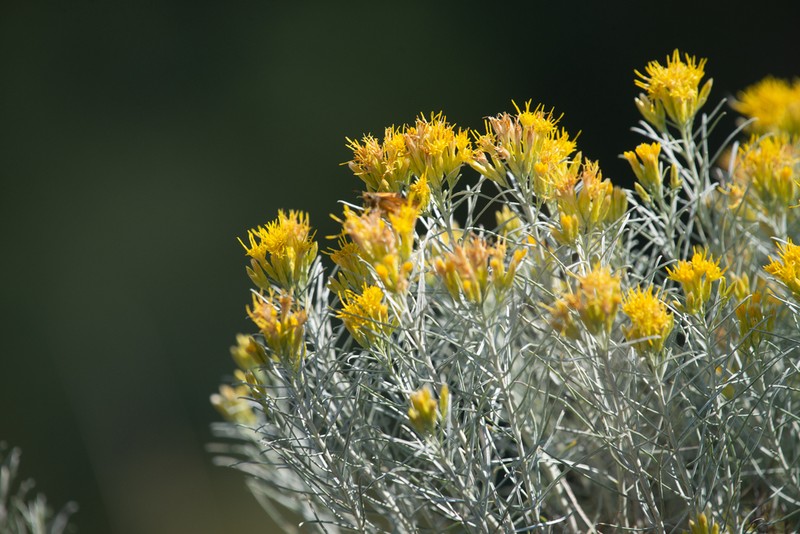
Rubber Rabbitbrush
Ericameria nauseosa
- Native to:
- Canada, Mexico, United States
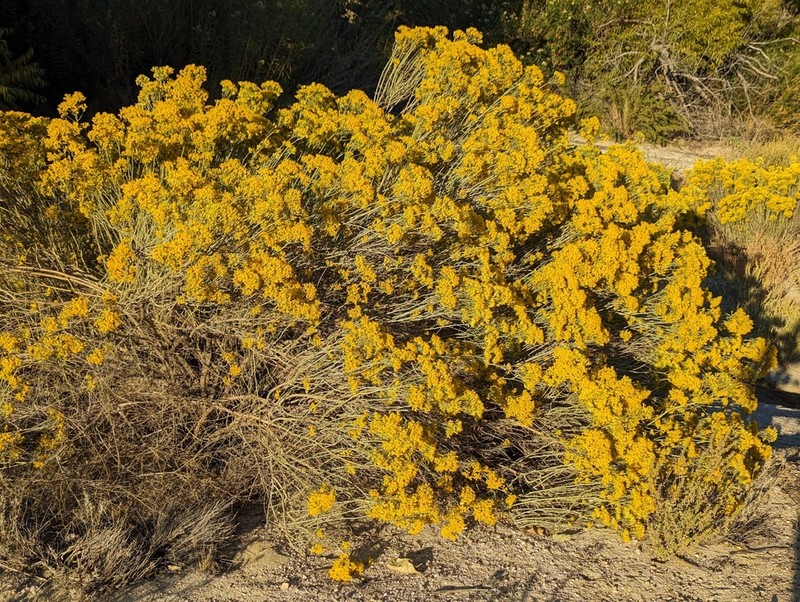
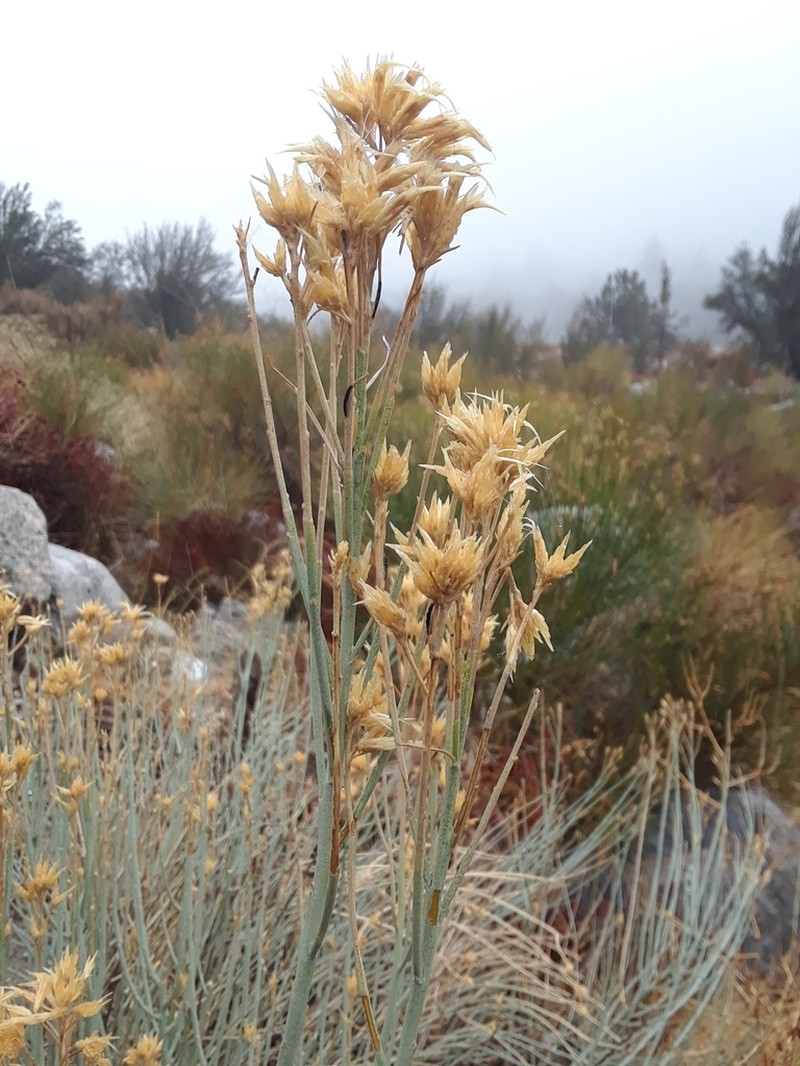
iNaturalist: © logi_berrra (iNaturalist #189091408)
Taxonomy
- Division:
- Magnoliophyta | - Flowering plants
- Family:
- Asteraceae
- Genus:
- Ericameria
- Species:
- Ericameria nauseosa
- USDA Symbol:
- ERNA10
Growth Characteristics
- Life Cycle:
- Perennial
- Growth Habit:
- Shrub , Subshrub
- Height:
- 200 cm
- Light Requirements:
- Full Sun
- Drought Tolerance:
- High
- Bloom Months:
- aug,sep,oct
- Bloom Colors:
- yellow
- Landscaping Shrub:
- Yes
Wildlife Benefits
- Bees:
- ★★★☆☆ Documented bee visitation (GBIF)
- Butterflies & Moths:
- ★★★★★ Documented Lepidoptera association (GBIF)
- Caterpillars:
- ★★☆☆☆ Recorded caterpillar host plant (HOSTS Database)
- Hummingbirds:
- ★☆☆☆☆ Documented hummingbird visits (GBIF)
Keystone Species Ranking
- Pollen Specialist Bee Keystone:
- ★★★★★ Native pollen specialist bee species supported by this genus (NWF)
Host Plant for Caterpillars
Eucosma totana, Gnorimoschema octomaculella, One-spotted Flower Moth (Schinia unimacula), Plagiomimicus tepperi, Schinia tertia, Synnoma lynosyrana, Walsingham's flower moth (Schinia walsinghami), Palla (Charidryas palla)
Reported Fauna Sightings
Bees: Brown-belted bumble bee (Bombus griseocollis), Eastern Carpenter Bee (Xylocopa virginica), Indiscriminate cuckoo bumble bee (Bombus insularis), Melissodes Latreille, Southern plains (Bombus fraternus), Two-form bumble bee (Bombus bifarius), Western bumble bee (Bombus occidentalis), ⚠️Western honey bee (Apis mellifera) Hummingbirds: Black-chinned Hummingbird (Archilochus alexandri) Moths:Acute-lined Flower Moth (Schinia acutilinea), corn earworm (Helicoverpa zea), Gnorimoschema octomaculella, White-lined sphinx moth (Hyles lineata) Butterflies:American Lady (Vanessa virginiensis), American snout butterfly (Libytheana carinenta), Argynnis coronis, Argynnis edwardsii, Checkered White (Pontia protodice), Clouded Sulphur (Colias philodice), Common Buckeye (Junonia coenia), Common Checkered-skipper (Burnsius communis), Dainty Sulphur (Nathalis iole), Gray Buckeye (Junonia grisea), Gray Hairstreak (Strymon melinus), Great Purple Hairstreak (Atlides halesus), Hoary Comma (Polygonia gracilis), Juba Skipper (Hesperia juba), ⚠️Monarch butterfly (Danaus plexippus), Northern White-Skipper (Heliopetes ericetorum), Orange Sulphur (Colias eurytheme), Painted Lady (Vanessa cardui), Queen butterfly (Danaus gilippus), Reakirt's Blue (Echinargus isola), Red Admiral (Vanessa atalanta), Small White (Pieris rapae), Variegated Fritillary (Euptoieta claudia), Western Pygmy Blue (Brephidium exilis), Woodland Skipper (Ochlodes sylvanoides)
Garden & Ecology Notes
- Wildlife Value:
- birds, butterflies, small mammals
- Deer Resistant:
- Yes
- Salt Tolerant:
- Yes
- Fragrant:
- Yes
- Fire Ecology:
- Fire adapted — tolerates or benefits from fire
- Fire Notes:
- Resprouts from root crown after fire; benefits from periodic fire to reduce competition.
Soil Requirements
- Soil Type:
- sandy, well-drained, nutrient-poor soil
- pH:
- 6.0 - 8.0 (slightly acidic to slightly alkaline)
- Drainage:
- excellent drainage required
- Moisture:
- dry to moderate
- Notes:
- Thrives in arid and semi-arid conditions
Propagation & Germination
- Stratification:
- Cold/moist stratification required — 30–60 days
- Germination Time:
- 14–30 days
- Notes:
- Seeds germinate readily after cold stratification; surface sow and keep moist.
Pre-treatment: A brief cool treatment prior to a warm growth chamber is ideal for germination. However, pre-treatment is not necessary for all seed sources.
Establishment: Germination rates and times can vary widely depending on the seed source, with seeds from warmer areas tending to germinate quicker than those from colder regions. Seeds from higher elevations and latitudes may require a greater length of stratification for germination at low temperatures.
Source: npn.rngr.net
ORGHPS Germination Guide: Sow @ 20C. Germinates within 3 months.
Where to Buy
Nationwide Seller
- Native Seed Group (seeds)
- Sheffield's Seed (seeds)