
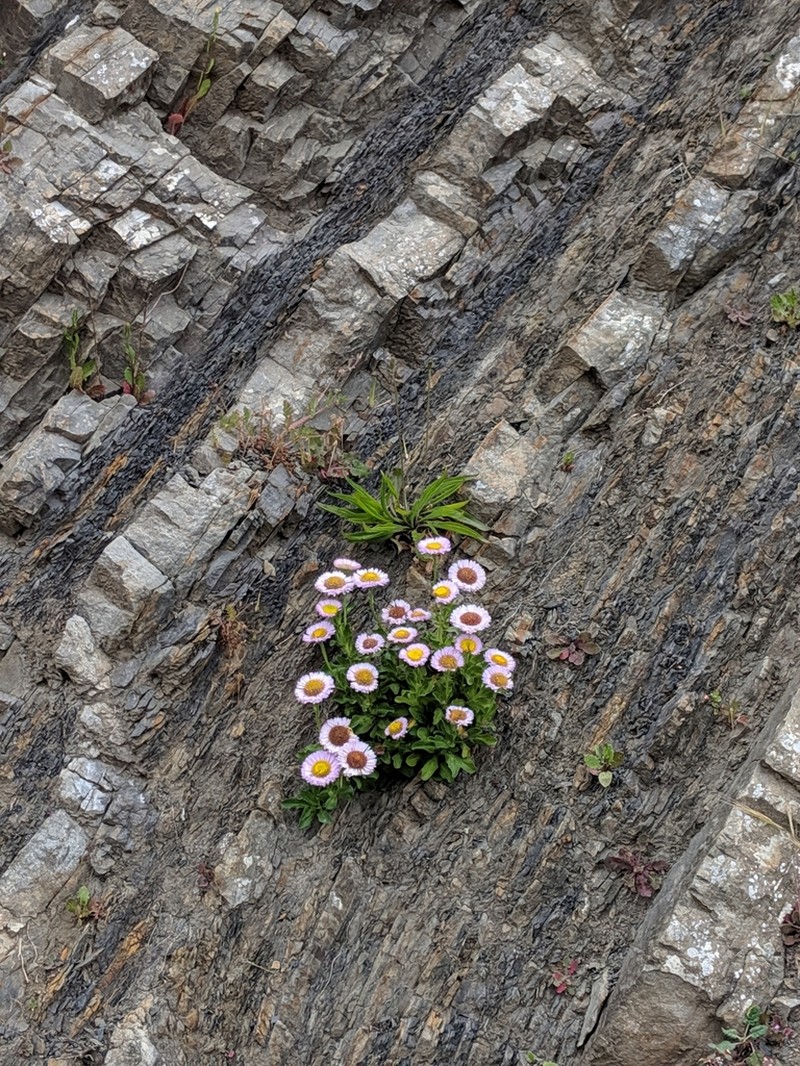
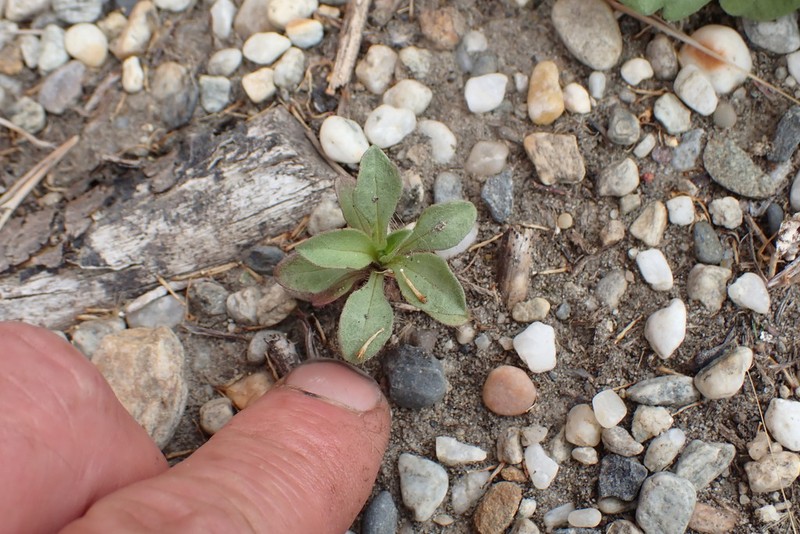
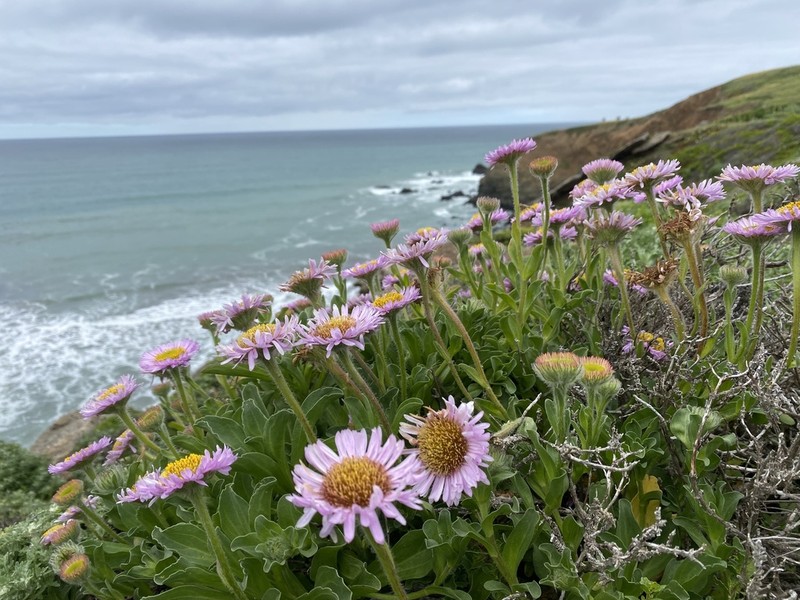
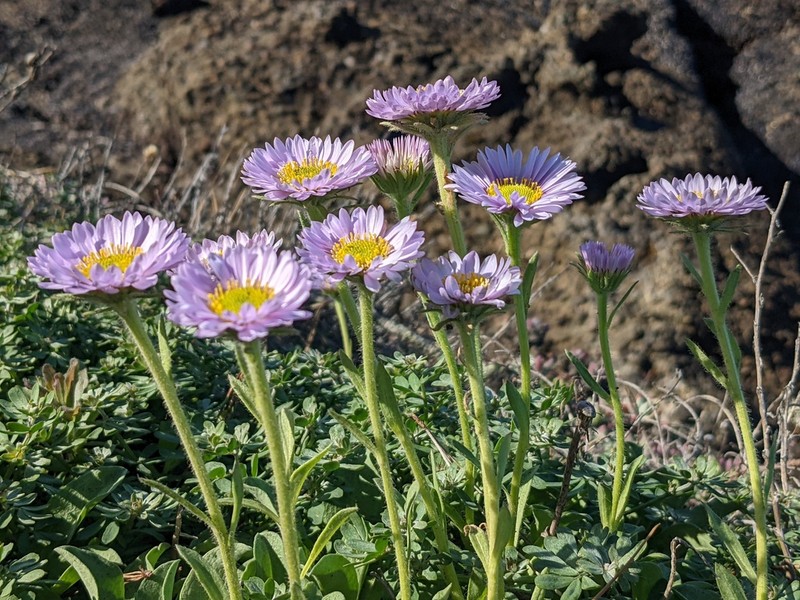
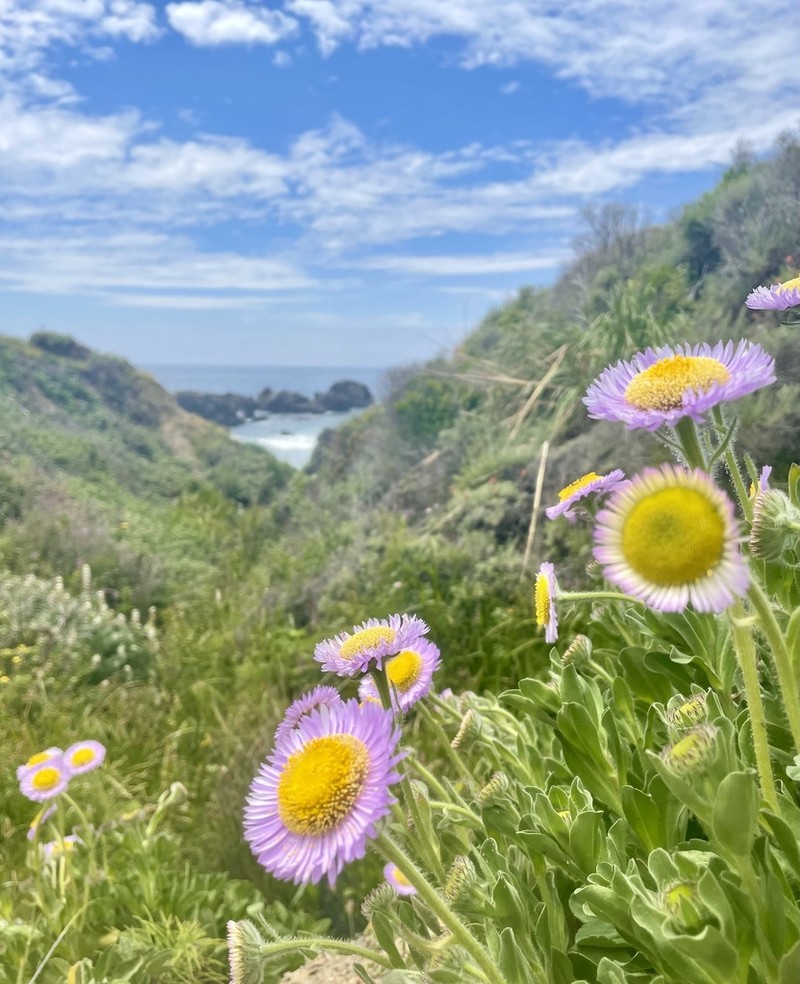
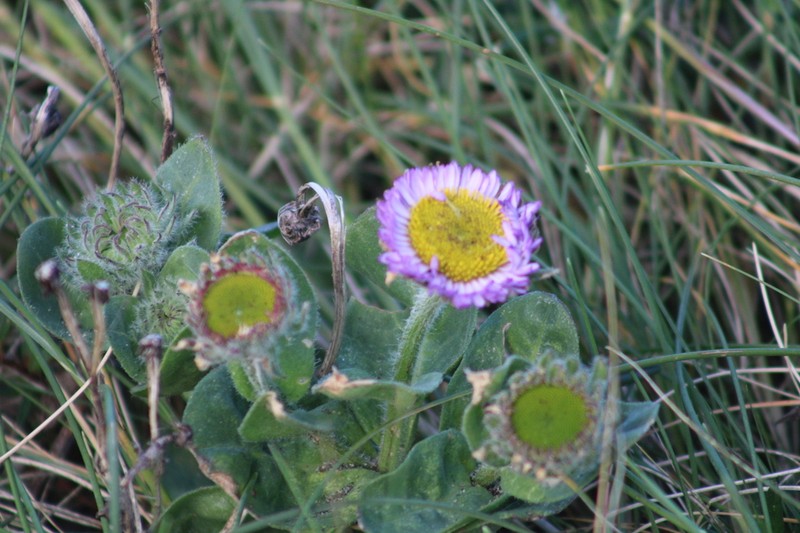
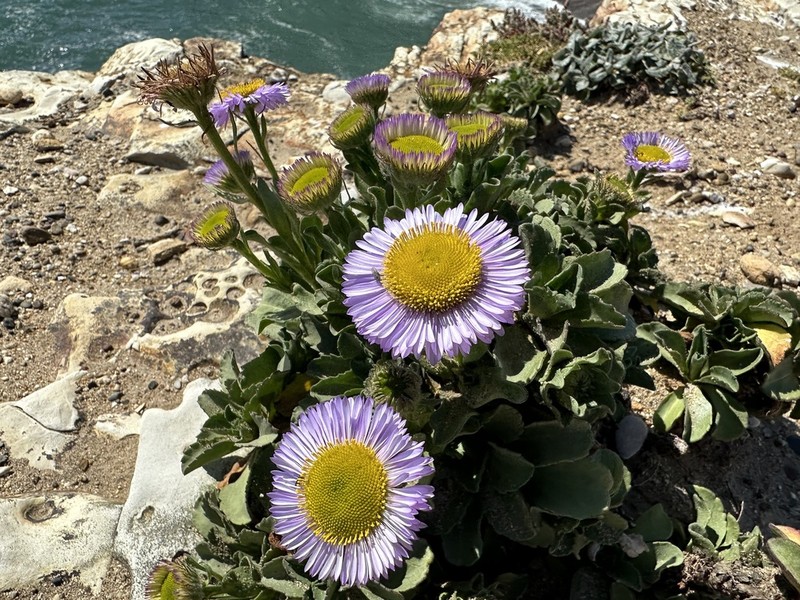
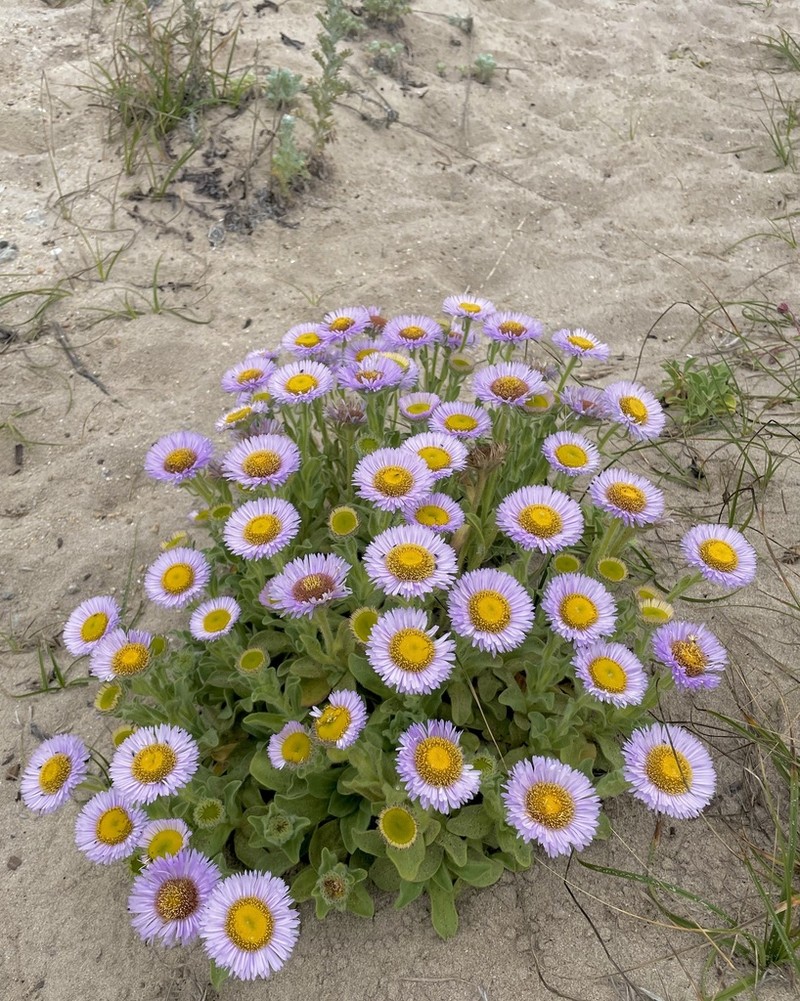
Seaside Fleabane
Erigeron glaucus
- Native to:
- United States
iNaturalist: © semajrak (iNaturalist #25111587)
Taxonomy
- Division:
- Magnoliophyta | - Flowering plants
- Family:
- Asteraceae
- Genus:
- Erigeron
- Species:
- Erigeron glaucus
- USDA Symbol:
- ERGL3
Growth Characteristics
- Life Cycle:
- Perennial
- Growth Habit:
- Forb/herb
- Height:
- 30 cm
- Light Requirements:
- Part Shade
- Drought Tolerance:
- High
- Bloom Months:
- mar,apr,may,jun,jul,aug,sep
- Bloom Colors:
- pink, purple, white
Wildlife Benefits
- Bees:
- ★★☆☆☆ Documented bee visitation (GBIF)
- Butterflies & Moths:
- ★☆☆☆☆ Documented Lepidoptera association (GBIF)
- Caterpillars:
- ★☆☆☆☆ Recorded caterpillar host plant (HOSTS Database)
Keystone Species Ranking
- Caterpillar Keystone:
- ★★★☆☆ Butterfly & moth species supported by this genus (NWF)
- Pollen Specialist Bee Keystone:
- ★★★★☆ Native pollen specialist bee species supported by this genus (NWF)
Host Plant for Caterpillars
orange tortrix moth (Argyrotaenia franciscana), william's plume moth (Platyptilia williamsii)
Reported Fauna Sightings
Bees: ⚠️Western honey bee (Apis mellifera), Yellow-faced bumble bee (Bombus vosnesenskii) Butterflies:Fiery Skipper (Hylephila phyleus), Gray Hairstreak (Strymon melinus), ⚠️Monarch butterfly (Danaus plexippus), Woodland Skipper (Ochlodes sylvanoides)
Garden & Ecology Notes
- Wildlife Value:
- bees, butterflies
- Deer Resistant:
- Yes
- Salt Tolerant:
- Yes
Soil Requirements
- Soil Type:
- sandy, well-drained, nutrient-poor soil
- pH:
- 5.5 - 7.5 (slightly acidic to neutral)
- Drainage:
- excellent drainage required
- Moisture:
- dry to moderate
- Notes:
- native to coastal dunes and bluffs
Propagation & Germination
- Stratification:
- None required
- Germination Time:
- 10–30 days
- Notes:
- Seeds germinate readily without pretreatment; surface sow and keep moist.
Pre-treatment: None required
Establishment: Seeds are collected between Jun 1st and August 1st. Mature capsules are brown. Seed is black and tiny at maturity. D. aurantiacus is found in rocky places in the coastal range and foothills of the Sierras, below 3,000 feet elevation; from Santa Berbara and Placer counties to western Oregon.
Source: npn.rngr.net
ORGHPS Germination Guide: Sow @ 4C.