
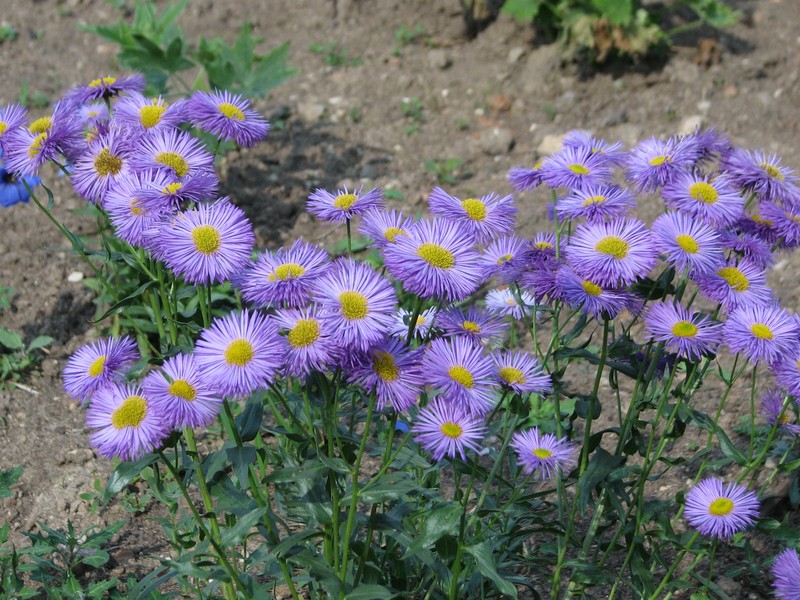
Aspen Fleabane
Erigeron speciosus
Taxonomy
- Division:
- Magnoliophyta | - Flowering plants
- Family:
- Asteraceae
- Genus:
- Erigeron
- Species:
- Erigeron speciosus
Growth Characteristics
- Life Cycle:
- Perennial
- Growth Habit:
- Forb/herb , Subshrub
- Height:
- 3-4 ft
- Light Requirements:
- Full Sun
- Drought Tolerance:
- High
- Bloom Months:
- jun, jul, aug, sep, oct
- Bloom Colors:
- White, Yellow, Blue, Purple
Native Range
United States: Arizona, Colorado, Idaho, Montana, New Mexico, Nevada, Oregon, South Dakota, Utah, Washington, Wyoming, Canada: Alberta, British Columbia
Keystone Species Ranking
- Caterpillar Keystone:
- ★★★☆☆ Based on number of butterfly and moth species using this genus as host plant (Source: National Wildlife Federation)
- Bee Keystone:
- ★★☆☆☆ Based on number of native bee species using this genus for pollen and nectar (Source: National Wildlife Federation)
Host Plant for Caterpillars
Reported Fauna Sightings
Soil Requirements
- Soil Type:
- rich, well-drained loamy soil
- pH:
- 6.0 - 7.5 (slightly acidic to neutral)
- Drainage:
- excellent drainage required
- Moisture:
- dry to moderate
- Notes:
- prefers open meadows and forest edges
Germination Information
Pre-treatment: Seeds should be plated on 1.5% agar in petri dishes and incubated using six temperature treatments intended to represent different seed sowing times and locations. Alternatively, seeds can be cold stratified for 30 to 60 days.
Establishment: Seeds germinated to nearly 100% in early spring conditions without winter treatment, and had relatively high germination in all three treatments that imposed 12 weeks of winter conditions. Seeding during late winter or early spring may provide sufficient dormancy breaking to allow seeds to germinate. Additional research is needed to confirm the specific minimum temperature conditions needed to break dormancy and allow germination.
Source: npn.rngr.net