
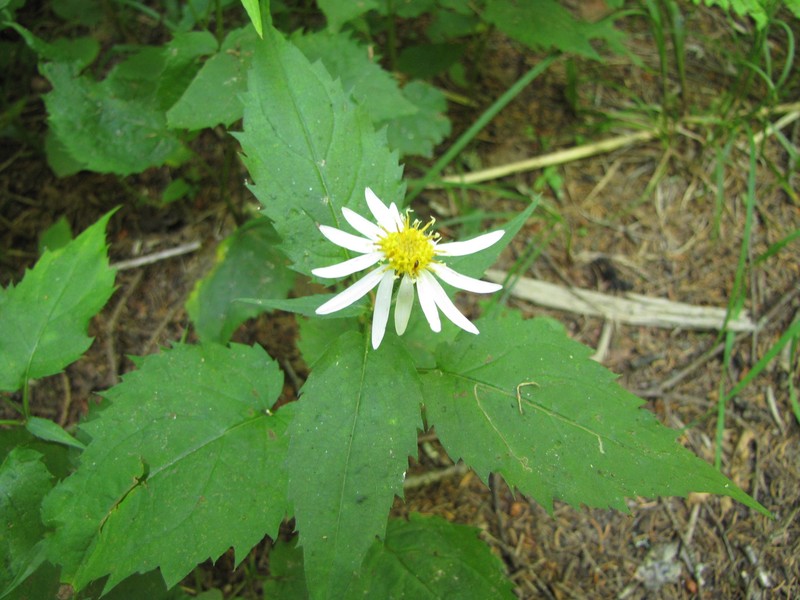
Mountain Aster
Eurybia chlorolepis
Taxonomy
- Division:
- Magnoliophyta | - Flowering plants
- Family:
- Asteraceae
- Genus:
- Eurybia
- Species:
- Eurybia chlorolepis
Growth Characteristics
- Life Cycle:
- Perennial
- Growth Habit:
- Forb/herb
- Height:
- 2-3 ft
- Light Requirements:
- Part Shade
- Drought Tolerance:
- High
- Bloom Months:
- aug, sep, oct, nov
- Bloom Colors:
- White, Yellow
Native Range
United States: Georgia, North Carolina, South Carolina, Tennessee, Virginia
Keystone Species Ranking
- Caterpillar Keystone:
- ★★★★☆ Based on number of butterfly and moth species using this genus as host plant (Source: National Wildlife Federation)
- Bee Keystone:
- ★★★★☆ Based on number of native bee species using this genus for pollen and nectar (Source: National Wildlife Federation)
Host Plant for Caterpillars
Bucculatrix sexnotata, Gnorimoschema gallaeasterella
Reported Fauna Sightings
Bees: Black-tailed bumble bee (Bombus melanopygus), Black-tailed bumble bee (Bombus melanopygus), Common eastern bumble bee (Bombus impatiens), Common eastern bumble bee (Bombus impatiens), Fernald cuckoo bumble bee (Bombus flavidus), Fernald cuckoo bumble bee (Bombus flavidus), Fuzzy-horned bumble bee (Bombus mixtus), Fuzzy-horned bumble bee (Bombus mixtus), Half-black bumble bee (Bombus vagans), Half-black bumble bee (Bombus vagans), Indiscriminate cuckoo bumble bee (Bombus insularis), Indiscriminate cuckoo bumble bee (Bombus insularis), Sitka bumble bee (Bombus sitkensis), Sitka bumble bee (Bombus sitkensis), Two-form bumble bee (Bombus bifarius), Two-form bumble bee (Bombus bifarius), Western bumble bee (Bombus occidentalis), Western bumble bee (Bombus occidentalis), Yellow head bumble bee (Bombus flavifrons), Yellow head bumble bee (Bombus flavifrons)
Soil Requirements
- Soil Type:
- rich, well-drained loamy soil
- pH:
- 4.5 - 6.5 (acidic to slightly acidic)
- Drainage:
- excellent drainage required
- Moisture:
- consistently moist
- Notes:
- native to Appalachian mountain forests
Germination Information
Pre-treatment: Seed germinates in light, therefore it should be surface-sown.
Source: npn.rngr.net