
Bigleaf Aster
Eurybia macrophylla
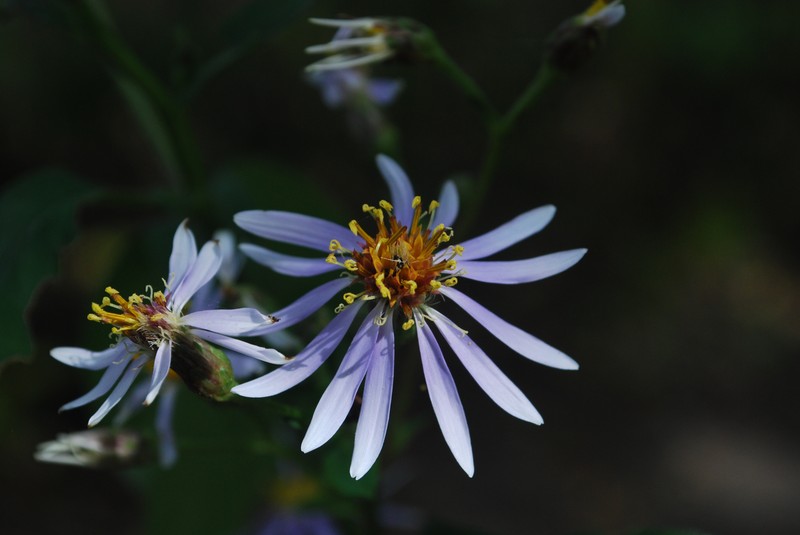
Taxonomy
- Division:
- Magnoliophyta | - Flowering plants
- Family:
- Asteraceae
- Genus:
- Eurybia
- Species:
- Eurybia macrophylla
Growth Characteristics
- Life Cycle:
- Perennial
- Growth Habit:
- Forb/herb
- Height:
- 3-4 ft
- Light Requirements:
- Full Sun, Part Shade, Shade
- Drought Tolerance:
- High
- Bloom Months:
- jul, aug, sep, oct
- Bloom Colors:
- White, Blue, Purple
Native Range
United States: Connecticut, Georgia, Iowa, Illinois, Indiana, Kentucky, Massachusetts, Maryland, Maine, Michigan, Minnesota, Missouri, North Carolina, New Hampshire, New Jersey, New York, Ohio, Pennsylvania, Rhode Island, South Carolina, Tennessee, Virginia, Vermont, Wisconsin, West Virginia, Canada: Manitoba, New Brunswick, Nova Scotia, Ontario, Prince Edward Island, Quebec
Keystone Species Ranking
- Caterpillar Keystone:
- ★★★★☆ Based on number of butterfly and moth species using this genus as host plant (Source: National Wildlife Federation)
- Bee Keystone:
- ★★★★☆ Based on number of native bee species using this genus for pollen and nectar (Source: National Wildlife Federation)
Host Plant for Caterpillars
Dejongia , Dichomeris levisella, Phaneta alterana, Phaneta perfuscana, Tischeria astericola
Reported Fauna Sightings
Bees: Common eastern bumble bee (Bombus impatiens), Common eastern bumble bee (Bombus impatiens), Half-black bumble bee (Bombus vagans), Half-black bumble bee (Bombus vagans), Red-belted bumble bee (Bombus rufocinctus), Red-belted bumble bee (Bombus rufocinctus), Sanderson bumble bee (Bombus sandersoni), Sanderson bumble bee (Bombus sandersoni), Tri-colored bumble bee (Bombus ternarius), Tri-colored bumble bee (Bombus ternarius)
Soil Requirements
- Soil Type:
- rich, well-drained loamy soil
- pH:
- 5.5 - 7.0 (slightly acidic to neutral)
- Drainage:
- tolerates poor drainage
- Moisture:
- consistently moist
- Notes:
- prefers shaded woodland areas
Germination Information
Pre-treatment: None required
Establishment: Seeds collected in Acadia National Park, Maine by Martin van der Grinten during September/October by hand harvesting. The range of Large-leaved Aster is from Quebec to Minnesota and south to Georgia. Found in semi-shaded areas or dry woods.
Source: npn.rngr.net