
Common Sunflower
Helianthus annuus
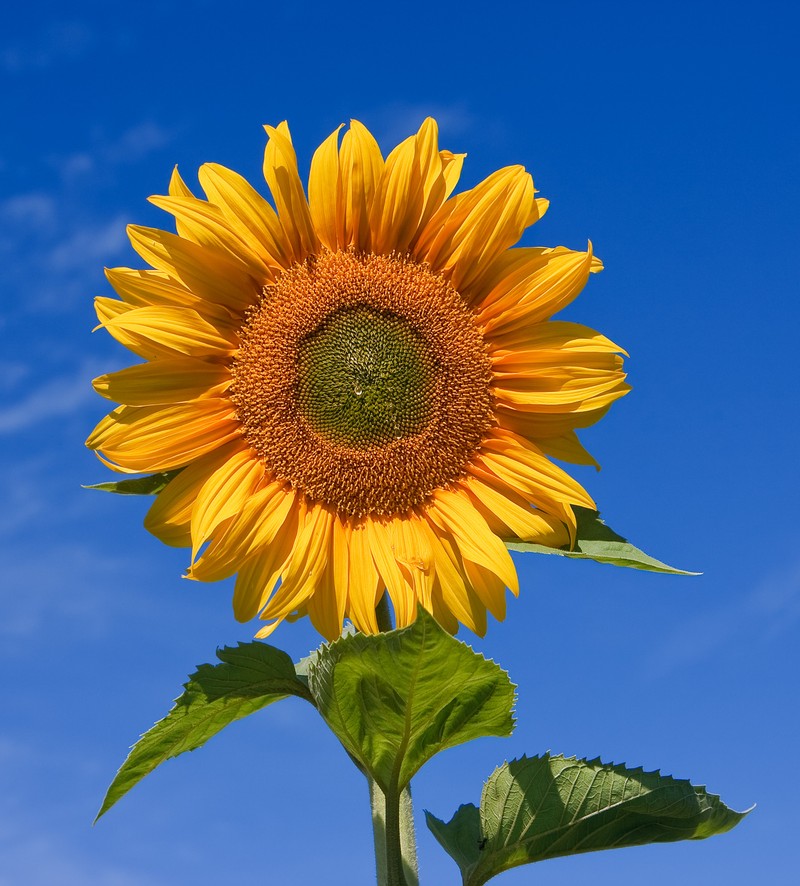
Fir0002


Taxonomy
- Division:
- Magnoliophyta | - Flowering plants
- Family:
- Asteraceae
- Genus:
- Helianthus
- Species:
- Helianthus annuus
Growth Characteristics
- Life Cycle:
- Annual
- Growth Habit:
- Forb/herb
- Height:
- 300 cm
- Light Requirements:
- Full Sun
- Drought Tolerance:
- Medium
- Bloom Months:
- jun,jul,aug,sep,oct
- Bloom Colors:
- yellow, orange, red, brown, maroon
- Food Forest:
- Contains edible parts
Native Range
Mexico, United States
Wildlife Benefits
- Bees:
- ★☆☆☆☆ Documented bee visitation (GBIF)
- Butterflies & Moths:
- ★☆☆☆☆ Documented Lepidoptera association (GBIF)
- Caterpillars:
- ★★★★☆ Recorded caterpillar host plant (HOSTS Database)
Keystone Species Ranking
- Caterpillar Keystone:
- ★★☆☆☆ Butterfly & moth species supported by this genus (NWF)
- Pollen Specialist Bee Keystone:
- ★☆☆☆☆ Native pollen specialist bee species supported by this genus (NWF)
Host Plant for Caterpillars
American sunflower moth (Homoeosoma electella), American sunflower moth (Homoeosoma electellum), Armyworm moth (Pseudaletia unipuncta), beet armyworm (Spodoptera exigua), Bucculatrix longula, Bucculatrix simulans, Common Pinkband (Ogdoconta cinereola), corn earworm (Helicoverpa zea), darksided cutworm (Euxoa messoria), dingy cutworm (Feltia jaculifera), European corn borer (Ostrinia nubilalis), Euxoa albipennis, Euxoa ochrogaster, Grammia arge, host moth (Phtheochroa hospes), Isabella tiger moth (Pyrrharctia isabella), Isophrictis similiella, muscosa sphinx (Manduca muscosa), Obliquebanded leafroller (Choristoneura rosaceana), Pelochrista rorana, Pelochrista womonana, Plagiomimicus spumosum, Rachiplusia ou, Rustic Sphinx (Manduca rustica), Scrobipalpula artemisiella, Southern armyworm (Spodoptera eridania), southern emerald (Synchlora frondaria), Soybean Looper (Pseudoplusia includens), Suleima baracana, Suleima daracana, sunflower bud moth (Suleima helianthana), Tobacco budworm (Heliothis virescens), Variegated cutworm (Peridroma saucia), Virginia Tiger Moth (Spilosoma virginica), Bordered Patch (Chlosyne lacinia), Charidryas gorgone, orange oakleaf (Charidryas nycteis)
Reported Fauna Sightings
Bees: Black and gold bumble bee (Bombus auricomus), Black-tailed bumble (Bombus melanopygus), Bombus sonorus, Central bumble bee (Bombus centralis), Diadasia enavata, Epimelissodes obliqua, Half-black bumble bee (Bombus vagans), Melissodes Latreille, Morrison bumble bee (Bombus morrisoni), Nevada bumble bee (Bombus nevadensis), Red-belted bumble bee (Bombus rufocinctus), Triepeolus concavus, Two-form bumble bee (Bombus bifarius), Two-spotted bumble bee (Bombus bimaculatus), Western bumble bee (Bombus occidentalis), ⚠️Western honey bee (Apis mellifera), White-shouldered bumble bee (Bombus appositus) Hummingbirds: Allen's Hummingbird (Selasphorus sasin) Moths:Salt Marsh Moth (Estigmene acrea) Butterflies:Atalopedes Scudder, Bordered Patch (Chlosyne lacinia), Checkered White (Pontia protodice), Gray Hairstreak (Strymon melinus), ⚠️Monarch butterfly (Danaus plexippus), Painted Lady (Vanessa cardui), Variegated Fritillary (Euptoieta claudia)
Garden & Ecology Notes
- Wildlife Value:
- birds, bees, butterflies, small mammals
Soil Requirements
- Soil Type:
- rich, well-drained loamy soil
- pH:
- 6.0 - 7.5 (slightly acidic to neutral)
- Drainage:
- excellent drainage required
- Moisture:
- dry to moderate
- Notes:
- thrives in sunny, open areas
Propagation & Germination
- Stratification:
- None required
- Germination Time:
- 7–14 days
- Notes:
- Seeds germinate readily at 70-85°F soil temperature. Direct sow after last frost or start indoors 2-3 weeks before transplanting.
Propagation data sourced from Claude AI
Pre-treatment: Seeds were plated on 1.5% agar in petri dishes and incubated in growth chambers with six temperature treatments intended to represent different seed sowing times and locations in the Colorado Plateau
Establishment: Viable seeds from wild-collected seed from Garfield County, Colorado germinated to only 40% or less in all three treatments that imposed 12 weeks of winter conditions. Treatments without winter conditions had even lower germination (0-15%).
Source: npn.rngr.net