
Hairy False Goldenaster
Heterotheca villosa
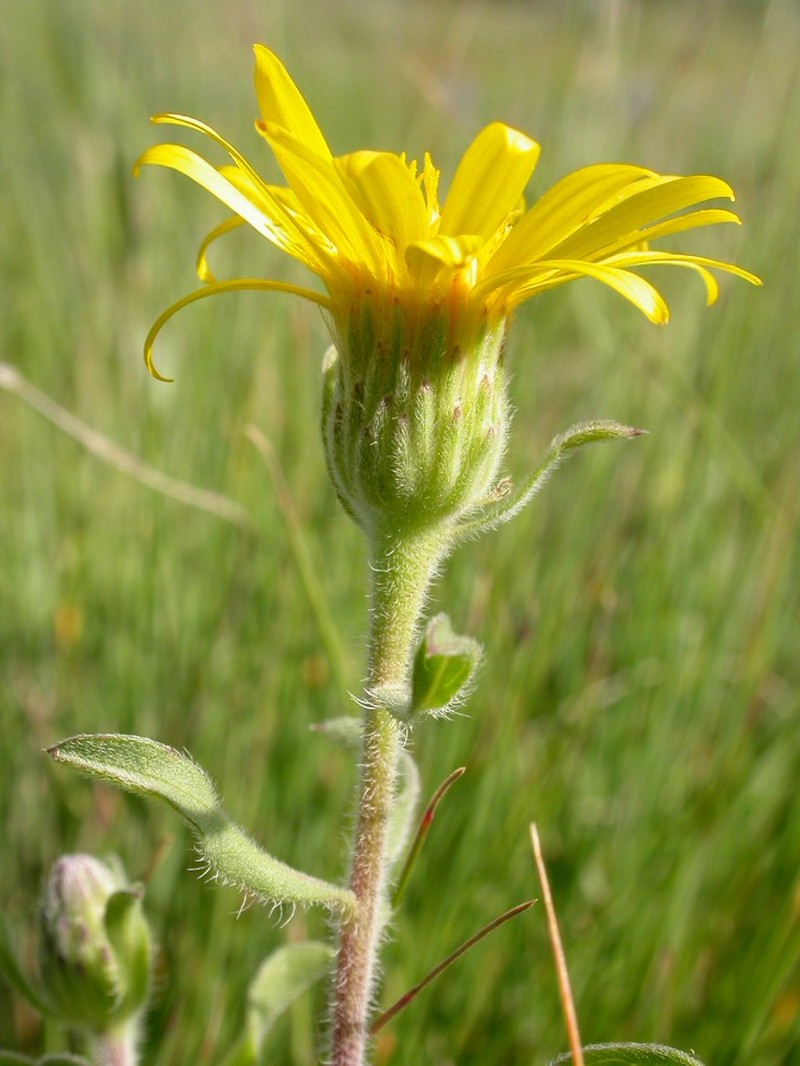
Matt Lavin from Bozeman, Montana, USA
Taxonomy
- Division:
- Magnoliophyta | - Flowering plants
- Family:
- Asteraceae
- Genus:
- Heterotheca
- Species:
- Heterotheca villosa
Growth Characteristics
- Life Cycle:
- Perennial
- Growth Habit:
- Forb/herb , Subshrub
- Height:
- 2-3 ft
- Light Requirements:
- Full Sun
- Drought Tolerance:
- High
- Bloom Months:
- may, jun, jul, aug, sep, oct
- Bloom Colors:
- Yellow
Native Range
United States: Arizona, California, Colorado, Iowa, Idaho, Illinois, Indiana, Kansas, Michigan, Minnesota, Montana, North Dakota, Nebraska, New Mexico, Nevada, Oklahoma, Oregon, South Dakota, Texas, Utah, Washington, Wisconsin, Wyoming, Canada: Alberta, British Columbia, Manitoba, Ontario, Saskatchewan
Keystone Species Ranking
- Bee Keystone:
- ★☆☆☆☆ Based on number of native bee species using this genus for pollen and nectar (Source: National Wildlife Federation)
Host Plant for Caterpillars
Reported Fauna Sightings
Soil Requirements
- Soil Type:
- sandy, well-drained, nutrient-poor soil
- pH:
- 6.0 - 8.0 (slightly acidic to slightly alkaline)
- Drainage:
- excellent drainage required
- Moisture:
- dry to moderate
- Notes:
- thrives in disturbed areas and open sites
Germination Information
Pre-treatment: None required
Establishment: Seeds from wild-collected seed from Garfield County, Colorado had relatively low germination regardless of the imposition of 12 weeks of winter conditions. This suggests that seeds in this species may have different dormancy-break requirements, and seeding timing may not significantly influence germination of sown seed. Additional research is needed to confirm the specific length of conditions needed to break dormancy and allow germination in the maximum number of seeds. Additional research is also needed to determine the extent to which these results are characteristic of the species.
Source: npn.rngr.net