Rough Hawkweed
Hieracium scabrum
- Native to:
- Canada, Prince Edward I., United States, Virgin Islands
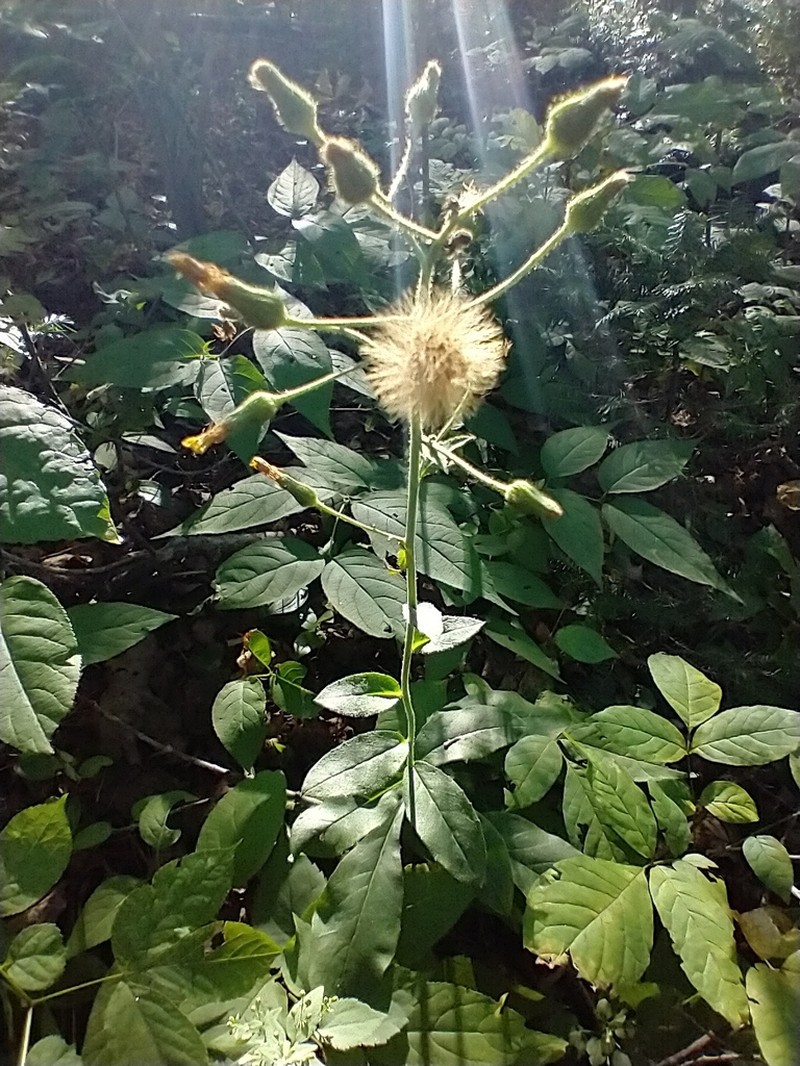
iNaturalist: © tsn (iNaturalist #239164688)
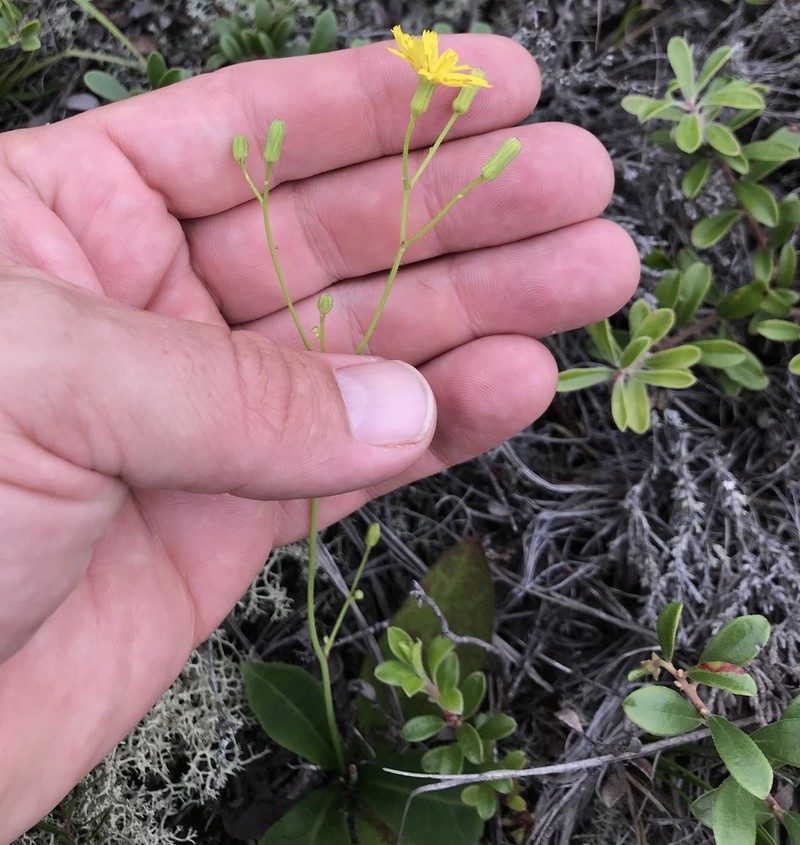
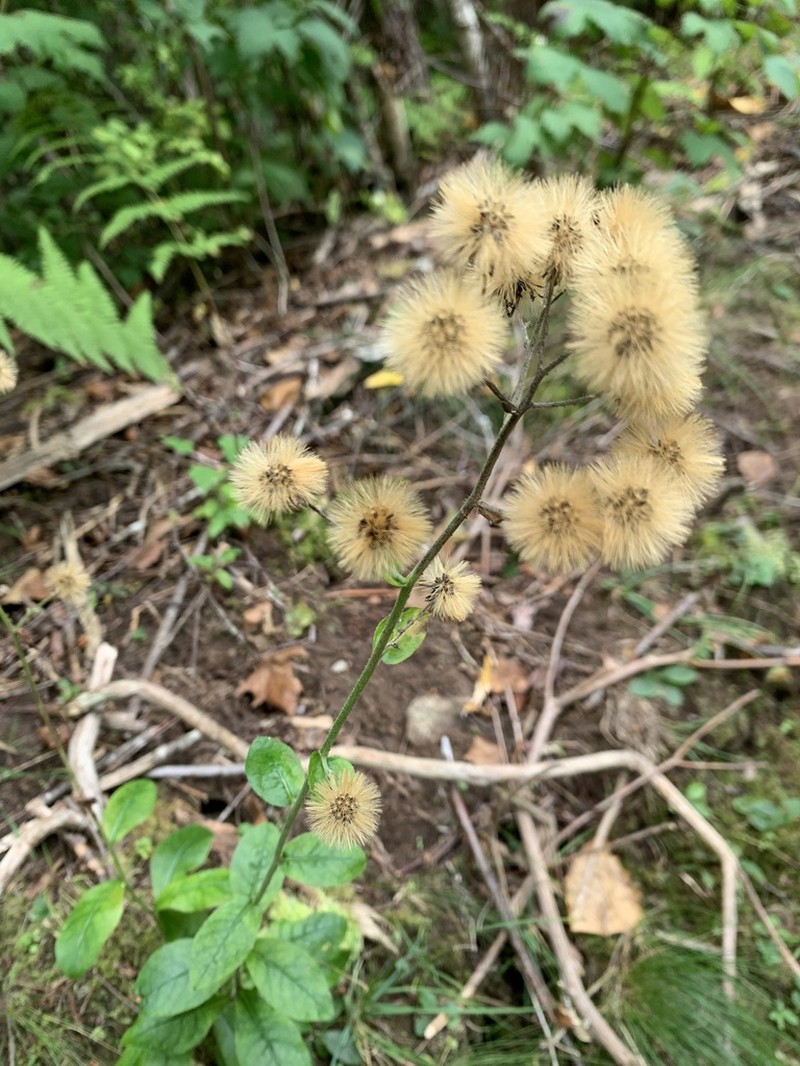
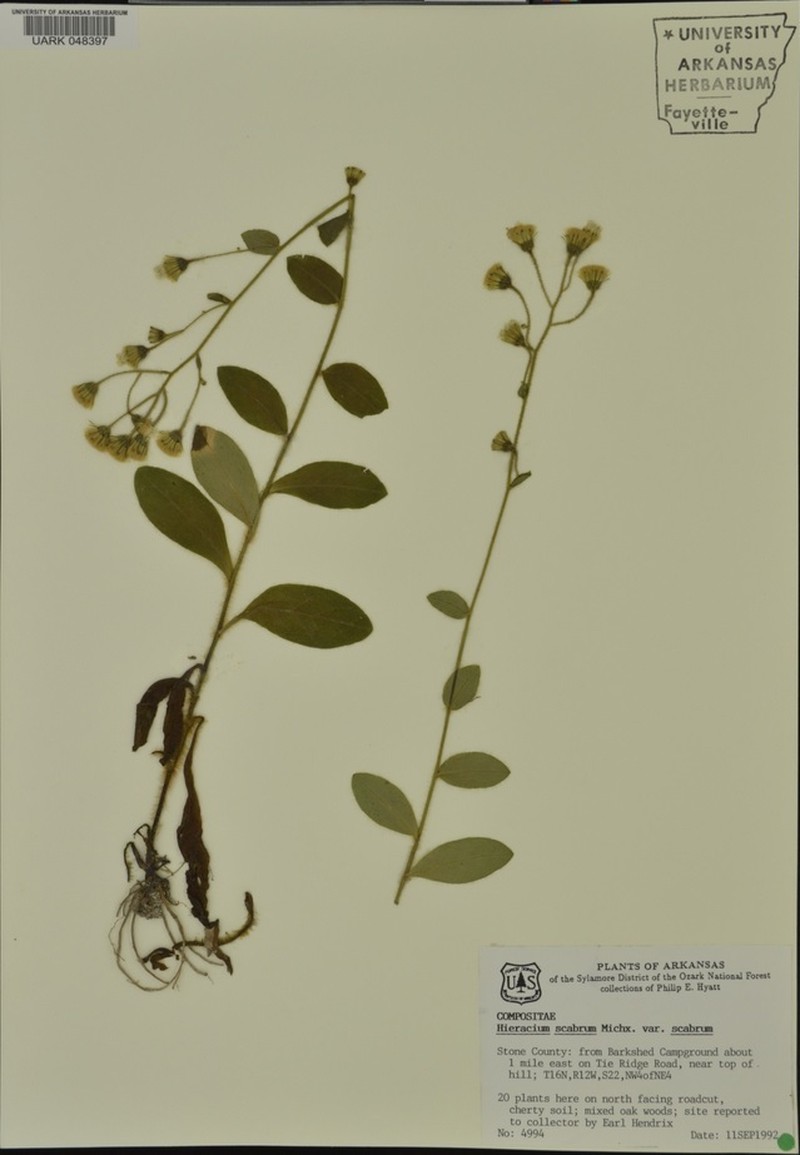
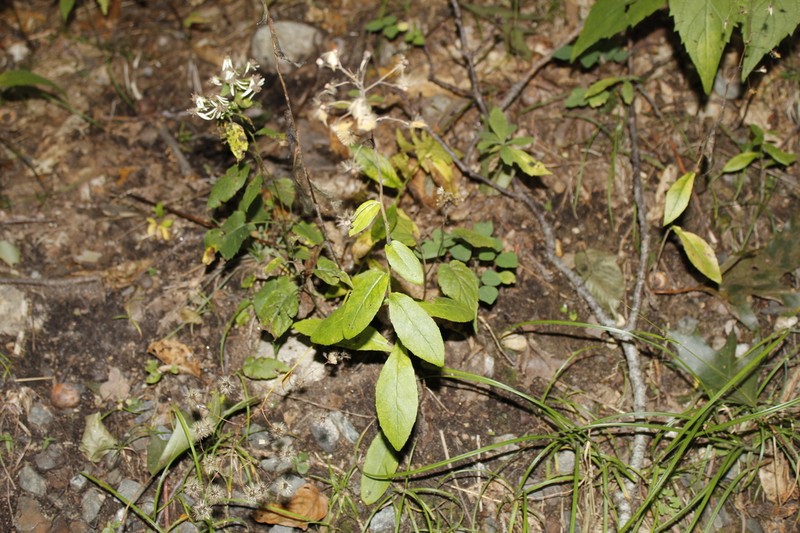
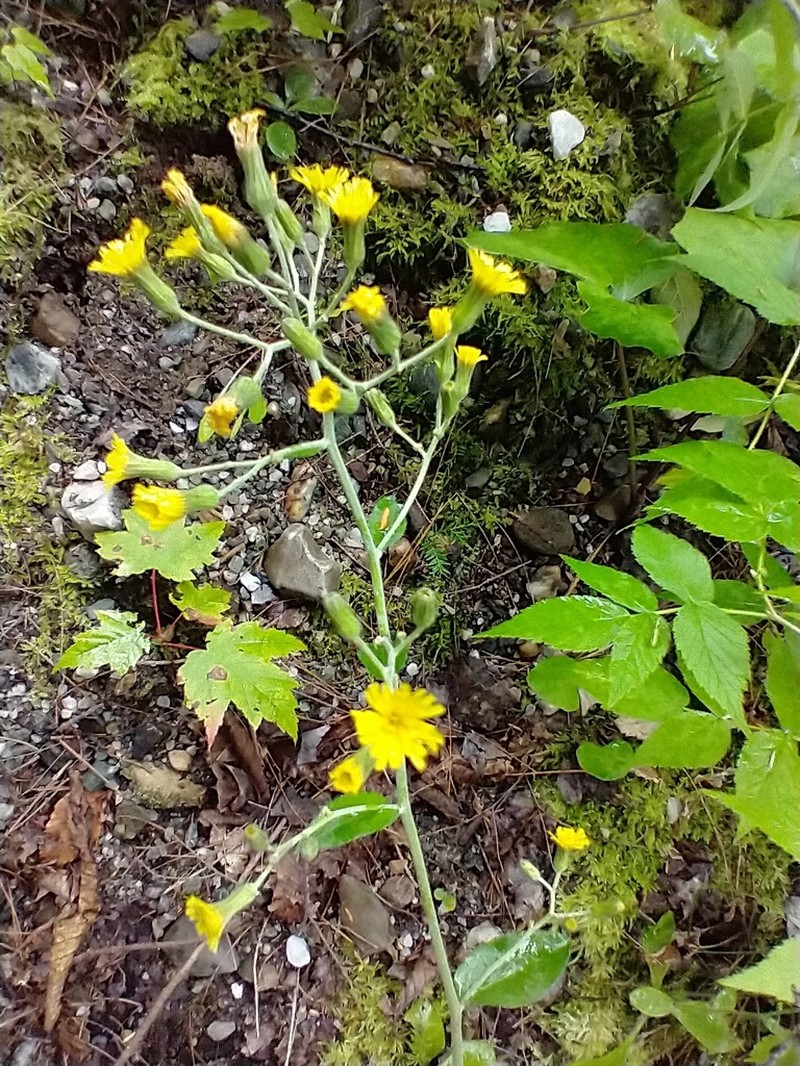
Taxonomy
- Division:
- Magnoliophyta | - Flowering plants
- Family:
- Asteraceae
- Genus:
- Hieracium
- Species:
- Hieracium scabrum
- USDA Symbol:
- HISC
Growth Characteristics
- Life Cycle:
- Perennial

- Growth Habit:
- Forb/herb
- Height:
- 61 cm

- Light Requirements:
- Full Sun

- Drought Tolerance:
- High
- Bloom Months:
- jul, aug, sep
- Bloom Colors:
- yellow
Wildlife Benefits
- Bees:
- ★☆☆☆☆ Documented bee visitation (GBIF)
- Butterflies & Moths:
- ★☆☆☆☆ Documented Lepidoptera association (GBIF)
Keystone Species Ranking
- Pollen Specialist Bee Keystone:
- ★☆☆☆☆ Native pollen specialist bee species supported by this genus (NWF)
Garden & Ecology Notes
- Minimum Light:
- Part Shade
- Best Light:
- Full Sun, Part Sun
- Habitat:
- Meadow, Woodland, Barrens, Temperate forest
- Wildlife Value:
- bees, butterflies, moths
- Ecology:
- Little is known about floral-faunal relationships involving Hieracium scabrum, but the flower heads are likely pollinated by long-tongued bees and other insects. It is suspected that Hieracium scabrum serves as a host plant for Schinia bina. The seeds and leaves of Hieracium scabrum are known to be eaten by wild turkey and ruffed grouse.

Soil Requirements
- Soil:
- sandy
- pH:
- 4.5 - 6.0 (acidic)
- Drainage:
- well-drained
- Moisture:
- dry to moderate
- Notes:
- Occurs typically in sterile, nutrient-poor sandy, gravelly, or rocky acidic soils.
Propagation & Germination
- Notes:
- Seeds generally require 30 to 60 days of cold moist stratification to break physiological dormancy and germinate in the presence of light.
Where to Buy
Nationwide Seller
- Hungry Hook Farm (PA) (seeds)