
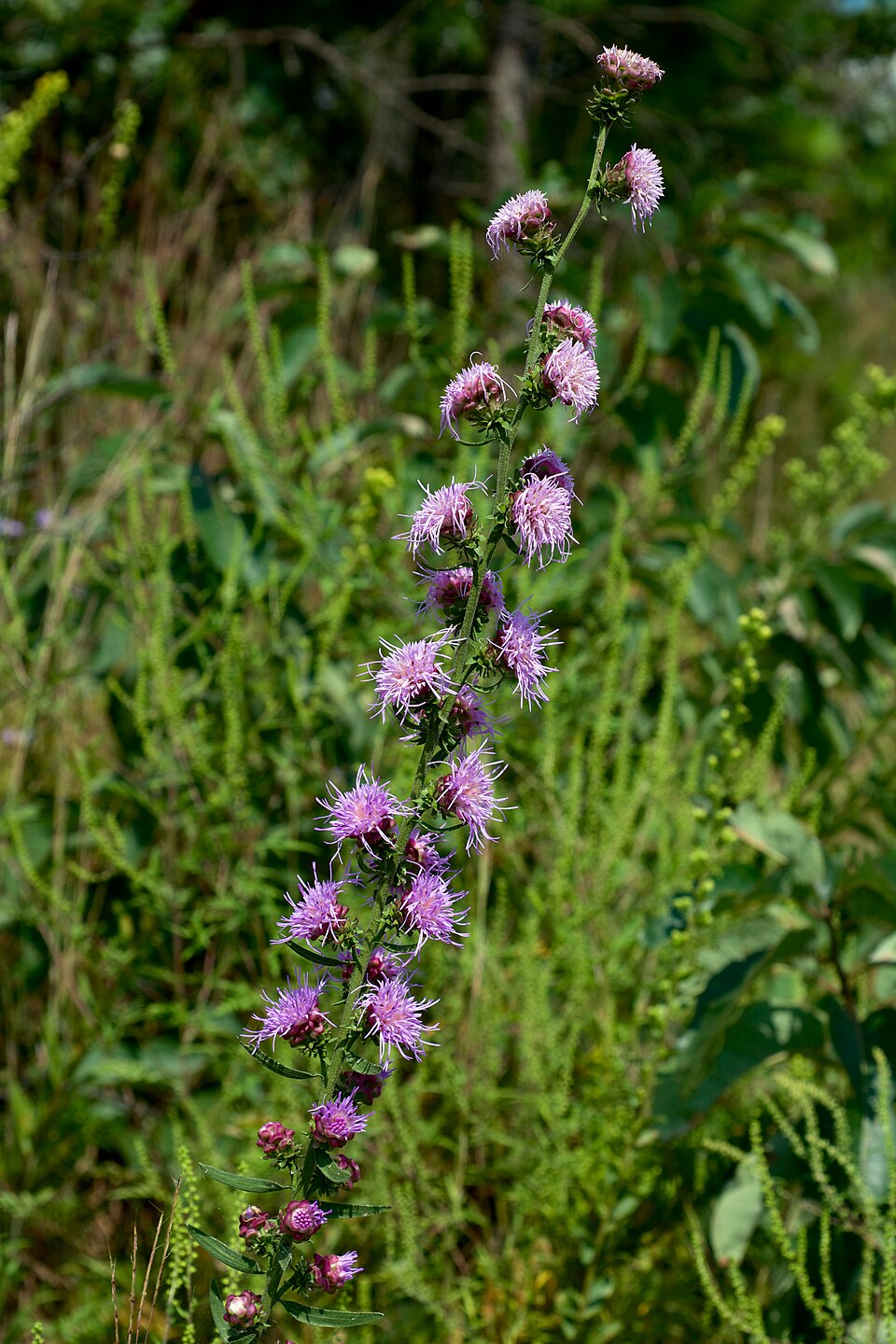
Tall Blazing Star
Liatris aspera
Taxonomy
- Division:
- Magnoliophyta | - Flowering plants
- Family:
- Asteraceae
- Genus:
- Liatris
- Species:
- Liatris aspera
Growth Characteristics
- Life Cycle:
- Perennial
- Growth Habit:
- Geophyte
- Height:
- 6-8 ft
- Light Requirements:
- Full Sun
- Drought Tolerance:
- High
- Bloom Months:
- aug, sep
- Bloom Colors:
- Pink, Purple
Native Range
United States: Alabama, Arkansas, Florida, Georgia, Iowa, Illinois, Indiana, Kansas, Kentucky, Louisiana, Michigan, Minnesota, Missouri, Mississippi, North Carolina, North Dakota, Nebraska, New York, Ohio, Oklahoma, South Carolina, South Dakota, Tennessee, Texas, Virginia, Wisconsin, West Virginia, Canada: Ontario
Reported Fauna Sightings
Soil Requirements
- Soil Type:
- sandy, well-drained, nutrient-poor soil
- pH:
- 5.5 - 7.5 (slightly acidic to neutral)
- Drainage:
- excellent drainage required
- Moisture:
- dry to moderate
- Notes:
- thrives in open prairies and savannas
Germination Information
Pre-treatment: Mix the seeds with an equal amount of either perlite or vermiculite and place in a cool dry place for 1-3 months for cold stratification.
Establishment: Seeds are collected by hand from locally native plants within the eastern central Upper Peninsula. The plant is found in dry, sandy sites in full sun and takes several years to go from seed to bloom. There is a variation in pre-treatment protocol, with one suggesting cold stratification only if seeds do not grow, while the other recommends it for all seeds for 105 days.
Source: npn.rngr.net