
Dotted Blazing Star
Liatris punctata
- Native to:
- Canada, Mexico, United States
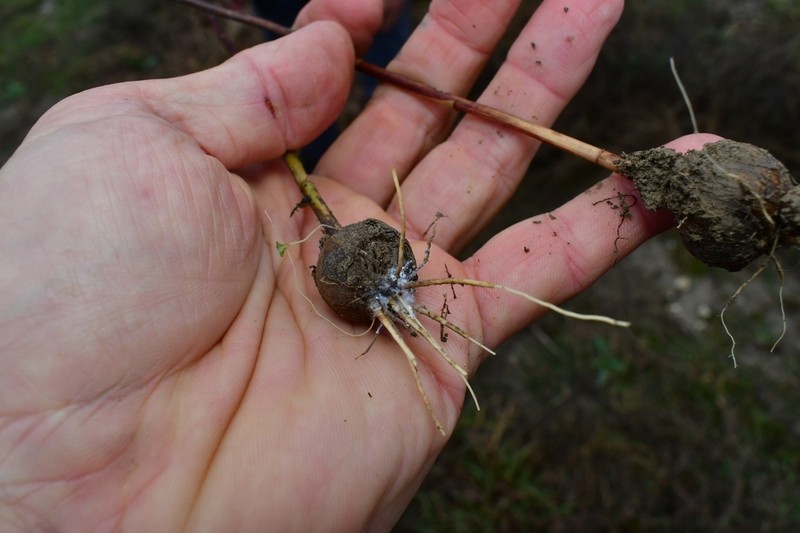
iNaturalist: © joeysantore (iNaturalist #191518247)
Taxonomy
- Division:
- Magnoliophyta | - Flowering plants
- Family:
- Asteraceae
- Genus:
- Liatris
- Species:
- Liatris punctata
- USDA Symbol:
- LIPU
Growth Characteristics
- Life Cycle:
- Perennial
- Growth Habit:
- Geophyte
- Height:
- 60 cm
- Light Requirements:
- Full Sun
- Drought Tolerance:
- High
- Bloom Months:
- aug,sep,oct
- Bloom Colors:
- purple, pink
Wildlife Benefits
- Bees:
- ★☆☆☆☆ Documented bee visitation (GBIF)
- Butterflies & Moths:
- ★★★★★ Documented Lepidoptera association (GBIF)
- Caterpillars:
- ★☆☆☆☆ Recorded caterpillar host plant (HOSTS Database)
- Hummingbirds:
- ★☆☆☆☆ Documented hummingbird visits (GBIF)
Host Plant for Caterpillars
Reported Fauna Sightings
Garden & Ecology Notes
- Wildlife Value:
- birds, butterflies, bees
- Deer Resistant:
- Yes
- Fire Ecology:
- Fire adapted — tolerates or benefits from fire
- Fire Notes:
- Resprouts from root crown after fire; fire can stimulate flowering and seed production.
Soil Requirements
- Soil Type:
- sandy, well-drained, nutrient-poor soil
- pH:
- 6.0 - 7.5 (slightly acidic to neutral)
- Drainage:
- excellent drainage required
- Moisture:
- dry to moderate
- Notes:
- Thrives in open prairies and rocky slopes
Propagation & Germination
- Stratification:
- Cold/moist stratification required — 30–60 days
- Germination Time:
- 14–30 days
- Notes:
- Seeds benefit from cold moist stratification for 30-60 days to improve germination rates.
Pre-treatment: Seeds are cold, moist stratified for 60 days in a refrigerator at 1 to 3 C. Seeds are imbibed in water and rolled into moist paper towels inserted into an opened zip-lock bag. Dry stored seeds may germinate without pretreatment, but stratification gives a more uniform germination.
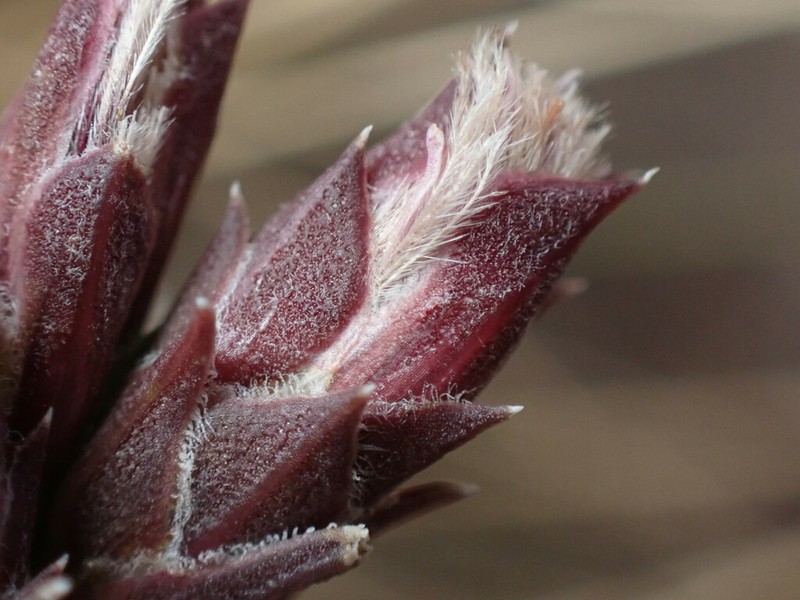
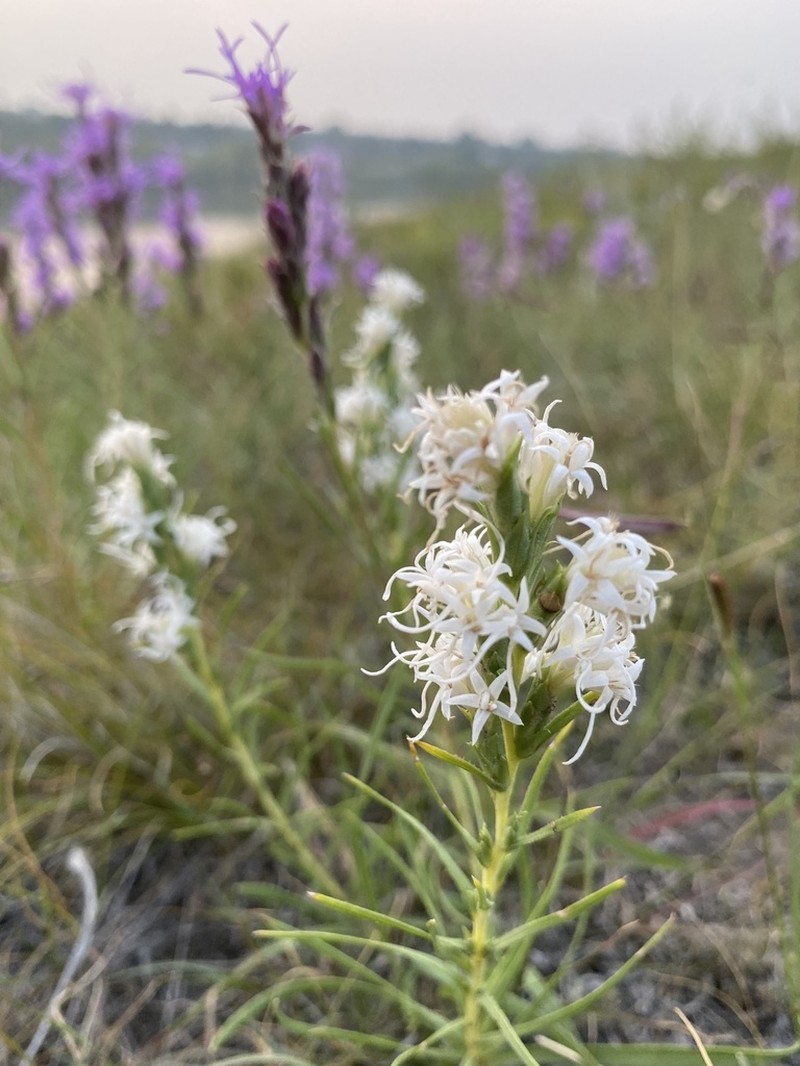
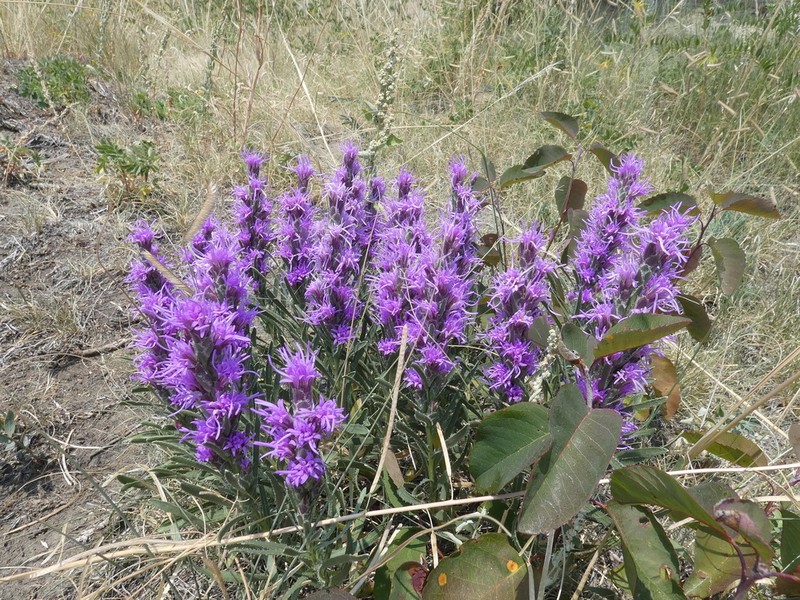
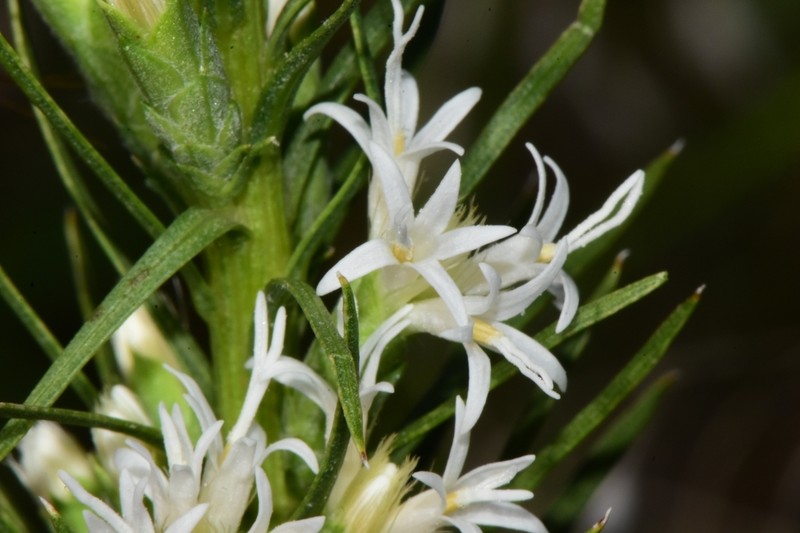
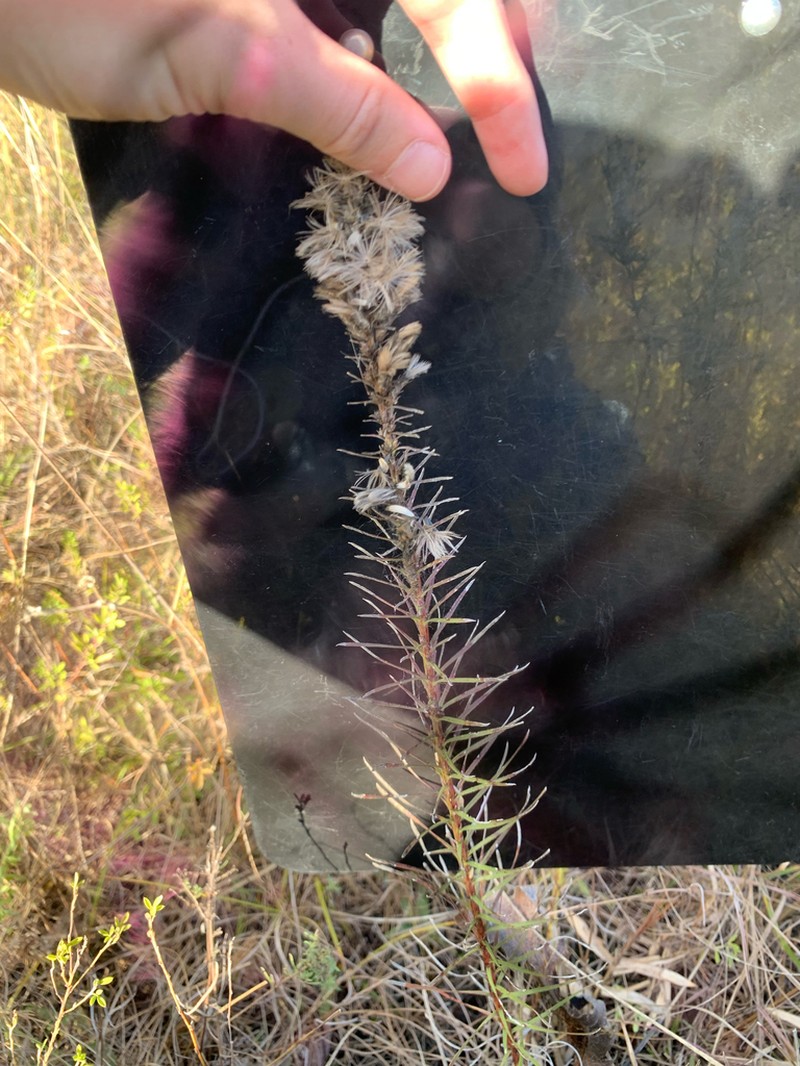
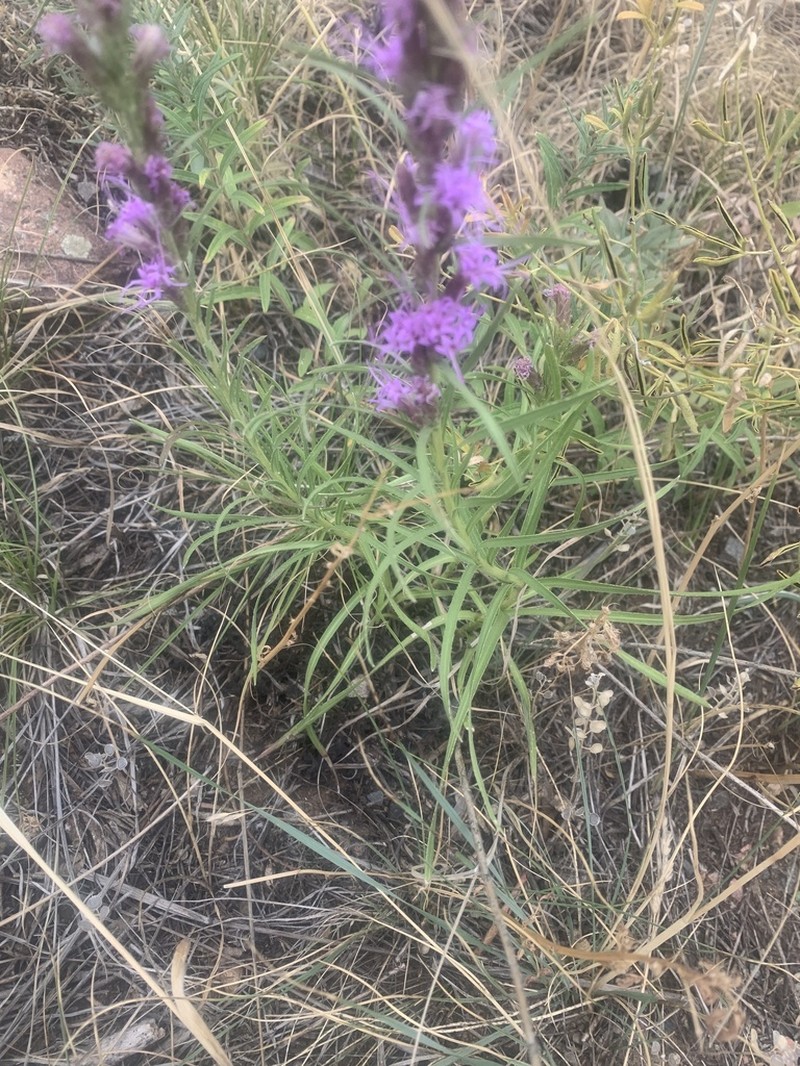
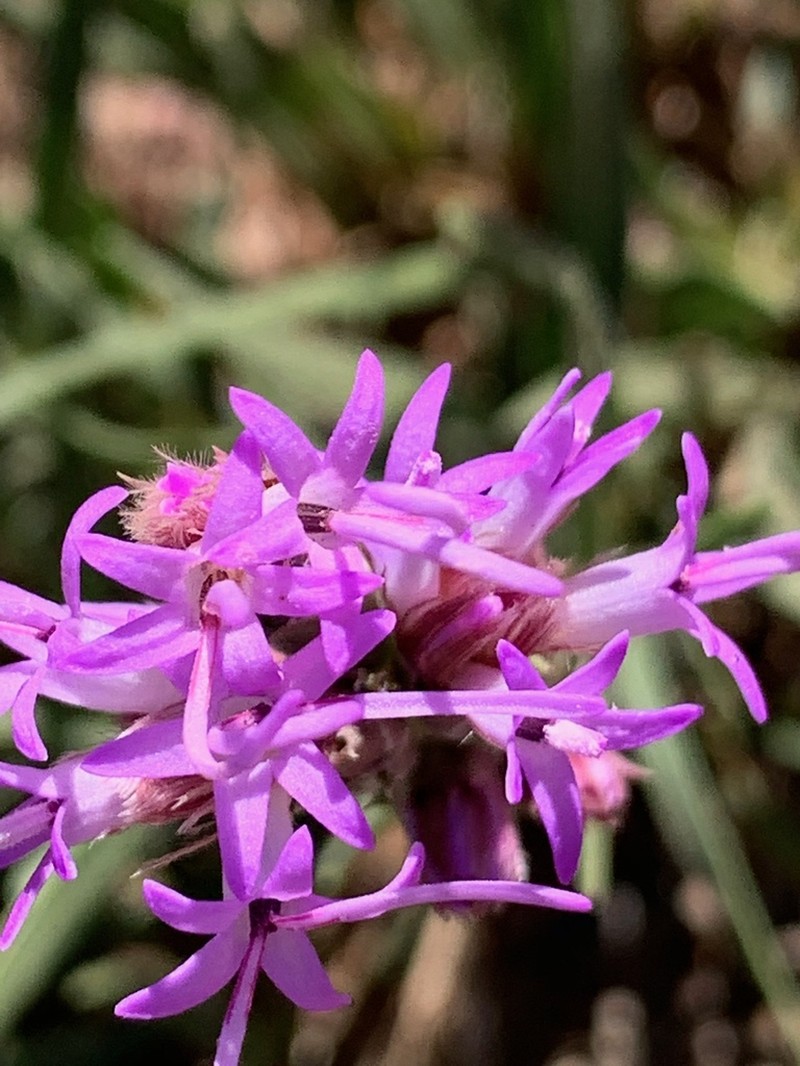
Establishment: Dotted gayfeather flowers in August and September and produces a dense spike of clustered flowers that are pink to reddish purple. The fruits are achenes that are dark grey at maturity with a white feathery pappus borne at the top of the achene. Achenes mature approximately in late September and October. Seeds are dispersed by wind. Achenes ripen first from the lower portion of inflorescence and progress upwards. Collect fully achenes just prior to dispersal by hand.
Source: npn.rngr.net
ORGHPS Germination Guide: Sow @ 4C for 3 weeks, then place @ 20C.
Where to Buy
Nationwide Seller
- Prairie Moon Nursery (nursery and seeds)
- Prairie Moon Nursery (nursery and seeds)
- Native American Seed (nursery and seeds)