
Pinnate Prairie Coneflower
Ratibida pinnata
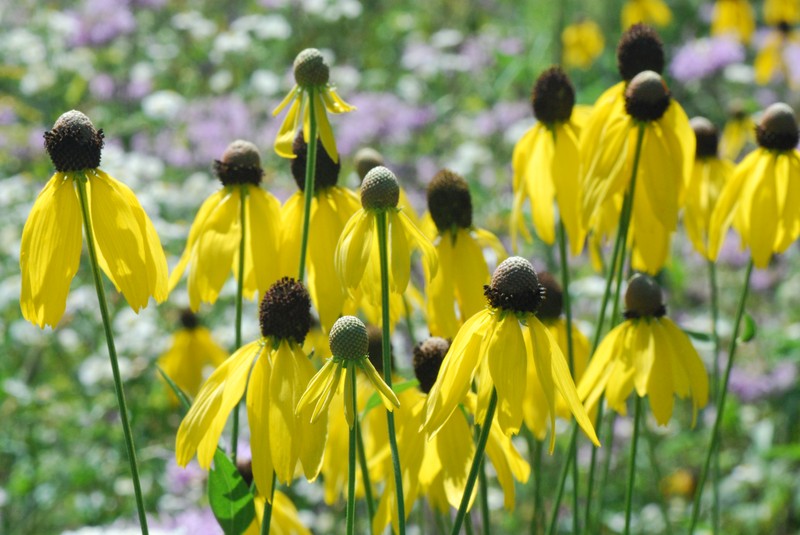
Joshua Mayer from Madison, WI, USA
Taxonomy
- Division:
- Magnoliophyta | - Flowering plants
- Family:
- Asteraceae
- Genus:
- Ratibida
- Species:
- Ratibida pinnata
Growth Characteristics
- Life Cycle:
- Perennial
- Growth Habit:
- Forb/herb
- Height:
- 4-6 ft
- Light Requirements:
- Full Sun, Part Shade
- Drought Tolerance:
- High
- Bloom Months:
- may, jun, jul, aug, sep
- Bloom Colors:
- Yellow
Native Range
United States: Alabama, Arkansas, Connecticut, Florida, Georgia, Iowa, Illinois, Indiana, Kansas, Kentucky, Louisiana, Massachusetts, Michigan, Minnesota, Missouri, Mississippi, Nebraska, New Jersey, New York, Ohio, Oklahoma, Pennsylvania, South Carolina, South Dakota, Tennessee, Virginia, Vermont, Wisconsin, West Virginia, Canada: Ontario
Keystone Species Ranking
- Bee Keystone:
- ★★★★☆ Based on number of native bee species using this genus for pollen and nectar (Source: National Wildlife Federation)
Reported Fauna Sightings
Soil Requirements
- Soil Type:
- rich, well-drained loamy soil
- pH:
- 5.5 - 7.5 (slightly acidic to neutral)
- Drainage:
- excellent drainage required
- Moisture:
- dry to moderate
- Notes:
- prefers open prairies and meadows
Germination Information
Pre-treatment: Seeds are placed in cold moist stratification for 90 days or damp stratified by mixing it with equal amounts of vermiculite and lightly dampening in a plastic bag or container, then stored for 3-4 months in a cold room of 34-36 degrees F.
Establishment: Seed is collected by hand from nursery stock. The plant flowers from approx. June 19 to August 7. Seed is harvested August 25. The plant is found from southern Ontario to Georgia and west to South Dakota and south to Oklahoma.
Source: npn.rngr.net