
Threadleaf Ragwort
Senecio flaccidus
- Native to:
- Mexico, United States
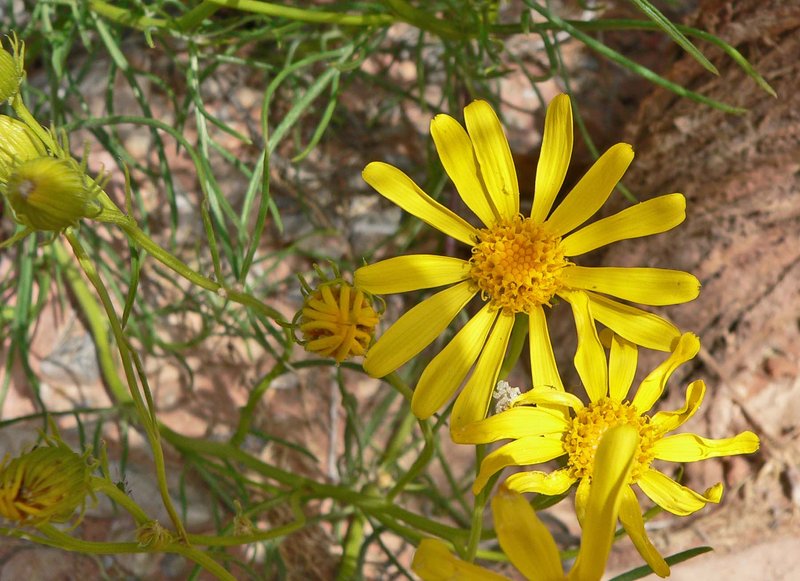
User:Stan Shebs
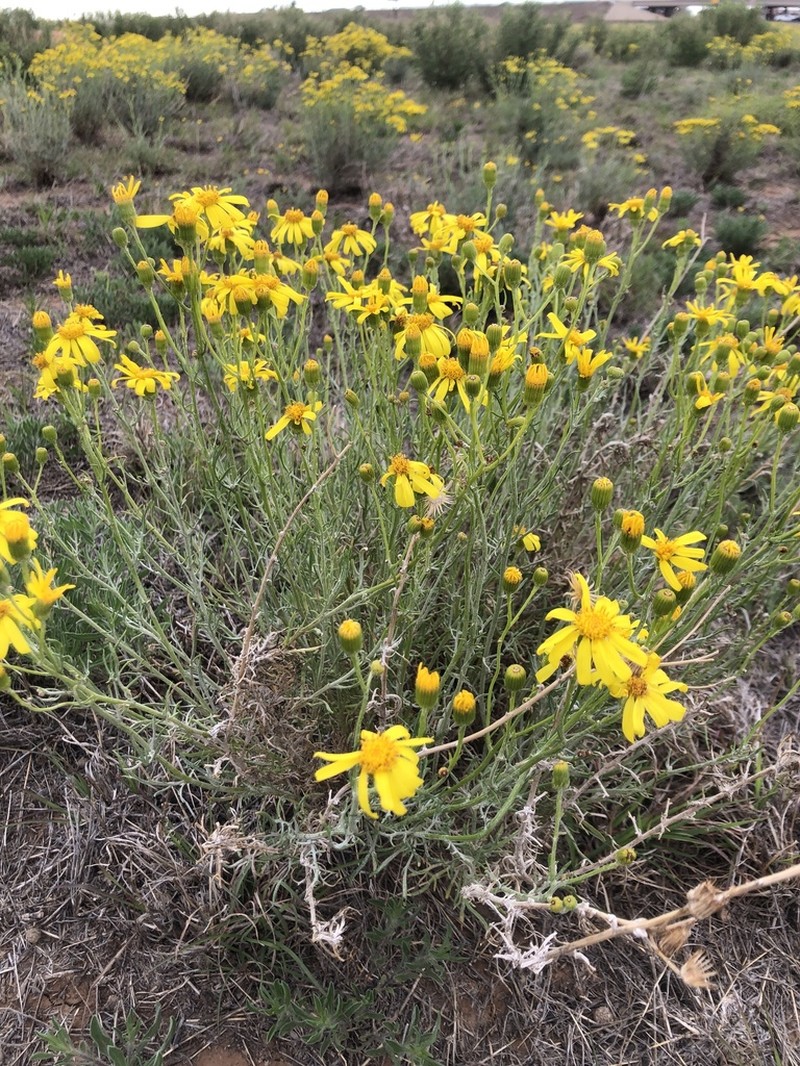
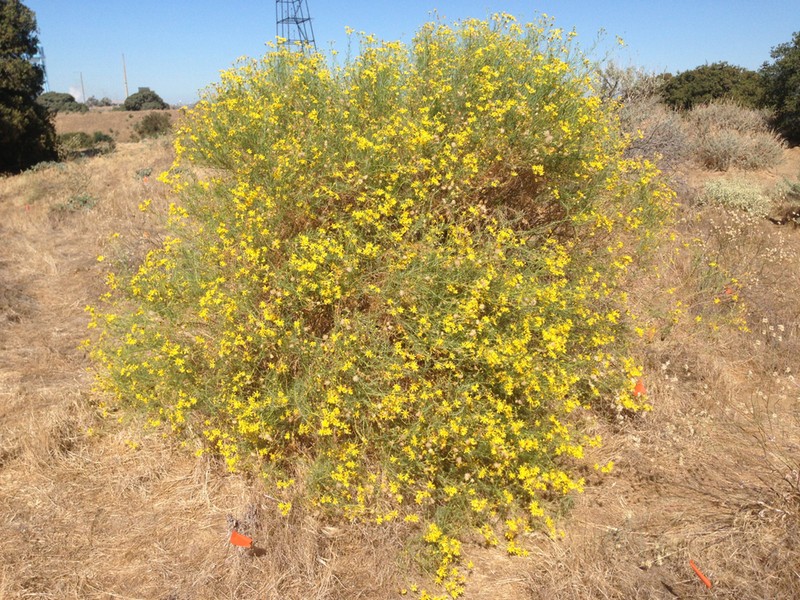
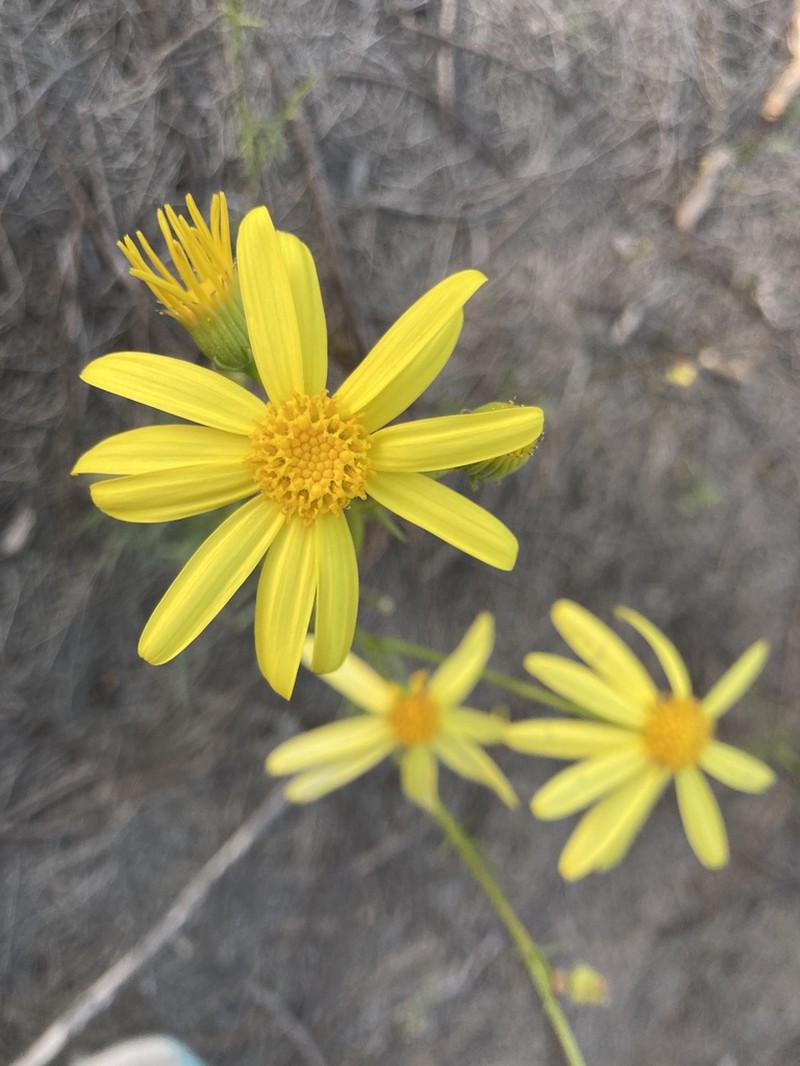
Taxonomy
- Division:
- Magnoliophyta | - Flowering plants
- Family:
- Asteraceae
- Genus:
- Senecio
- Species:
- Senecio flaccidus
- USDA Symbol:
- SEFL3
Growth Characteristics
- Life Cycle:
- Perennial
- Growth Habit:
- Forb/herb , Subshrub
- Height:
- 100 cm
- Light Requirements:
- Full Sun
- Drought Tolerance:
- High
- Bloom Months:
- apr,may,jun,jul,aug,sep,oct
- Bloom Colors:
- yellow
Wildlife Benefits
- Bees:
- ★☆☆☆☆ Documented bee visitation (GBIF)
- Butterflies & Moths:
- ★★★☆☆ Documented Lepidoptera association (GBIF)
- Caterpillars:
- ★☆☆☆☆ Recorded caterpillar host plant (HOSTS Database)
Keystone Species Ranking
- Pollen Specialist Bee Keystone:
- ★★★★☆ Native pollen specialist bee species supported by this genus (NWF)
Host Plant for Caterpillars
Agonopterix dammersi, American sunflower moth (Homoeosoma electella), Sonia vovana
Reported Fauna Sightings
Bees: Yellow-faced bumble bee (Bombus vosnesenskii) Butterflies:Queen butterfly (Danaus gilippus)
Garden & Ecology Notes
- Wildlife Value:
- butterflies, bees
- Deer Resistant:
- Yes
Soil Requirements
- Soil Type:
- sandy, well-drained, nutrient-poor soil
- pH:
- 6.0 - 8.0 (neutral to slightly alkaline)
- Drainage:
- excellent drainage required
- Moisture:
- dry to moderate
- Notes:
- native to arid and semi-arid regions
Propagation & Germination
Pre-treatment: Seeds are directly sown in open flats using a growing medium of 2 parts sand, 1 part mulch and 2 parts perlite (v:v:v).
Establishment: Seeds are hand collected when achenes have matured. The plant is found in washes and dry streambeds below 5,000 ft elevation from central Californian coast range to the Mojave desert and Santa Cruz and Santa Catalina islands.
Source: npn.rngr.net