
Prairie Rosinweed
Silphium terebinthinaceum
Also known as: prairie rosinweed
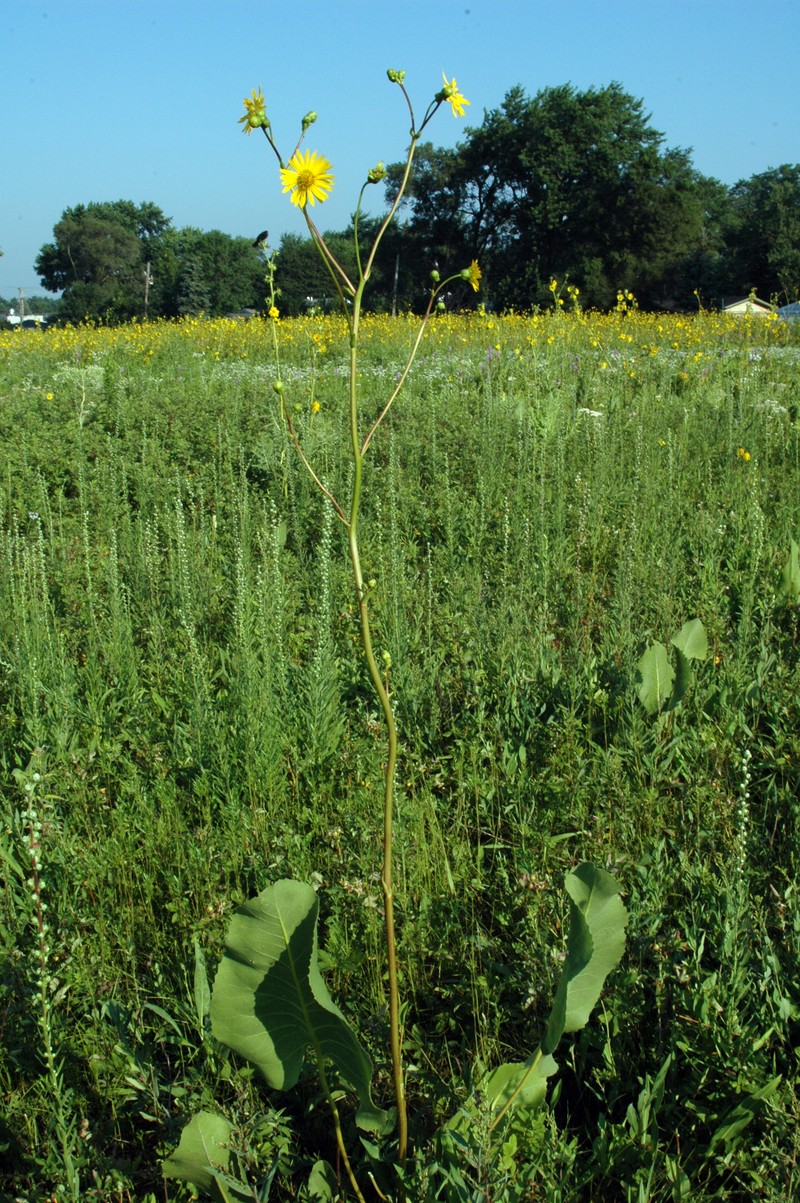
Frank Mayfield from Chicago area, USA
Taxonomy
- Division:
- Magnoliophyta | - Flowering plants
- Family:
- Asteraceae
- Genus:
- Silphium
- Species:
- Silphium terebinthinaceum
Growth Characteristics
- Life Cycle:
- Perennial
- Growth Habit:
- Forb/herb
- Height:
- 8-12 ft
- Light Requirements:
- Full Sun
- Drought Tolerance:
- Medium
- Bloom Months:
- jul, aug, sep
- Bloom Colors:
- Yellow
Native Range
United States: Alabama, Arkansas, District of Columbia, Georgia, Iowa, Illinois, Indiana, Kentucky, Michigan, Missouri, Mississippi, North Carolina, Ohio, South Carolina, Tennessee, Virginia, Wisconsin, West Virginia, Canada: Ontario
Keystone Species Ranking
- Bee Keystone:
- ★★★★☆ Based on number of native bee species using this genus for pollen and nectar (Source: National Wildlife Federation)
Host Plant for Caterpillars
Reported Fauna Sightings
Soil Requirements
- Soil Type:
- rich, well-drained loamy soil
- pH:
- 5.5 - 7.5 (slightly acidic to neutral)
- Drainage:
- excellent drainage required
- Moisture:
- dry to moderate
- Notes:
- prefers open prairies and savannas
Germination Information
Pre-treatment: Seeds are placed in cold moist stratification for 150 days or planted in the fall. If unable to plant in the fall due to weather, store the seed dry in cold storage at 34-36 degrees F.
Establishment: The plant is found in prairies throughout the eastern and Midwestern United States, but does not occur west of Iowa. Seed is collected by hand from nursery stock. The plant flowers from approx. July 13 to August 25. Seed is harvested about Sept. 9.
Source: npn.rngr.net