
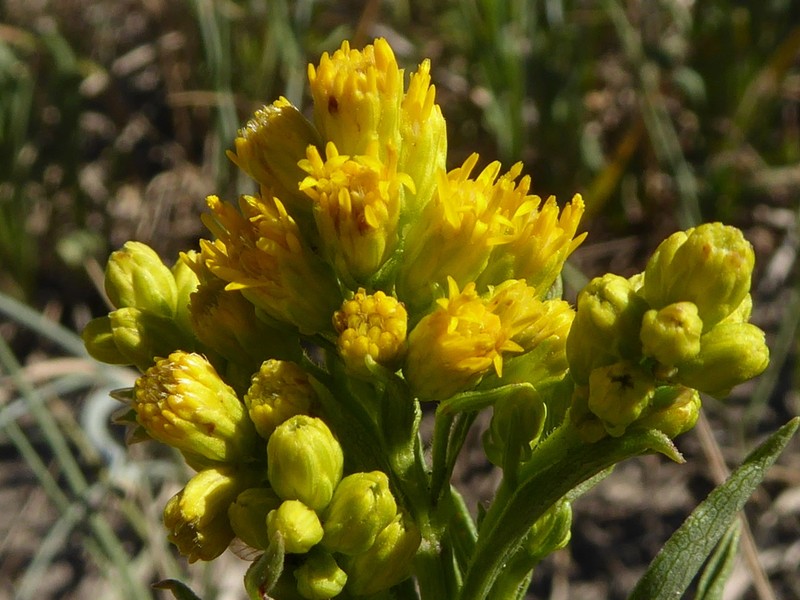
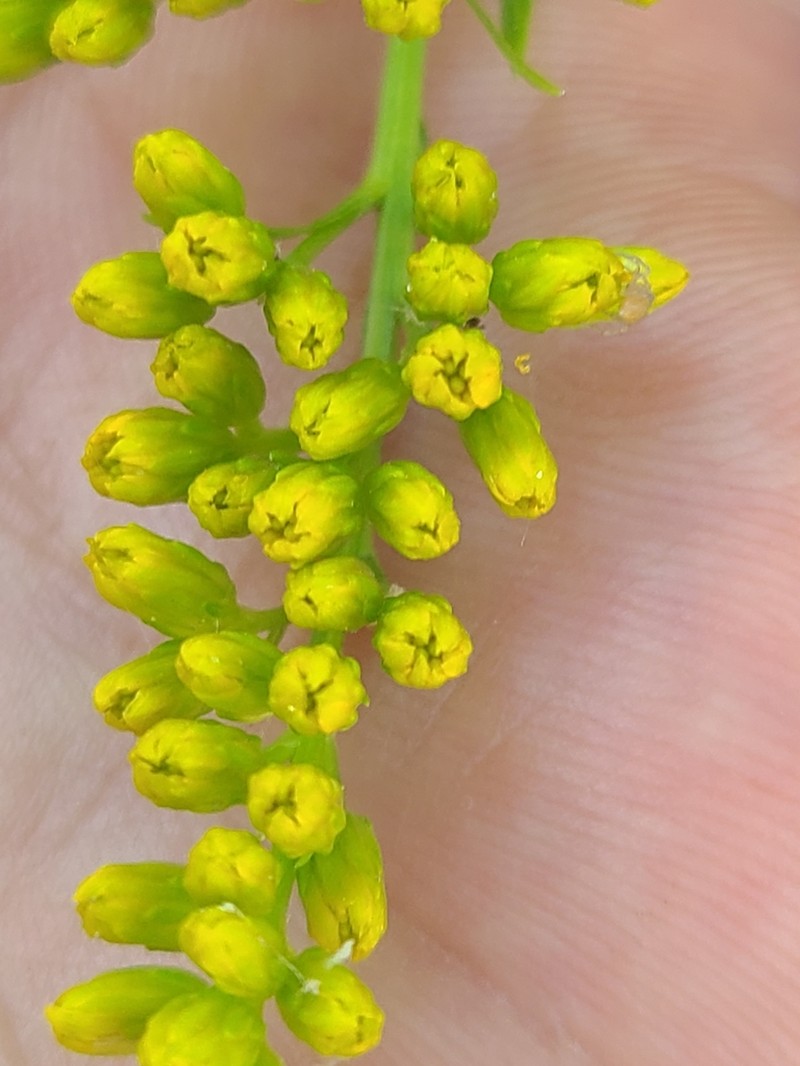
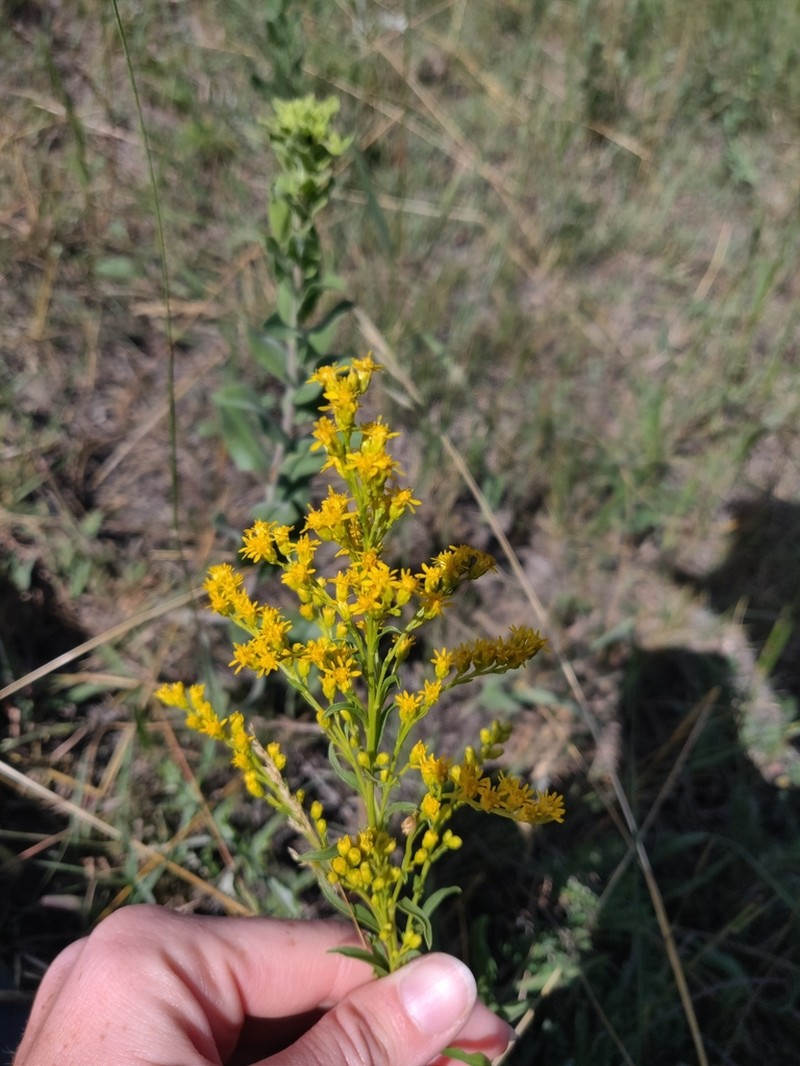
Missouri Goldenrod
Solidago missouriensis
- Native to:
- Canada, Mexico, United States
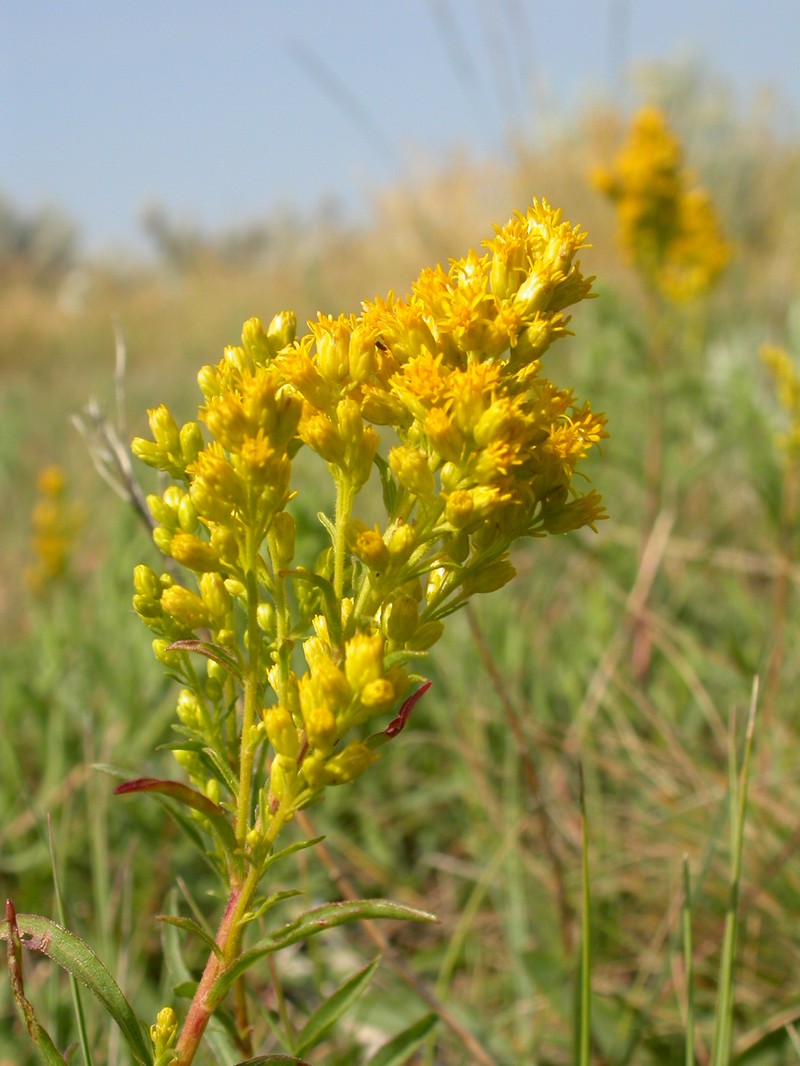
Matt Lavin (www.flickr.com)
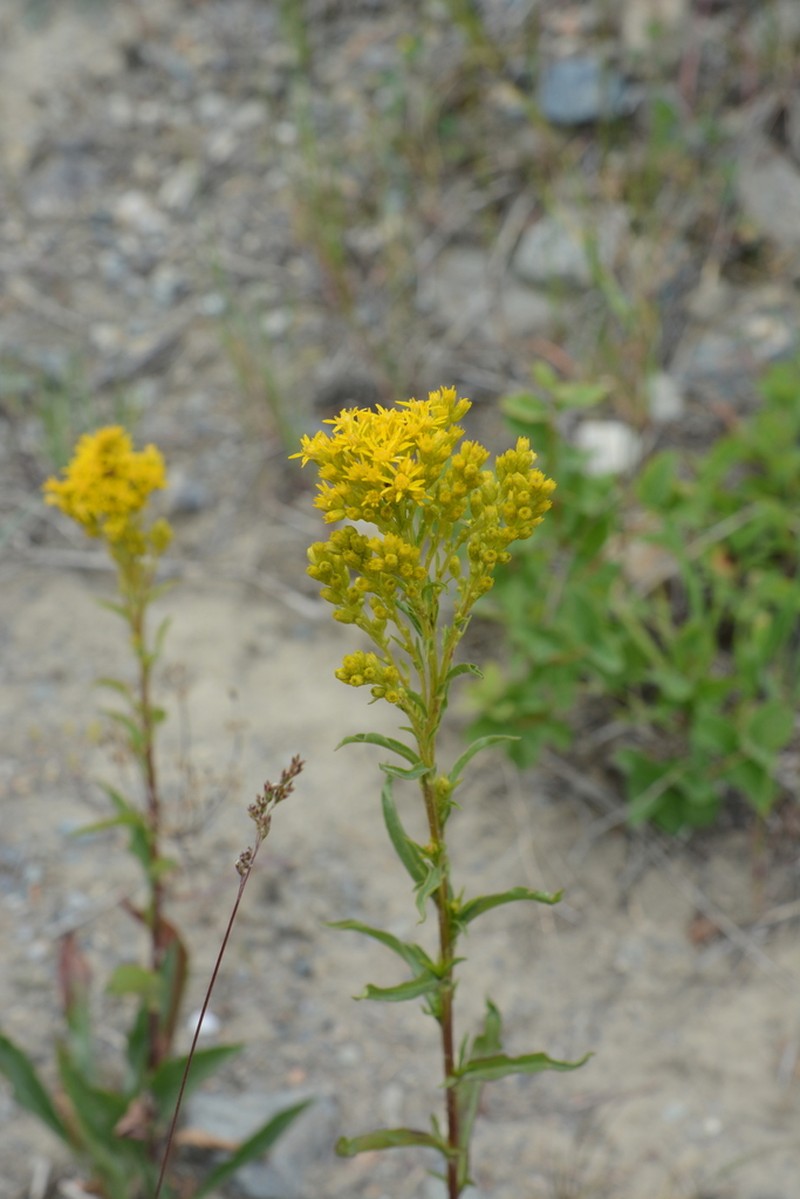
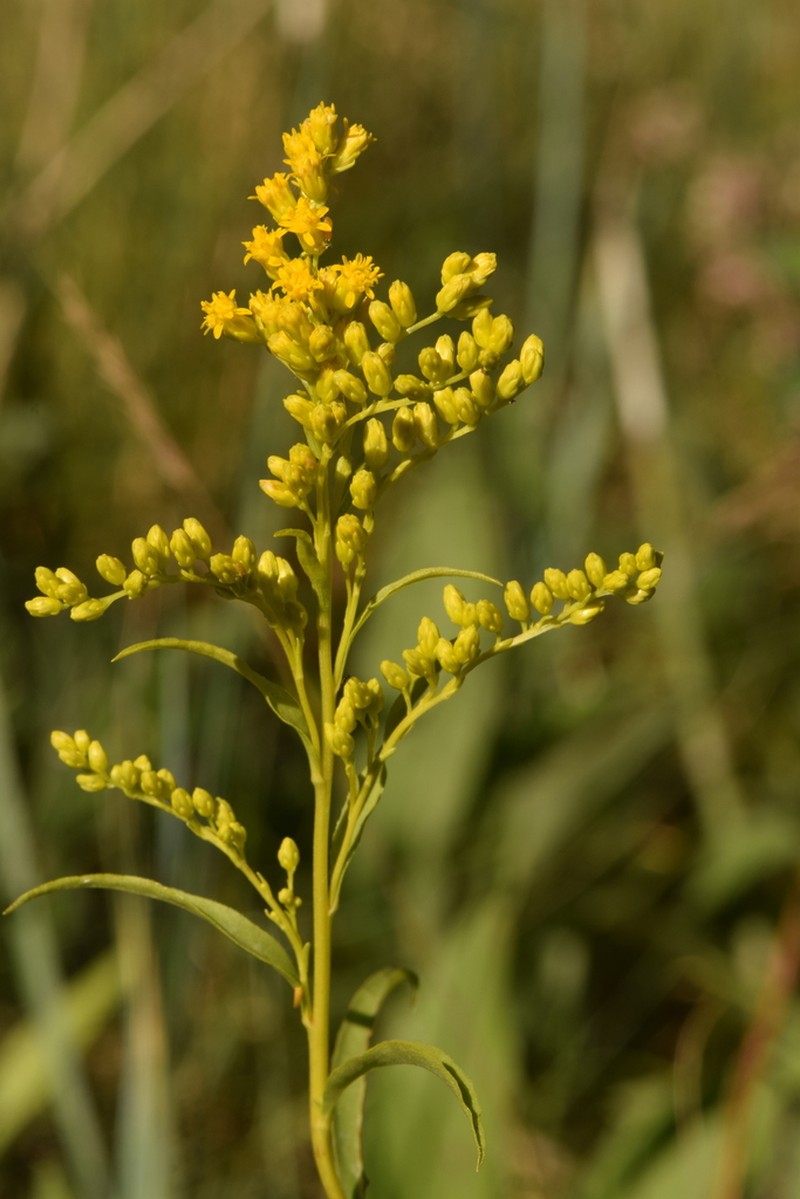
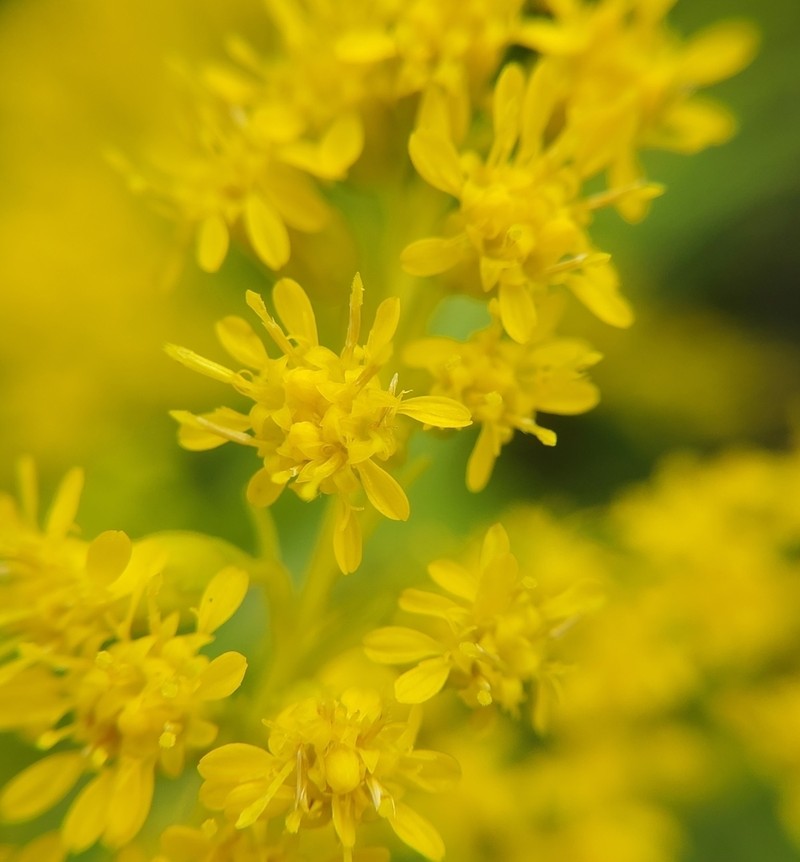
Taxonomy
- Division:
- Magnoliophyta | - Flowering plants
- Family:
- Asteraceae
- Genus:
- Solidago
- Species:
- Solidago missouriensis
- USDA Symbol:
- SOMI2
Growth Characteristics
- Life Cycle:
- Perennial
- Growth Habit:
- Forb/herb
- Height:
- 100 cm
- Light Requirements:
- Full Sun
- Drought Tolerance:
- Medium
- Bloom Months:
- jul,aug,sep
- Bloom Colors:
- yellow
Wildlife Benefits
- Bees:
- ★☆☆☆☆ Documented bee visitation (GBIF)
- Butterflies & Moths:
- ★☆☆☆☆ Documented Lepidoptera association (GBIF)
Keystone Species Ranking
- Caterpillar Keystone:
- ★★★★☆ Butterfly & moth species supported by this genus (NWF)
- Pollen Specialist Bee Keystone:
- ★★★★★ Native pollen specialist bee species supported by this genus (NWF)
Reported Fauna Sightings
Bees: Black-tailed bumble bee (Bombus melanopygus), Fernald cuckoo bumble bee (Bombus flavidus), Fuzzy-horned bumble bee (Bombus mixtus), Half-black bumble bee (Bombus vagans), Hunt's bumble bee (Bombus huntii), Indiscriminate cuckoo bumble bee (Bombus insularis), Red-belted bumble bee (Bombus rufocinctus), Two-form bumble bee (Bombus bifarius), Western bumble bee (Bombus occidentalis)
Garden & Ecology Notes
- Wildlife Value:
- bees, butterflies, birds
- Fire Ecology:
- Fire adapted — tolerates or benefits from fire
- Fire Notes:
- Resprouts from rhizomes after fire; benefits from occasional fire to reduce competition.
Soil Requirements
- Soil Type:
- sandy or rocky, well-drained soil
- pH:
- 5.5 - 7.5 (slightly acidic to neutral)
- Drainage:
- excellent drainage required
- Moisture:
- dry to moderate
- Notes:
- thrives in open prairies and grasslands
Propagation & Germination
- Stratification:
- Cold/moist stratification required — 30–60 days
- Germination Time:
- 14–30 days
- Notes:
- Seeds germinate readily after cold stratification; surface sow and keep moist.
Pre-treatment: None required
Establishment: Seed ripens in late September and early October. It is collected when the pappus begins to expand. Seed is brown in color and wind disseminated, so must be collected before it blows away. Seed can be collected using a vacuum. Harvested seed is stored in paper bags at room temperature until cleaned.
Source: npn.rngr.net
Where to Buy
Nationwide Seller
- Prairie Moon Nursery (nursery and seeds)